BASSCOM AI-Readiness Study — Bulgaria's Ministry-Commissioned Census of 63 Schools
Bulgaria
Survey of 10,038 pupils, 1,767 teachers and 210 principals in 63 schools: 94.7% of pupils use AI, but only 6.5% …
Mexico · Mexico City · See the Mexico profile · See the Mexico City profile
Top 40% 53/100 · Ask Evidence Copilot about this practice
Mexico's education ministry surveyed over 1.5 million students and 160,000+ teachers in about 2,900 institutions on generative AI. Use is near-universal, but about three in four do not know any institutional rules. The SEP answered with 10 national actions.
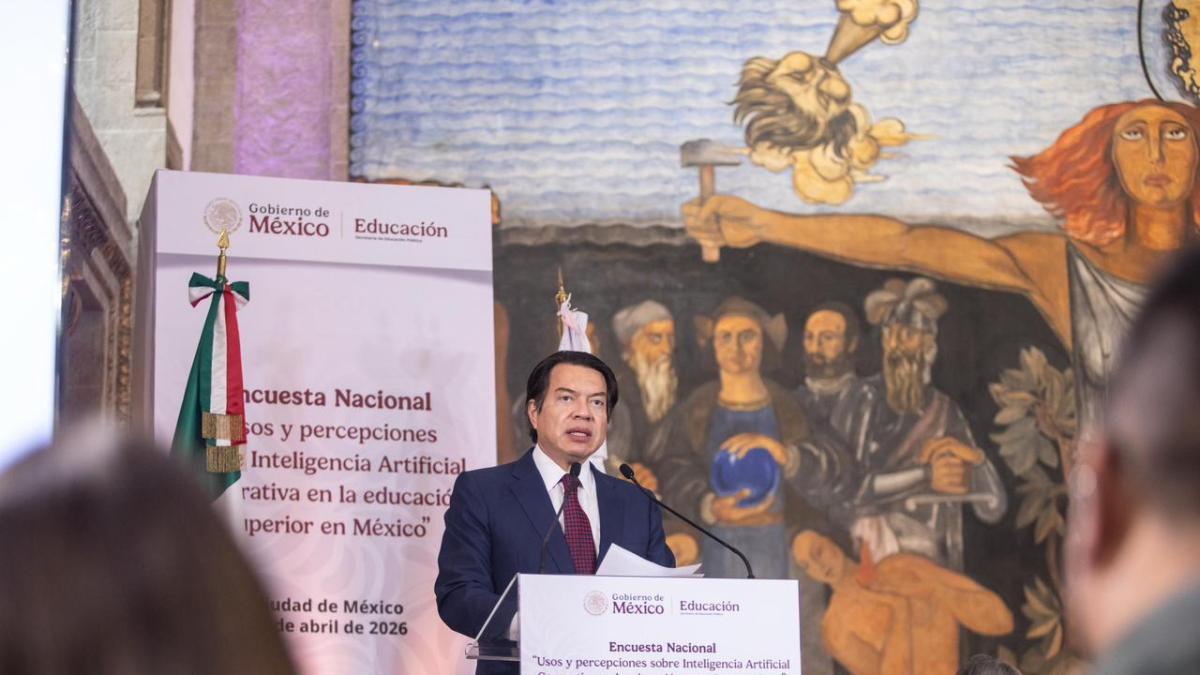
In April 2026 Mexico's Secretaría de Educación Pública (SEP) presented the national survey 'Usos y percepciones sobre Inteligencia Artificial Generativa en la Educación Superior en México' at its historic headquarters in Mexico City. Secretary Mario Delgado and Undersecretary of Higher Education Ricardo Villanueva led the presentation, with ANUIES and UNESCO Mexico taking part. More than 1.5 million students and over 160,000 teachers from about 2,900 higher-education institutions took part. Excélsior reports more than 1.27 million valid responses. Published teacher counts vary between 163,000 and 166,000.
The findings are self-reported. Nine in ten respondents know what generative AI is, and over 60% use it every day. 79% of students use it to write texts. Seven in ten students and teachers say their academic performance has improved. Yet 76% of teachers at public universities know of no institutional rule on AI use. Self-rated mastery averages 5.1 out of 10, and 4.4 at intercultural universities. Only 25% of teachers at intercultural universities have taken an AI course, against 51% at private ones. 91% of teachers ask for more training. 9% of students use AI for emotional support.
The SEP's answer was 10 national actions, not a ban. They are: treat generative AI as a routine academic tool; set clear institutional guidelines for ethical, critical use; make teacher training and AI literacy national priorities; update study plans; rethink assessment; guarantee AI literacy for students; reduce gaps in access, skills and governance; add a gender perspective; protect student well-being; and strengthen the humanities and social sciences.
Caveats: the survey measures perceptions, not learning outcomes. Published sample figures vary between reports. Whether the 10 actions are carried out is still to be shown.
Read the full analysis: https://www.excelsior.com.mx/nacional/presenta-mario-delgado-acciones-uso-iag
Implementation detail (cost, timeline, staffing, conditions for success) is not yet available for this practice.
Do you run this practice? Claim it — verified implementers get a public contact pathway and can propose corrections.
Where this practice's information was retrieved from, and when.
Bulgaria
Survey of 10,038 pupils, 1,767 teachers and 210 principals in 63 schools: 94.7% of pupils use AI, but only 6.5% …
Guyana
Guyana's national university requires students to disclose generative-AI use, grades AI-assisted and unassisted work on different rubrics, and flags its …
United Kingdom
Oxford gave all staff and students free ChatGPT Edu (GPT-5) from 2025/26 after a year-long ~750-user pilot, backed by an …
Australia
From 1 January 2026, Curtin University (Australia) disabled Turnitin's AI-writing detection campus-wide, keeping only text-matching checks, citing reliability problems and …
Open full copilot Grounded in cited practices — always check the sources.