Japan Forest Environment Transfer Tax (Rinshin Kankyō Jōyo Zei)
Japan
Since 2019, Japan distributes ¥40–62 billion/year to municipalities and prefectures for managing private plantation forests; from April 2024 funded by …
Ethiopia · Addis Ababa · See the Ethiopia profile · See the Addis Ababa profile
Evidence: Descriptive / self-reported Top 96% 20/100 · Ask Evidence Copilot about this practice
Ethiopia's Green Legacy claims 40bn+ seedlings planted since 2019, incl. a single-day record of 350 million trees. Independent analysts say survival is unverified — a 2025 district satellite study found only 40% survival vs official claims of 79–85%.
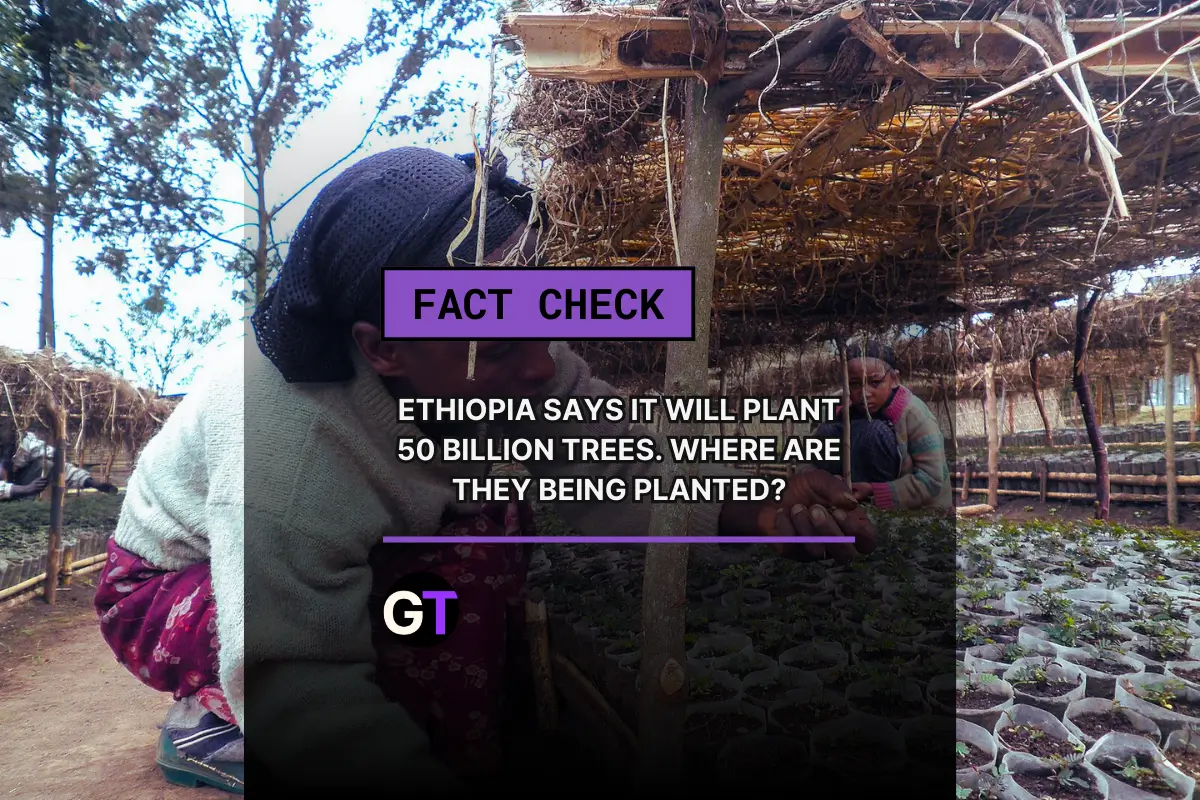
In 2019 Ethiopia's government launched the Green Legacy Initiative, a nationwide mass tree-planting campaign coordinated by the Prime Minister's Office and the Ministry of Agriculture, aiming to reverse decades of deforestation that took national forest cover from roughly 35% in the early 1900s to about 4% by the 2000s.
The campaign is best known for single-day planting drives — officials reported 350 million seedlings planted in 12 hours in July 2019 and up to 600 million in a day by 2024 — and the government has set a target of 50 billion trees, claiming to have already exceeded 40 billion seedlings planted across six years, with officially reported survival rates of 79-85%.
Independent scrutiny paints a more uncertain picture. A 2025 remote-sensing study of Gubalafto district (published in Discover Environment/Springer Nature), using Google Earth Engine land-cover analysis over 2019-2024, found an average survival rate of only 39.8% — far below official figures. Reporting by Dialogue Earth cites Ethiopian Environmental Commission staff who suggest survival for the 2022-23 planting round (7.5 billion claimed seedlings) may not exceed 50%. Global Forest Watch data cited by independent trackers shows national forest cover at around 11% in the mid-2020s — an improvement on the historic low, but far short of what the campaign's headline seedling counts would imply if fully credited.
Analysts note that at typical planting densities, a genuine 50-billion-tree programme would require afforesting roughly 35% of Ethiopia's total land area — a scale for which no comprehensive, publicly available survey or independent verification system exists. The initiative illustrates both the scale achievable through mass civic mobilisation and the evidence gap that opens when a state-run programme lacks independent, third-party monitoring of its outcomes.
National / regional programmes
Indicative funding routes for practices of this type — always check each programme's current calls and eligibility rules.
Do you run this practice? Claim it — verified implementers get a public contact pathway and can propose corrections.
Where this practice's information was retrieved from, and when.
Japan
Since 2019, Japan distributes ¥40–62 billion/year to municipalities and prefectures for managing private plantation forests; from April 2024 funded by …
Mexico
World's oldest operational carbon market project (1994), led by indigenous and mestizo farming communities in Chiapas under Plan Vivo. Covers …
Nepal
Since Nepal's 1993 Forestry Act, 22,000+ Community Forest User Groups manage 2.3 million hectares — a third of national forest. …
Moldova
Moldova's forestry programme restored 20,300+ ha of degraded land and issued 851,911 carbon credits since 2003; a new 2023-2032 plan …
Open full copilot Grounded in cited practices — always check the sources.