Rwanda's Land Tenure Regularization Programme — Titling Land in Women's Names
Rwanda
Rwanda's 2008-2013 land titling programme used low-cost, imagery-based adjudication to register nearly all land parcels, requiring both spouses' names on …
Ethiopia · Addis Ababa · See the Ethiopia profile
Ethiopia's land certification programme (1998-2021) put both spouses' names/photos on joint land certificates for millions of households. Women's perceived tenure security reached 22-30% in joint-titling regions vs 4% where only heads were certified (Muchomba, 2017).
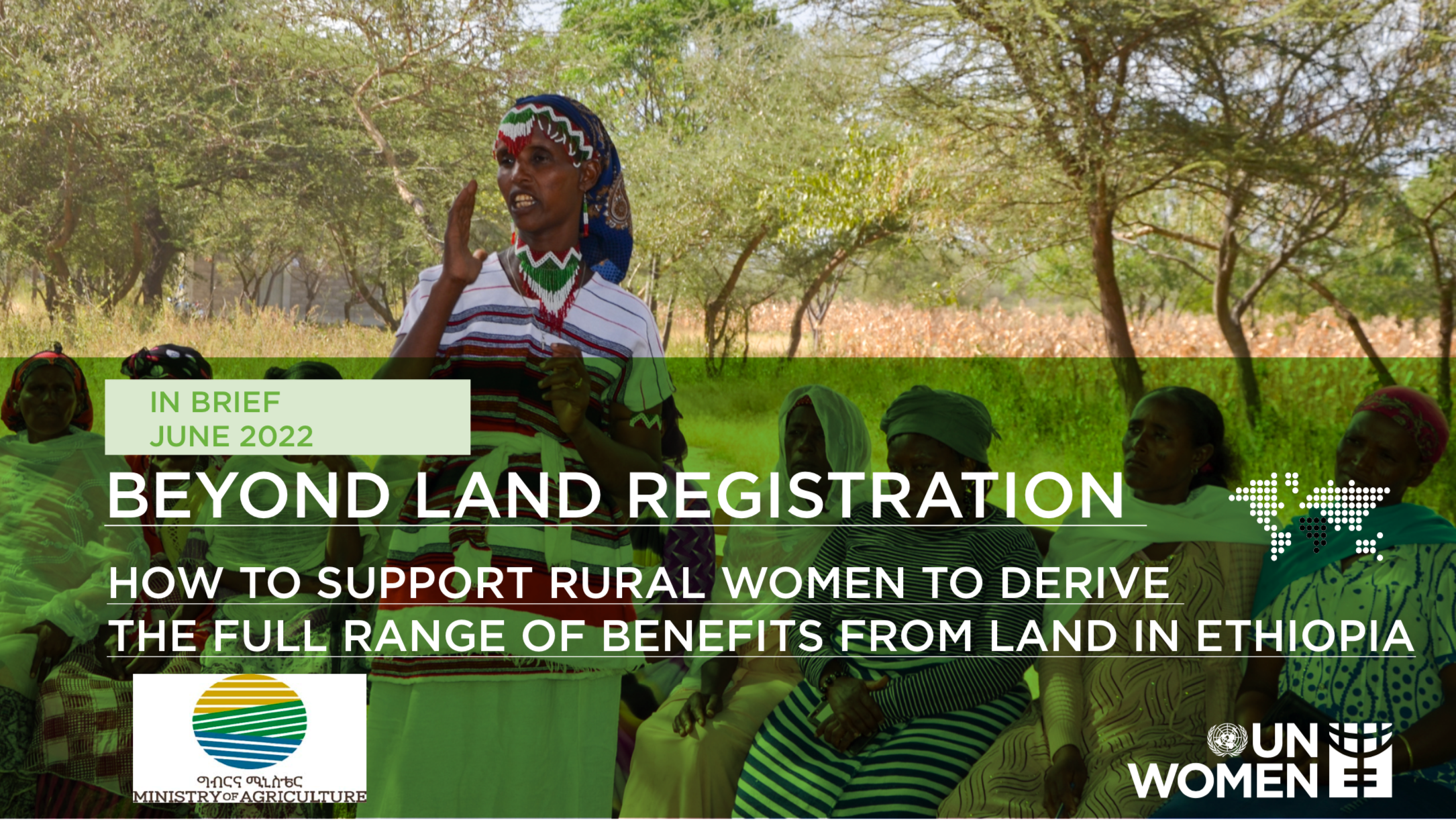
Starting in 1998, Ethiopia rolled out low-cost rural land certification that, from 2003-2005 onward, issued joint land certificates bearing both spouses' names and photographs rather than the household head alone, eventually covering 15-30 million parcels nationally.
Muchomba (2017) found perceived land tenure security among women was only 4% in Tigray (head-of-household-only certification) versus 22-30% in regions with joint certification, and linked joint certification to a 33% increase in household health spending. Deininger, Ali and Alemu found land-related court cases fell from about 20 to as few as 2 per week at one East Gojjam site after certification. A 2019 review of 7.1 million LIFT-certified parcels found 77% listed women as joint (55%) or individual (22%) landholders.
Bezabih and Holden (2010) found certification's productivity gains were substantial for male-headed households but only modest for female-headed ones; UN Women's 2022 review cautions that titling alone does not lead to greater tenure security for women, and the LIFT programme had to intervene to return over 1,000 parcels to women and vulnerable groups whose rights were violated even after certification.
Implementation detail (cost, timeline, staffing, conditions for success) is not yet available for this practice.
Where this practice's information was retrieved from, and when.
Rwanda
Rwanda's 2008-2013 land titling programme used low-cost, imagery-based adjudication to register nearly all land parcels, requiring both spouses' names on …
Madagascar
Madagascar's $47m CASEF programme (2016–2024) cut the cost of a land certificate from about $600 to $25 and issued over …
Vietnam
Vietnam's Land Law requires both spouses' names on land-use certificates. Panel studies (2004-2008) link female or joint titling to 10% …
Peru
Peru's PETT/COFOPRI land-titling programme put both spouses' names on rural titles from the 1990s. A 2013 quasi-experimental study found joint …
Open full copilot Grounded in cited practices — always check the sources.