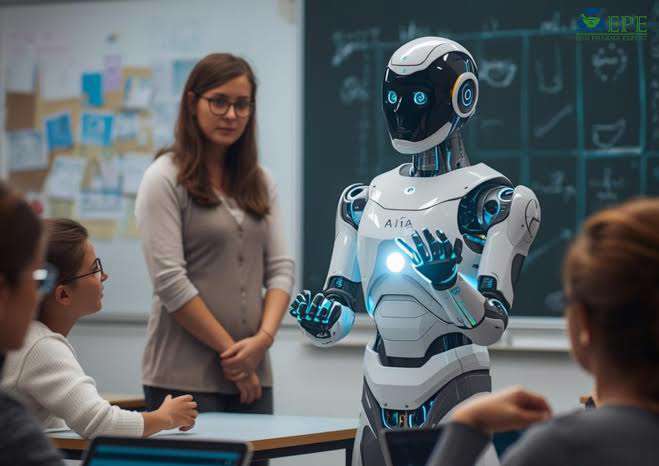
Ethiopia's Ministry of Education, through its e-SHE programme, launched an offline AI teacher assistant with Huawei in May 2026, generating lesson plans and standardised exam questions for Grades 9-12 teachers; the pilot has no published usage or outcome data yet.
On 14 May 2026, Ethiopia's Ministry of Education - through its e-SHE digital-education programme, led by coordinator Dr Muluneh Atinaf - launched an 'Agentic AI Teacher Assistant' developed with technology partner Huawei, unveiled at a Sheraton Hotel event in Addis Ababa. The application runs entirely offline on standard laptops or desktops, without cloud connectivity or high-end hardware, and has been fine-tuned on the complete set of Grades 9-12 textbooks so its output aligns with Ethiopia's revised national curriculum.
Objectives
The tool is designed to autonomously generate lesson plans, draft standardised exam questions and assignments, and suggest pedagogical strategies, with the explicit aim of reducing the administrative workload secondary-school teachers carry alongside instruction.
Activities
The Ministry has stated plans to extend the same AI support into university Learning Management Systems as a next phase.
Conclusions
As of this review the initiative is a newly launched pilot (May 2026) covering Grades 9-12: neither EBC nor Addis Fortune reports the number of schools or teachers using the tool, nor any measured effect on lesson quality, teacher time or student outcomes. It is documented here as a real, government-backed deployment whose evidence base is still to be built, not as a proven-impact model.
Implementation
Indicative cost
Low (< €50k) — No budget figure is reported; the offline design is intended to work on standard, non-high-end hardware.
Time to results
Short (< 1 year) — Launched 14 May 2026; the Ministry has stated an intention to extend into university LMS platforms as a next phase, with no date given.
Staffing & skills
Ministry of Education's e-SHE digital-education programme, coordinated by Dr Muluneh Atinaf, Huawei as technology partner developing the offline AI system
Conditions for success
Fully offline operation on standard laptops/desktops, avoiding dependence on connectivity or high-end hardware
Fine-tuning on the complete official Grades 9-12 textbook set to align outputs with the national curriculum
Common failure modes
No usage figures, adoption data or learning/teaching outcome measurements have been published for this month-old pilot
No published data-protection, algorithmic-transparency or ethical-use framework governs the tool
Where it fits
Governance type
national ministry of education in partnership with a technology vendor (Huawei)
Scale
pilot, Grades 9-12, no published school/teacher counts
Income level
low-income
Do you run this practice?
Claim it —
verified implementers get a public contact pathway and can propose corrections.
Data sources
Where this practice's information was retrieved from, and when.
UTMACH built a generative-AI vocational-guidance chatbot for Ecuadorian students; in a quasi-experimental trial with 351 students, its picks matched the …