IGEN–OIF AI Training Programme Upskills 42 Pedagogical Inspectors in Djibouti
Djibouti
From October 2025 to January 2026, Djibouti's IGEN ran seven AI training sessions with the OIF and University of Djibouti, …
Oman · Muscat · See the Oman profile · See the Muscat profile
Evidence: Descriptive / self-reported Top 24% 60/100 · Ask Evidence Copilot about this practice
Oman's Ministry rolled out the Noor digital-classroom platform to 578 schools (96% teacher access) by 2025, expanding to 730 in 2025–26. A separate 243-teacher survey found reported admin-burden cuts of ~20% and 65% of 266 students found AI-enhanced lessons more engaging.
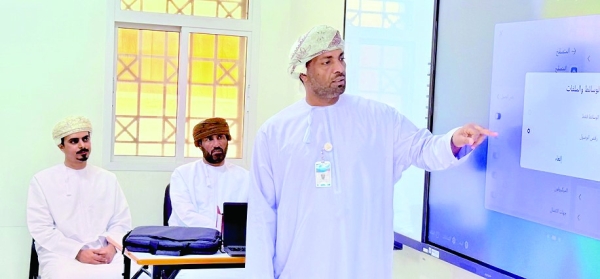
Oman's Ministry of Education has been rolling out the Noor Educational Platform, a national digital-classroom system offering electronic lesson-planning tools, vocabulary banks, digital content repositories and links between curriculum content and learning outcomes, alongside ministry guidelines on the ethical and effective use of AI in education.
The stated goal is full nationwide coverage: Phases 1-2 (2024-2025) reached 578 schools with 96% teacher access and 65% student access, and Phase 3 (2025-2026) is expanding to 730 schools across 11 governorates.
Central ministry teams and local education directorates collaborated to upload over 1,100 digital resources (e-books, interactive activities, videos). Separately, a 2024 mixed-methods study by researchers at the Global College of Engineering and Technology surveyed 243 teachers and 266 secondary students (grades 10-12) across urban and rural Omani government schools on AI adoption.
Teachers reported administrative burdens reduced by approximately 20% where AI tools were used for lesson planning and personalised learning, and 65% of surveyed students found AI-enhanced lessons — particularly in science and mathematics — more engaging.
Both the platform-access statistics and the survey findings are self-reported by their own institutions, with no independent audit of learning outcomes, and the academic study itself flags a persistent urban-rural gap in infrastructure and adoption. The AI-specific capabilities described remain mostly at the guidance and content-repository stage rather than embedded generative features, so this reads as an early-stage, government-backed digital foundation rather than a mature, causally-evaluated AI programme.
National / regional programmes
Indicative funding routes for practices of this type — always check each programme's current calls and eligibility rules.
Do you run this practice? Claim it — verified implementers get a public contact pathway and can propose corrections.
Where this practice's information was retrieved from, and when.
Djibouti
From October 2025 to January 2026, Djibouti's IGEN ran seven AI training sessions with the OIF and University of Djibouti, …
Ethiopia
Ethiopia's Ministry of Education, through its e-SHE programme, launched an offline AI teacher assistant with Huawei in May 2026, generating …
Malaysia
Malaysia's Ministry of Education (KPM) and UNICEF deploy SiPKPM, an AI early-warning system tracking 5 million learners on 7 risk …
Singapore
Singapore's Ministry of Education paired a national AI-in-Education Ethics Framework — Agency, Inclusivity, Fairness, Safety — with AI tools built …
Open full copilot Grounded in cited practices — always check the sources.