CommuniTree Community Carbon Programme (Nicaragua)
Nicaragua
Plan Vivo–certified community reforestation with 4,000+ smallholder families across 17,000+ ha in Estelí highlands. All 2015–2021 credits independently verified; US$3.1M …
Ethiopia · Dogu'a Tembien · See the Ethiopia profile
Plan Vivo- and Gold Standard-certified dryland restoration in Tigray, Ethiopia: landless and smallholder farmers have restored 30,000+ ha since 2016, sequestering a reported 760,872 tCO2 and raising flora species richness by 41%.
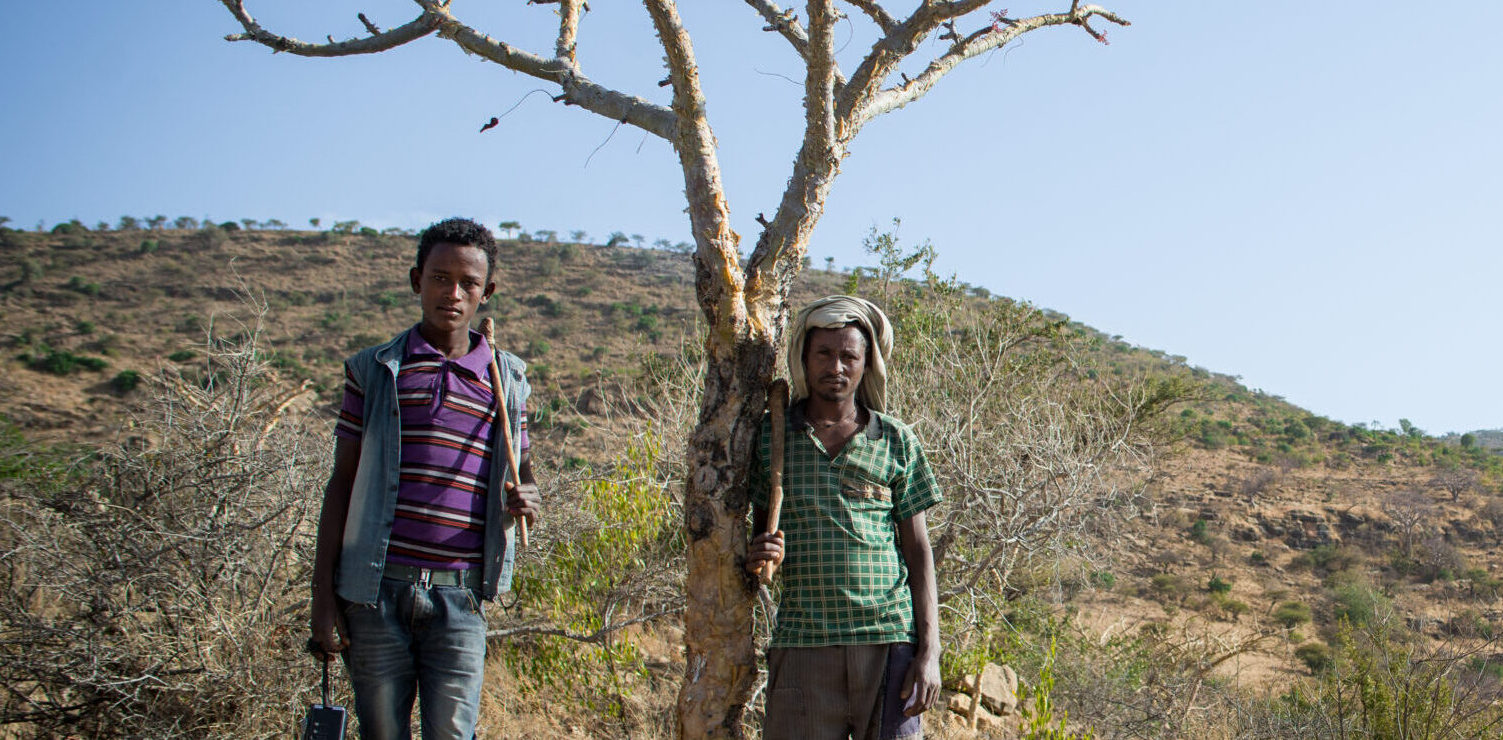
EthioTrees is a Plan Vivo- and Gold Standard-certified dryland restoration project launched in 2016 by the Belgian social enterprise Climate Lab, working with landless and smallholder farmers in the Dogu'a Tembien highlands of Tigray, northern Ethiopia. Farmers without formal land rights are given long-term stewardship of degraded hillsides to restore native woodland and agroforestry, in exchange for a share of carbon-credit revenue and training in dryland forestry.
Restoration activity has scaled from an initial 541 hectares in 2016 to over 30,000 hectares under active management. The project channels at least 60% of carbon income back to partnering households through a community benefit-sharing mechanism, and has built water reservoirs and primary schools as part of that mechanism; during Ethiopia's 2021-22 drought, its community fund also supported food aid.
According to the project's own verified reporting, activity has generated a cumulative 760,872 tonnes of CO2 sequestered and more than 450,000 Plan Vivo carbon certificates issued to date, with over 100,000 credits generated annually at recent scale. Independent monitoring cited by the project records a 41% increase in flora species richness since 2016, and restored groundwater has enabled year-round irrigation in some catchments. The project has built more than ten large water reservoirs and 15 primary schools, and its community fund supported food aid for over 29,000 people during the 2021-22 drought.
The project is certified under two independent standards (Plan Vivo and Gold Standard), but its figures are drawn primarily from its own and its partners' verified reporting rather than an independent academic study, so the social-impact numbers in particular should be read as strong but self-reported.
Implementation detail (cost, timeline, staffing, conditions for success) is not yet available for this practice.
Where this practice's information was retrieved from, and when.
Nicaragua
Plan Vivo–certified community reforestation with 4,000+ smallholder families across 17,000+ ha in Estelí highlands. All 2015–2021 credits independently verified; US$3.1M …
Guatemala
Plan Vivo-certified agroforestry programme restoring degraded pasture in Petén, Guatemala since 2019; a genuine, certified effort, but the developer's own …
Mozambique
One of Plan Vivo's founding projects paid ~1,000 Mozambican smallholders near Gorongosa National Park $242.60/ha over 7 years for agroforestry …
Cameroon
Plan Vivo-certified agroforestry project run by Graine de Vie with Bankim, Banyo and Mayo-Darlé communes in Cameroon's Adamawa Region pays …
Open full copilot Grounded in cited practices — always check the sources.