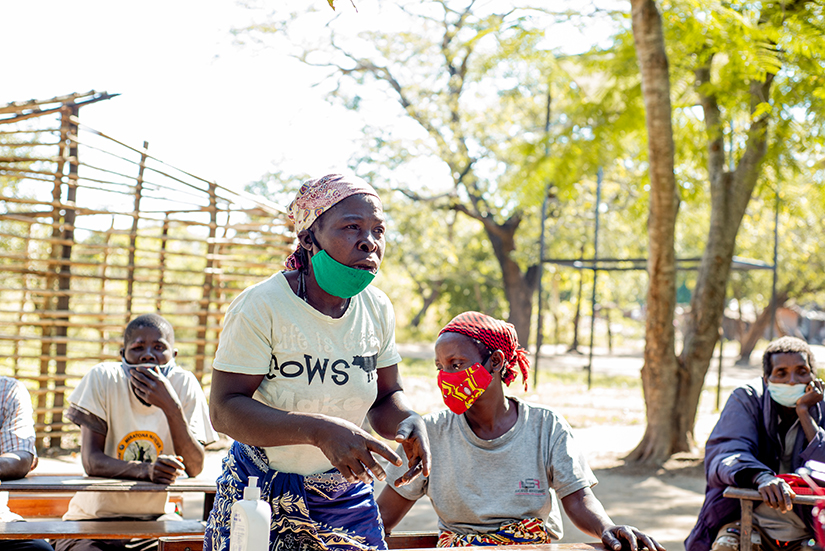
One of Plan Vivo's founding projects paid ~1,000 Mozambican smallholders near Gorongosa National Park $242.60/ha over 7 years for agroforestry carbon, but developer Envirotrade's financial collapse led to decertification in 2015 — a widely studied cautionary case.
242.60 USD/ha
Payment rate for verified carbon sequestration (over 7-year contract)
49 farmers
Farmers participating at project start (mid-2004)
63 ha
Land area covered at project start (mid-2004)
~1,000 farmers
Peak farmer participation
10,000 ha
Rehabilitation target area
7 years
Agroforestry contract duration
2015-10-13 date
Project decertification date
Details
Maturity
Discontinued
Promoter
Envirotrade
Period
2003-2015 (decertified)
Keywords
community carbon, agroforestry, Plan Vivo, REDD+, lessons learned, decertification
Context
Launched as a pilot in 2002 and scaled from August 2003 in the buffer zone of Gorongosa National Park, Sofala province, Mozambique, the N'hambita Community Carbon Project was developed by the private company Envirotrade with technical support from the University of Edinburgh and EU co-funding from 2003 to 2008. It became one of Plan Vivo's founding projects and was later validated under the CCBA Standard.
Objectives
Smallholder farmers signed seven-year agroforestry contracts to plant native and fruit trees, receiving payment for verified carbon sequestration, with a rehabilitation target of 10,000 hectares across the buffer zone.
Activities
By mid-2004, 49 farmers covered 63 hectares; participation grew to a peak of roughly 1,000 farmers, each paid US$242.60 per hectare over the seven-year contract for verified carbon sequestration.
Results
Peer-reviewed research published in Environment and Development Economics (Cambridge University Press) documented household participation and income trade-offs among project farmers. However, developer Envirotrade encountered financial difficulty, and Plan Vivo decertified the project on 13 October 2015; the company exited the region entirely by 2018, leaving villagers with unpaid balances on their agroforestry contracts.
Conclusions
A 2018 World Rainforest Movement retrospective recorded 'lasting community disillusionment'. The project is documented as a widely studied cautionary case illustrating the risk of dependence on a single private developer for long-term carbon-finance commitments to smallholders.
Implementation
Indicative cost
Medium (€50k–€500k) — The per-farmer payment ($242.60/ha over 7 years) was modest at smallholder scale, but the project required sustained EU co-funding (2003-2008) and university technical support across up to 1,000 farmers over more than a decade; rated medium cost.
Time to results
Long (> 3 years) — Individual contracts ran 7 years; the project itself operated from the 2002/2003 pilot through the 2015 decertification and full developer exit by 2018 -- over a decade -- rated long timeline.
Staffing & skills
Project developer Envirotrade (private company), University of Edinburgh technical/scientific support, Local smallholder farmers under individual agroforestry contracts, Plan Vivo Foundation as certifying body
Conditions for success
Technical support from a university partner on carbon methodology
EU co-funding for initial establishment (2003-2008)
Individual long-term (7-year) contracts with a clear payment-per-hectare rate to align farmer incentives
Common failure modes
Sole reliance on a single private developer (Envirotrade) for financing and credit sales created systemic risk
The developer's financial collapse led to decertification (October 2015) and the company's full exit by 2018
Farmers were left with unpaid contract balances -- a documented governance and financial failure
Community disillusionment documented in a 2018 retrospective
Where it fits
Governance type
private-developer-led with university/NGO certification (Plan Vivo/CCBA)
Scale
community/smallholder, up to roughly 1,000 households
Income level
low-income
Do you run this practice?
Claim it —
verified implementers get a public contact pathway and can propose corrections.
Data sources
Where this practice's information was retrieved from, and when.
Plan Vivo- and Gold Standard-certified dryland restoration in Tigray, Ethiopia: landless and smallholder farmers have restored 30,000+ ha since 2016, …
Plan Vivo–certified community reforestation with 4,000+ smallholder families across 17,000+ ha in Estelí highlands. All 2015–2021 credits independently verified; US$3.1M …