zeroCARBON Community Agroforestry Programme (Petén, Guatemala)
Guatemala
Plan Vivo-certified agroforestry programme restoring degraded pasture in Petén, Guatemala since 2019; a genuine, certified effort, but the developer's own …
Cameroon · Bankim · See the Cameroon profile
Plan Vivo-certified agroforestry project run by Graine de Vie with Bankim, Banyo and Mayo-Darlé communes in Cameroon's Adamawa Region pays smallholders to plant native trees, sequestering an estimated 3,300 tCO2e since 2024 while sharing carbon revenue with villages.
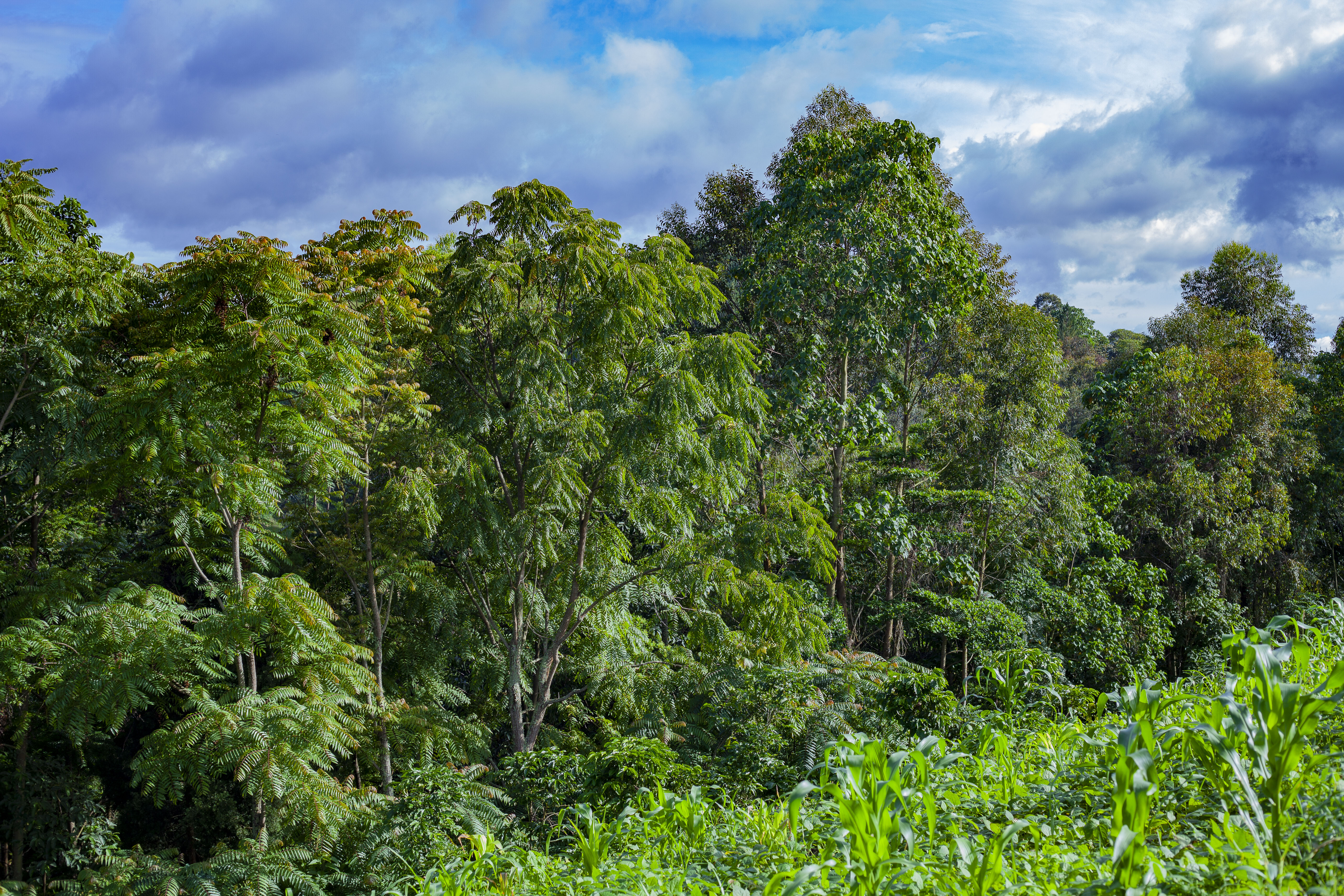
The Fes Enying project in Bankim commune, Mayo-Banyo division, Adamawa Region, Cameroon, is run by the NGO Graine de Vie in partnership with the communes of Bankim, Banyo and Mayo-Darlé, using the Plan Vivo Keystone 2.0 methodology since 2024. Smallholders plant native trees in home gardens and agroforestry plots at roughly 200 trees per hectare, adding about 10,000 trees per community each year, in a division that lost 5,300 ha of primary forest — 17% of its tree cover — between 2001 and 2025, mostly to permanent and shifting agriculture.
Public sources describe the carbon-revenue split somewhat inconsistently: Plan Vivo's project page cites 60% of revenue going to communities, while Earthly.org describes a 50% direct-to-farmer / 50% community-fund split (with 10% of the fund earmarked for garden maintenance) — a discrepancy that should be clarified as the project matures. As of the latest reporting, about 16 hectares have been planted, sequestering an estimated 3,300 tCO2e.
The project is still very young — one funding cycle since 2024 — and no independent, third-party audit of the carbon or revenue-sharing figures has yet been published; at 16 ha, its footprint remains small relative to the scale of deforestation pressure across the surrounding division.
Read the full analysis: https://earthly.org/projects/agroforestry-adamawa-cameroon
Implementation detail (cost, timeline, staffing, conditions for success) is not yet available for this practice.
Where this practice's information was retrieved from, and when.
Guatemala
Plan Vivo-certified agroforestry programme restoring degraded pasture in Petén, Guatemala since 2019; a genuine, certified effort, but the developer's own …
Nicaragua
Plan Vivo–certified community reforestation with 4,000+ smallholder families across 17,000+ ha in Estelí highlands. All 2015–2021 credits independently verified; US$3.1M …
Mozambique
One of Plan Vivo's founding projects paid ~1,000 Mozambican smallholders near Gorongosa National Park $242.60/ha over 7 years for agroforestry …
Ethiopia
Plan Vivo- and Gold Standard-certified dryland restoration in Tigray, Ethiopia: landless and smallholder farmers have restored 30,000+ ha since 2016, …
Open full copilot Grounded in cited practices — always check the sources.