The Station — Baghdad's First Co-Working Hub for Iraqi Entrepreneurs
Iraq
Baghdad's first co-working and incubation space opened in 2018 with 35 desks, backed by the Dutch Embassy, GIZ and local …
France · Paris · See the France profile · See the Paris profile
Evidence: Observational / pre–post Top 27% 76/100 · Ask Evidence Copilot about this practice
France's state-backed 'tiers-lieux' network grew from ~1,800 third places in 2018 to 3,500 in 2023 (target 5,000 by 2025), with 407 'Fabriques de territoire' hubs funded €62m and a third of sites in rural areas.
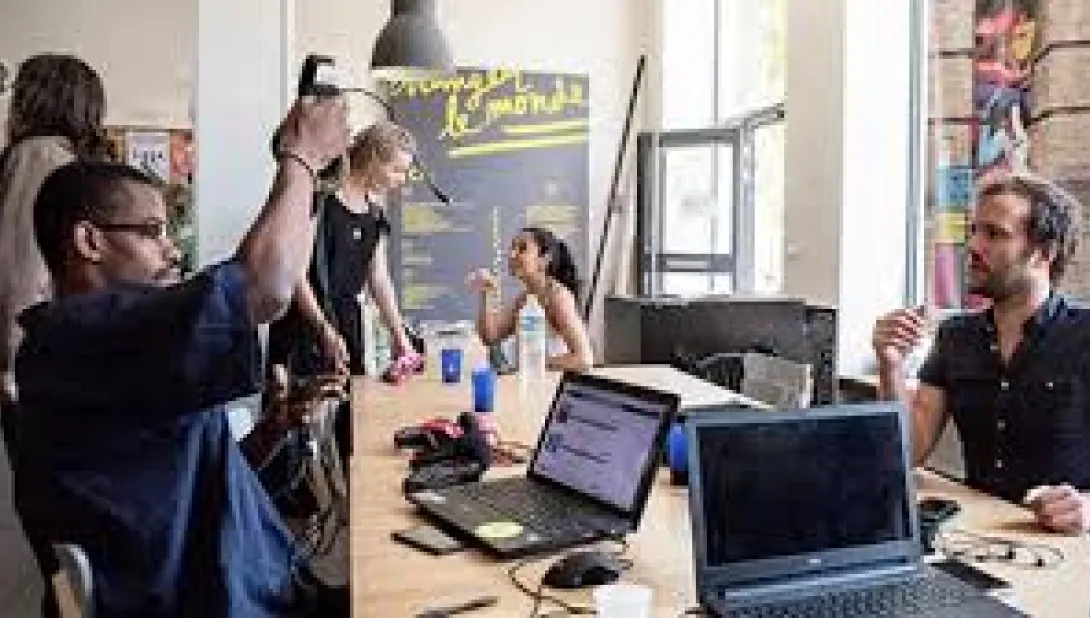
Tiers-lieux ("third places") are hybrid coworking, community and light-production spaces blending remote work, entrepreneurship support and local services. They expanded rapidly across France from the mid-2010s and were formalised under the national "Nouveaux Lieux, Nouveaux Liens" call for projects (2019), coordinated by ANCT (Agence Nationale de la Cohésion des Territoires).
Reduce territorial inequality by supporting rural entrepreneurship, retaining local jobs, enabling telework and easing relocation to smaller towns.
Since 2020 the state has funded over 700 third places or consortiums, including 407 'Fabriques de territoire' resource hubs (€62m, 105 re-conventioned) and 100 'Manufactures de proximité' small-scale production units (€30m) spread across 68 departments, plus 204 spaces funded through the Deffinov skills programme (€50m).
The network grew from roughly 1,800 sites in 2018 to 3,500 identified in 2023 (28% in mid-sized cities, 34% in rural areas, half opened since 2019), with a stated target of 5,000 by 2025. Academic research on rural coworking and tiers-lieux in France finds they help rural remote workers 'negotiate marginality'.
The growth figures come from ANCT's own labelling waves and observatory rather than an independent counterfactual impact evaluation; academic sources describe persistent 'professionalisation challenges' and an unclear long-term economic model for a share of sites, meaning many struggle to reach financial sustainability without ongoing public support.
ERDF — European Regional Development Fund National / regional programmes
Indicative funding routes for practices of this type — always check each programme's current calls and eligibility rules.
Do you run this practice? Claim it — verified implementers get a public contact pathway and can propose corrections.
Where this practice's information was retrieved from, and when.
Iraq
Baghdad's first co-working and incubation space opened in 2018 with 35 desks, backed by the Dutch Embassy, GIZ and local …
Kazakhstan
Kazakhstan's Damu Fund tested three SME finance instruments; a 2026 World Bank study found market-aligned partial guarantees raised employment ~24% …
Netherlands
4-year social entrepreneurship programme now focused on impact entrepreneurship. Amsterdam Impact strengthens the ecosystem for all companies that simultaneously create …
Philippines
Founded in 2016 by IdeaSpace, J.P. Morgan, DOST and DTI, QBO grew to 540+ member startups, 10,000+ members and 240+ …
Open full copilot Grounded in cited practices — always check the sources.