Hekluskógar — Reforesting the Slopes of Hekla Against Volcanic Ash Erosion
Iceland
Since 2007, Iceland's Hekluskógar project has enlisted 210+ landowners to re-establish native birch woodland around the Hekla volcano, planting 2.3M+ …
Sierra Leone · Freetown · See the Sierra Leone profile · See the Freetown profile
Evidence: Observational / pre–post Top 40% 47/100 · Ask Evidence Copilot about this practice
In 2021 Freetown named Africa's first Chief Heat Officer, pairing the new office with solar-powered market shade canopies and a landslide-driven afforestation drive that has planted over 550,000 trees (about 82% survival) since 2019.
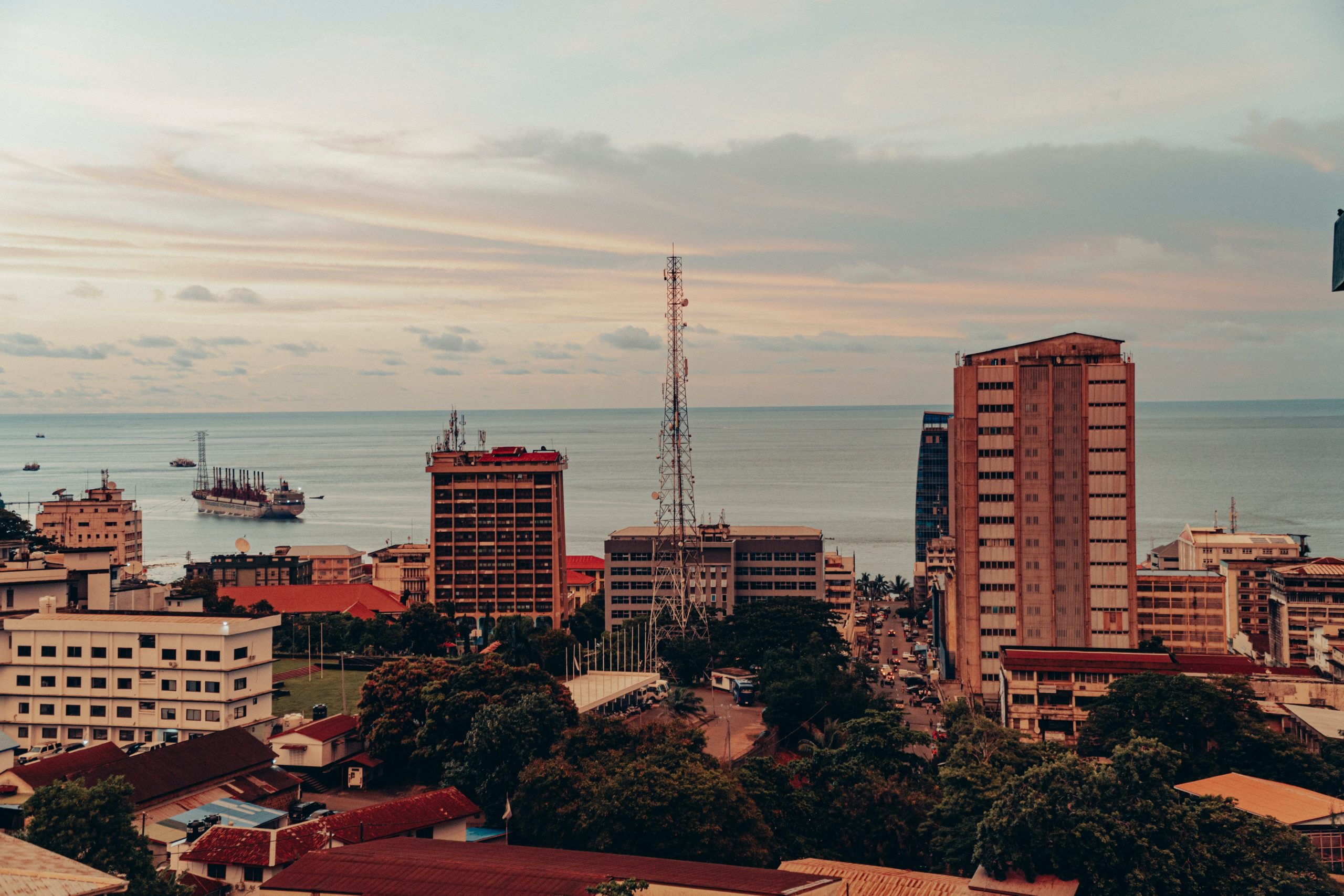
After a 2017 mudslide killed hundreds and left much of Freetown's hillside vegetation stripped, the city launched the #FreetownTheTreetown campaign in 2019 to replant tree cover for slope stabilisation and erosion control, later widened to address urban heat. In October 2021, Mayor Yvonne Aki-Sawyerr appointed Eugenia Kargbo as Freetown's (and Africa's) first Chief Heat Officer, a post funded by the Adrienne Arsht-Rockefeller Foundation Resilience Center.
Her office installed roughly 40 solar-powered plexiglass shade canopies at Congo Market, one of Freetown's largest open-air markets, designed with input from the women traders who use them, with plans to extend coverage across the city's roughly 42 open-air markets. A parallel 58,000-tree, 50-hectare afforestation effort targets the most heat-exposed and landslide-prone slopes. The office also coordinates motorbike-mounted heat-sensor surveys, a partnership with the US National Oceanic and Atmospheric Administration on heat-island mapping, and two World Bank-funded weather stations, the city's first.
By 2021 the #FreetownTheTreetown campaign had planted just over 550,000 of a 1-million-tree target, with roughly 450,000 (about 82%) confirmed surviving through a digitally tracked, pay-per-verified-tree model. City planners project the parallel afforestation effort could cut local urban-heat-island intensity by about 20%.
Evidence quality is mixed: tree-planting and survival figures are tracked and independently reported, and the Chief Heat Officer model has since been replicated by C40 in Miami, Athens, Melbourne, Santiago and other cities, indicating real transferability. However, no independent before/after temperature study of the market canopies has yet been published, and Kargbo herself has flagged chronic underfunding from national government as a constraint on scaling.
Philanthropic / foundation funding
Indicative funding routes for practices of this type — always check each programme's current calls and eligibility rules.
Do you run this practice? Claim it — verified implementers get a public contact pathway and can propose corrections.
Where this practice's information was retrieved from, and when.
Iceland
Since 2007, Iceland's Hekluskógar project has enlisted 210+ landowners to re-establish native birch woodland around the Hekla volcano, planting 2.3M+ …
Australia
Melbourne's 2012 Urban Forest Strategy set a 20-year target to double tree canopy from 20% to 40% by planting over …
Ethiopia
Canada-funded SUNCASA is restoring Dire Dawa's flood-prone Dechatu River catchment: IISD, WRI and local partners planted 313,330 seedlings in the …
Thailand
Launched in 2019 by the Bangkok Metropolitan Administration, Green Bangkok 2030 is converting underused public, state and private land into …
Open full copilot Grounded in cited practices — always check the sources.