Cheonggyecheon Stream Restoration — Seoul's Highway-to-River Nature-Based Corridor
South Korea
Seoul removed a 5.6km elevated highway and daylighted the buried Cheonggyecheon stream, cutting local air pollution 35%, raising species counts …
South Africa · Sir Lowry's Pass Village · See the South Africa profile
Evidence: Descriptive / self-reported Top 41% 47/100 · Ask Evidence Copilot about this practice
A US$3.5m GEF project (2012–2018) trained over 5,000 people in integrated fire management across four Western Cape communities in South Africa's fire-dependent fynbos hotspot; its coordinator later ran fire-risk work funded by insurers through 2020.
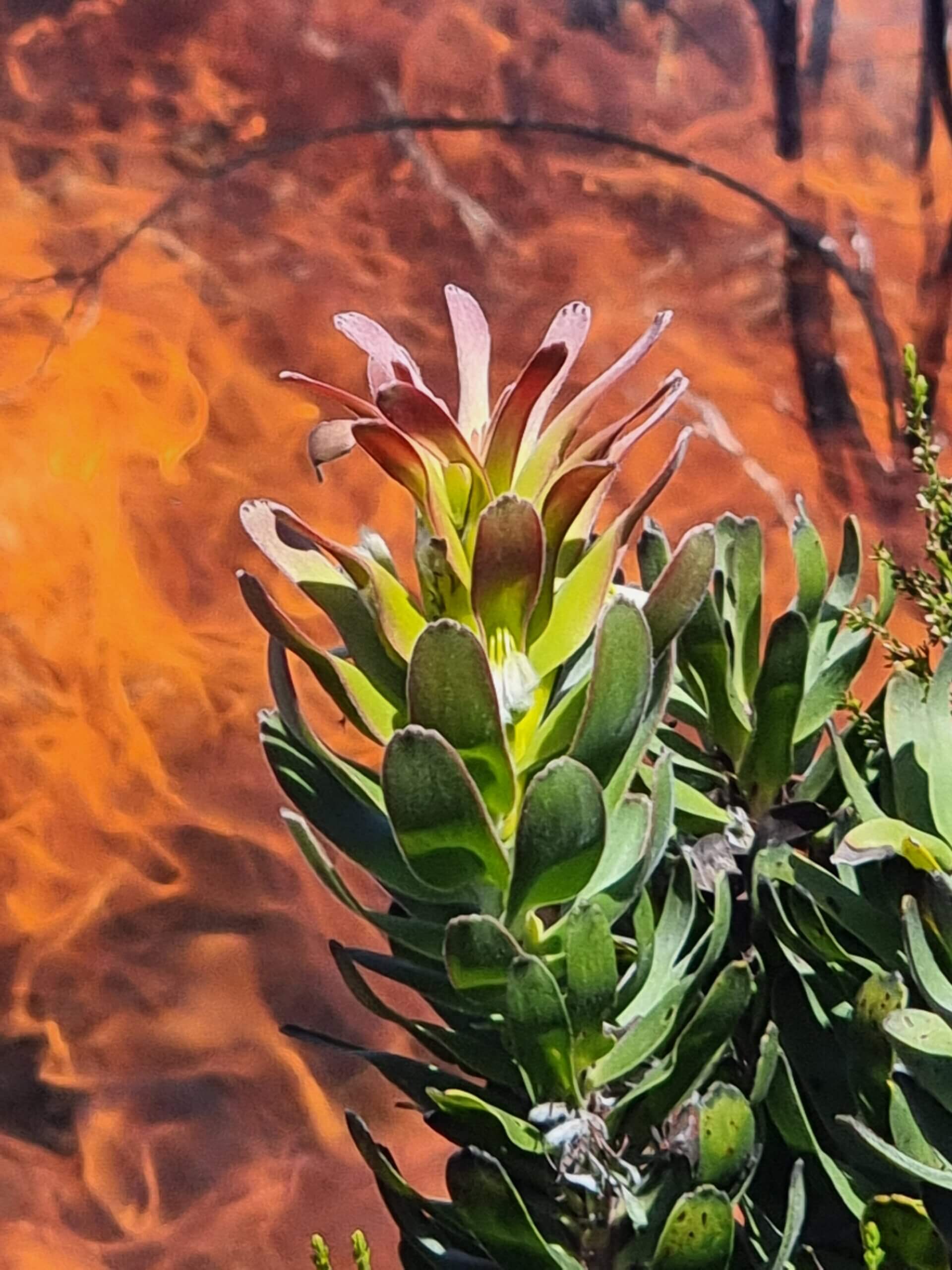
The GEF Fynbos Fire Project was a US$3.5 million initiative funded by the Global Environment Facility's Special Climate Change Fund, running from 2012 to April 2018, managed by UNDP and implemented by the NGO Landworks through South Africa's Department of Environmental Affairs, working in four rural fynbos-biome communities (Goedverwacht, Kranshoek, Sir Lowry's Pass Village, Clarkson) within the framework of the national 'Working on Fire' programme.
The project aimed to build integrated fire management capacity in the fire-dependent fynbos biome of the Cape Floristic Region, where climate-change-driven shifts in fire frequency and intensity threaten both biodiversity — since fynbos requires periodic burning to regenerate — and property.
The project delivered integrated fire management training covering fire ecology, fire behaviour, fire-risk assessment and prescribed-burning application, reaching over 5,000 people across the four target communities in the roughly 46,000 km² fynbos biome, which holds nearly one-fifth of Africa's known plant species.
Over 5,000 people were trained in integrated fire management. After the GEF-funded phase ended, the project's lead coordinator went on to implement fire risk reduction projects for the South African Insurance Association through 2020, before taking on management of the Western Cape Fire Protection Association.
Neither source reports quantified fire-outcome data — no measured change in fire frequency, area burned, or biodiversity recovery is presented; the strongest evidence is institutional (funding continuity, formal training output, and a documented handoff from public to insurance-sector funding) rather than ecological impact evidence.
National / regional programmes
Indicative funding routes for practices of this type — always check each programme's current calls and eligibility rules.
Do you run this practice? Claim it — verified implementers get a public contact pathway and can propose corrections.
Where this practice's information was retrieved from, and when.
South Korea
Seoul removed a 5.6km elevated highway and daylighted the buried Cheonggyecheon stream, cutting local air pollution 35%, raising species counts …
Indonesia
APRIL's Fire Free Village Programme pays Riau villages IDR 50–100 million for staying fire-free; a peer-reviewed 2019 study found programme …
Micronesia
Since 2002 the Micronesia Conservation Trust has mobilised USD 100 million, including a USD 50 million endowment, funding 150+ protected …
Belgium
Since 2002 the City of Ghent has paid residents, schools and businesses EUR25-31 per m2 to install green roofs and, …
Open full copilot Grounded in cited practices — always check the sources.