Nepal Wireless Networking Project — Mahabir Pun's Himalayan Village-to-Village Internet
Nepal
Starting from a single WiFi link to Pokhara in 2002, teacher Mahabir Pun and volunteer engineers built the Nepal Wireless …
Greenland · Nuuk · See the Greenland profile · See the Nuuk profile
Evidence: Descriptive / self-reported Top 10% 96/100 · Ask Evidence Copilot about this practice
A subsea fibre-optic cable network connecting Greenland to Iceland and Canada cut Nuuk's internet latency by ~500ms overnight in 2009 and was extended in 2017 to reach four more west-coast towns, replacing costly satellite links with broadband for most of Greenland's population.
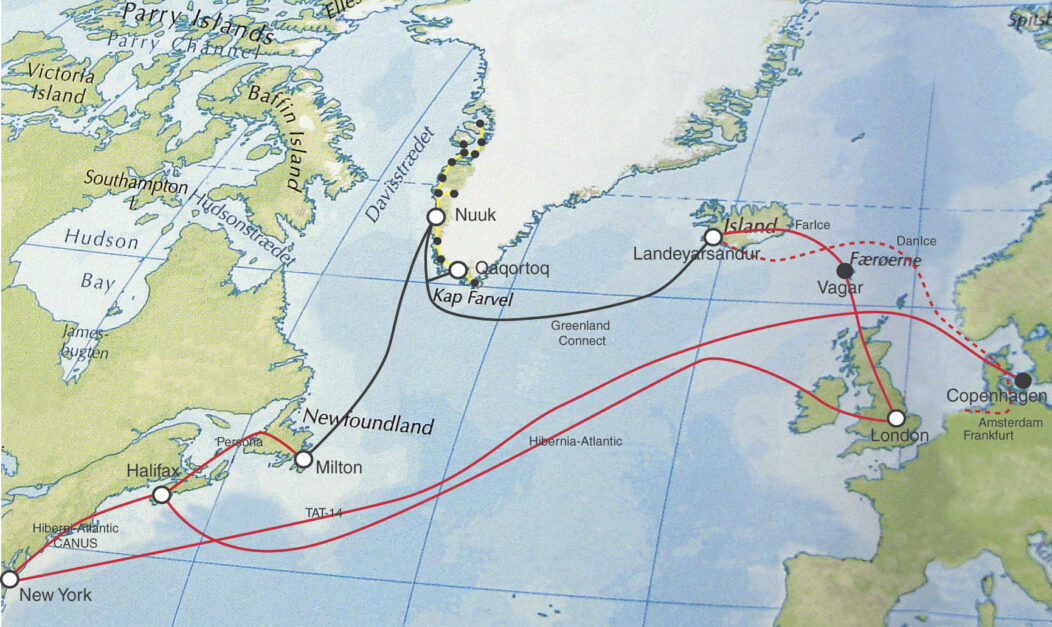
Until 2009 Greenland depended entirely on costly, high-latency satellite links; Tele Greenland A/S (now Tusass) laid the Greenland Connect submarine fibre-optic cable, financed partly by a EUR 20 million Nordic Investment Bank loan, for a total project cost of roughly EUR 90 million.
The cable went live on 23 March 2009, cutting Nuuk's latency by around 500ms; lit capacity has since been upgraded from 1.92 Tbps to 12.8 Tbps, and a 2017 extension (Greenland Connect North) brought fibre-grade broadband to four more west-coast towns.
Many smaller east-coast and northern settlements (e.g. Tasiilaq, Ittoqqortoormiit, Qaanaaq) still depend on satellite connectivity, a gap Tusass has since begun addressing through a separate 2025 low-earth-orbit satellite partnership.
Implementation detail (cost, timeline, staffing, conditions for success) is not yet available for this practice.
National / regional programmes
Indicative funding routes for practices of this type — always check each programme's current calls and eligibility rules.
Do you run this practice? Claim it — verified implementers get a public contact pathway and can propose corrections.
Where this practice's information was retrieved from, and when.
Nepal
Starting from a single WiFi link to Pokhara in 2002, teacher Mahabir Pun and volunteer engineers built the Nepal Wireless …
Mexico
TIC A.C. operates the world's largest community-owned mobile network, covering 63 indigenous localities across five Mexican states; its 2016 Social …
Bangladesh
Grameen Bank financed rural women to buy mobile phones on microcredit and resell calls to their villages. By 2006 the …
India
AirJaldi Networks builds solar-powered wireless broadband across rural India, registering roughly 200,000 users over 40 networks in nine states since …
Open full copilot Grounded in cited practices — always check the sources.