Top 6%
in this catalogue (246 scored practices)
Scores cluster high, so position within the catalogue is often more telling than the number alone.
Evidence of impact / measured public value2/3
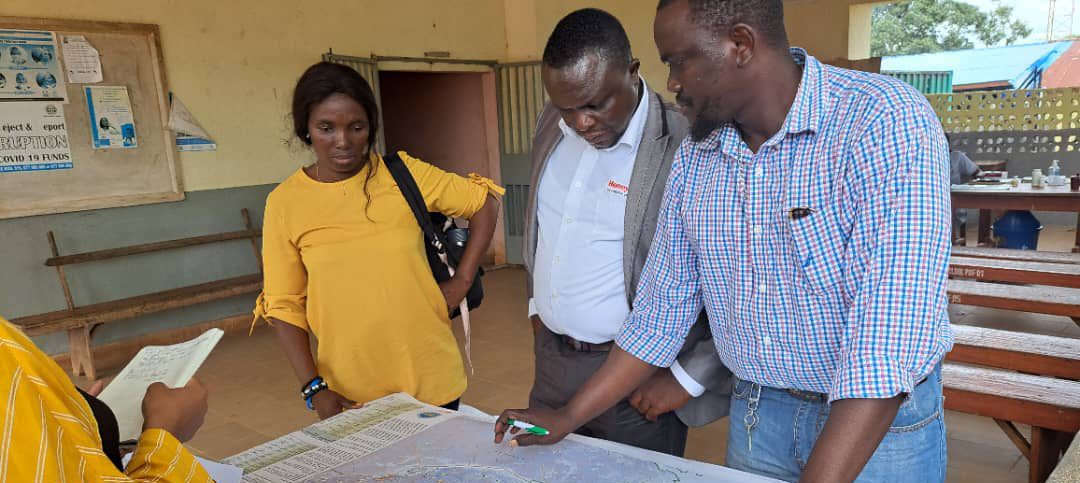
The 2022 HPV campaign administered 177,141 doses against a 153,991-girl target using GRID3-informed microplans, a real documented outcome, but no controlled study isolates the mapping technology's own causal contribution.
Transparency, fairness & accountability2/3
GRID3's methodology and multi-partner governance (Statistics Sierra Leone, Esri, Maxar, Fraym, GPSDD) are publicly documented, though no independent audit of the ML building-classification accuracy was found.
Transferability / demonstrated replication3/3
The same GRID3 methodology has been replicated across dozens of African countries with documented national deployments, showing strong demonstrated transferability.
Scalability beyond pilot3/3
The population layer already covers all of Sierra Leone at 1-hectare resolution and has been reused across multiple national campaigns (COVID-19 outreach, 2022 and 2025 HPV drives).
Governance, capability & sustainability2/3
The program runs under the formal leadership of the Government of Sierra Leone (Statistics Sierra Leone) with a sustained multi-year, multi-donor partnership, though in-country technical capacity to maintain the ML pipeline independently is not detailed in available sources.
Evidoria. GRID3 — Sierra Leone's AI-Powered Population Mapping for Vaccination Micro-Planning. Persistent ID: 166e5d83-dba1-4c1d-ae88-40de2c73ed9e.