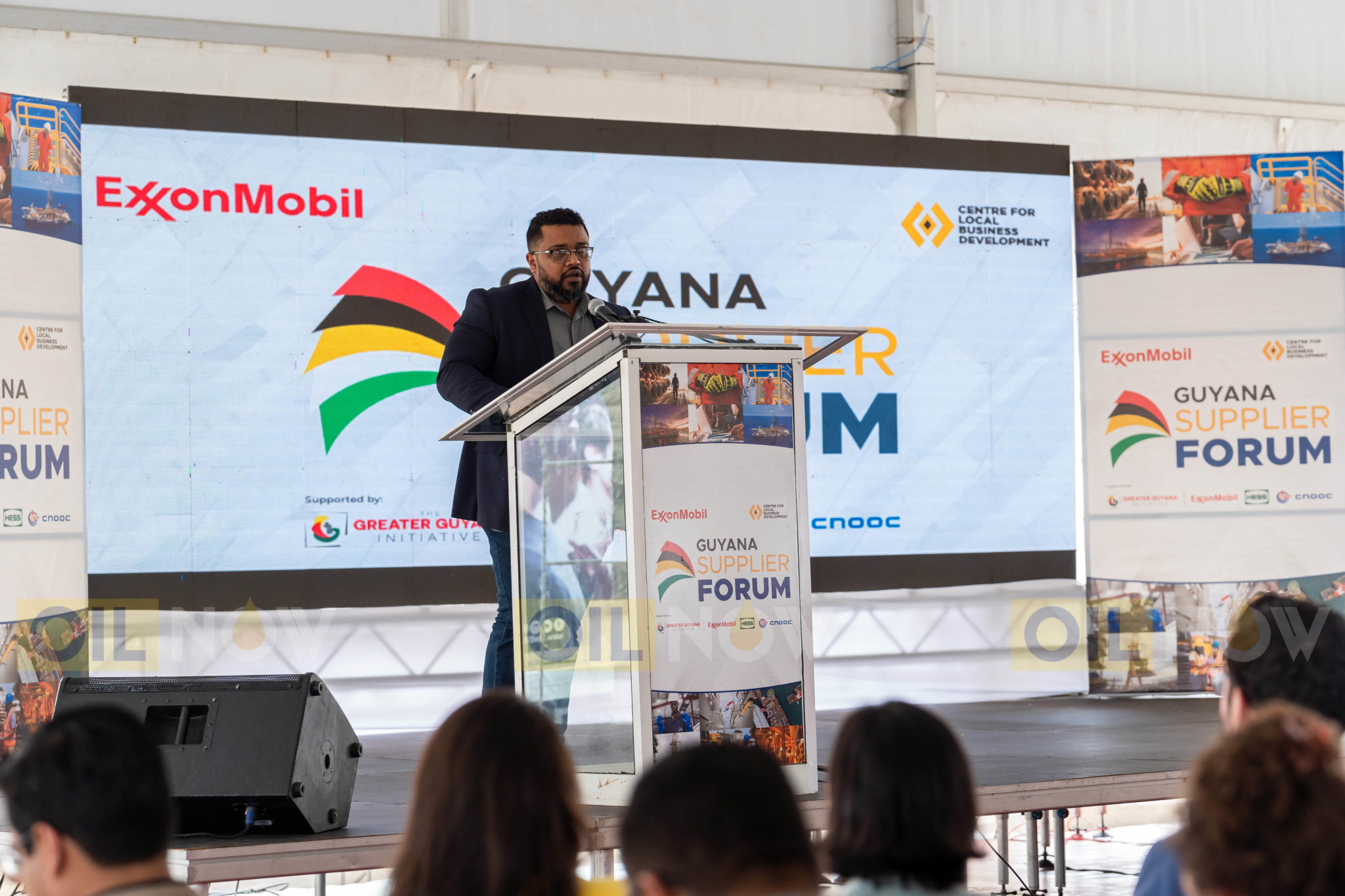
Guyana's 2021 Local Content Act requires oil operators to use, train and grow Guyanese-owned suppliers — 51% minimum local ownership, up to 90% local non-managerial staffing — channelling US$743 million to local firms in 2024 and certifying over 1,300 Guyanese companies by 2025.
743 US$ million
Local content expenditure (2024)
1.5+ US$ billion
Cumulative Guyanese procurement (2021–2025)
1,300+ firms
Certified local firms (September 2025)
Details
Maturity
Scaling
Promoter
Local Content Secretariat, Ministry of Natural Resources (Guyana)
Period
2021–2026 (ongoing)
Keywords
oil and gas, local content, SME development, workforce development
Context
Guyana's offshore oil production, led by an ExxonMobil-operated consortium, expanded rapidly after 2019, creating pressure to ensure the windfall built durable local business capacity rather than only enclave employment for foreign contractors. The 2021 Local Content Act responded by legally mandating Guyanese participation across 40 designated service and sub-sector categories, from catering and lay-down yards to engineering and logistics.
Activities
The Act is enforced by a dedicated Local Content Secretariat, which certifies eligible firms and sets tiered workforce quotas: a minimum 51% Guyanese beneficial ownership (voting rights) to qualify for procurement preferences, at least 75% Guyanese nationals in senior management, and up to 90% in non-managerial roles. From January 2026 the Secretariat also moved to faster digital certification, processing sole-proprietor applications within five working days and wholly Guyanese-owned entities within fifteen.
Results
Local content expenditure reached approximately US$743 million in 2024 alone, cumulative Guyanese procurement has surpassed US$1.5 billion since 2021, and the number of certified local firms rose from roughly 1,032 in November 2024 to more than 1,300 by September 2025, spanning construction, accommodation, catering and lay-down-yard services.
Conclusions
The figures are self-reported by the Secretariat rather than independently audited, and quota-based local content regimes generally carry a known risk: firms can satisfy ownership thresholds on paper while foreign partners retain effective control or margins, so sustained monitoring is needed to ensure the policy builds genuine Guyanese technical and managerial capability rather than pass-through arrangements.
Implementation
Indicative cost
Medium (€50k–€500k)
Time to results
Medium (1–3 years)
Staffing & skills
Enforced and administered by a dedicated Local Content Secretariat within the Ministry of Natural Resources, which certifies eligible firms and processes applications (5 working days for sole proprietors, 15 for wholly Guyanese-owned entities, from January 2026)
Conditions for success
Legally mandated, tiered local-ownership and staffing quotas (51% Guyanese ownership, 75% senior management, 90% non-managerial roles) across 40 designated service categories give the policy binding force rather than voluntary local-content targets
Digital certification and published expenditure tracking make compliance and progress visible
Common failure modes
Figures are self-reported by the Secretariat rather than independently audited
Quota-based local-content regimes carry a known risk that firms satisfy ownership thresholds on paper while foreign partners retain effective control or margins, requiring sustained monitoring
Where it fits
Governance type
national government regulatory regime
Scale
national (oil and gas sector)
Income level
upper-middle-income (rapidly growing oil economy)
Commonly funded by
National / regional programmes
Indicative funding routes for practices of this type — always check each programme's current calls and eligibility rules.
Do you run this practice?
Claim it —
verified implementers get a public contact pathway and can propose corrections.
Data sources
Where this practice's information was retrieved from, and when.