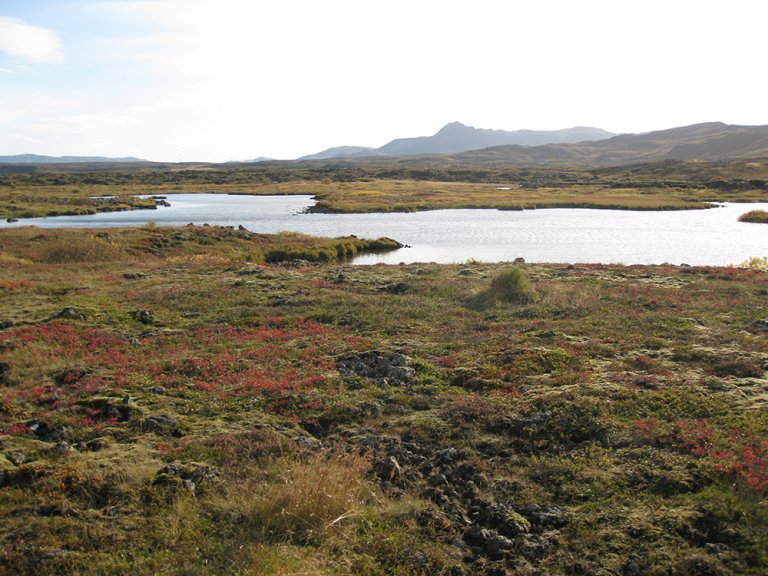
Heiðmörk is a municipal conservation and recreation area on the south-eastern edge of Reykjavík, spanning Reykjavík, Garðabær and Kópavogur and forming part of the capital region's green belt. Reykjavík City Council set it aside as a protected area and recreation park in 1947, and the Reykjavík Forestry Association, a non-profit citizen society, began planting in 1949–1950 and has managed it ever since; since 2013 under a management contract with the City of Reykjavík and the utility Reykjavík Energy. The area grew from about 1,350 ha to about 3,200 ha.
On land that was largely treeless and grazed, more than four million trees of some 26 species (Sitka spruce most prominent) have been planted, giving roughly 820 ha of conifer stands alongside about 650 ha of birch; the city reports cultivated forest on more than 20% of the area and wild birch on a similar share. Some 140 plots have been allotted to volunteer 'pioneer' groups who plant and tend them. Heiðmörk is the capital's main outdoor recreation area, with nearly 200 vascular plant species and more than 60 wild bird species recorded.
Heiðmörk also contains three water-protection zones and the wells and reservoirs that supply Reykjavík's drinking water, so land protection here doubles as source-water protection. No published inventory quantifies the carbon stored by the plantations or their effect on the aquifer.
The cautionary side: on 4 May 2021, during a drought, a wildfire burned about 56 ha of partly forested land, needing some 80 firefighters and a coast-guard helicopter; it came within about 300 m to a few kilometres of the capital's water-intake zones, and Iceland issued its first wildfire danger alert that spring. Afforestation and reduced grazing have increased fuel loads in a country with little wildfire tradition, so fire planning has become part of managing this urban forest.
Read the full analysis: https://reykjavik.is/en/heidmork
Where this practice's information was retrieved from, and when.