Leuven 2030 — quadruple-helix climate-neutral city experiment
Belgium
City-wide non-profit (founded 2013) steering Leuven toward climate neutrality via a quadruple-helix model of government, knowledge institutions, companies and citizens. …
Italy · Milan · See the Italy profile · See the Milan profile
Evidence: Observational / pre–post Top 3% 91/100 · Ask Evidence Copilot about this practice
Milan's Food Policy office, Politecnico di Milano and partners run hubs that recover unsold food from markets for redistribution; recovery grew from 615 tonnes (2023) to over 1,000 tonnes (2025), and the programme won the 2021 Earthshot Prize.
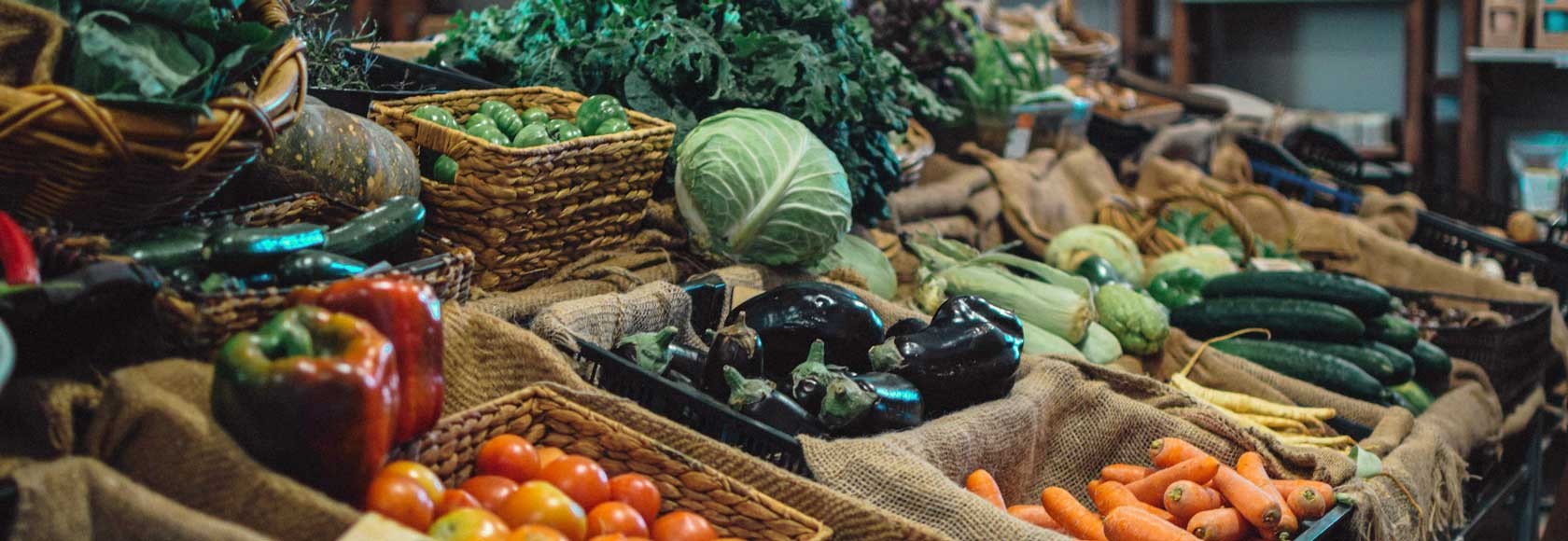
Launched in 2019 by the Municipality of Milan together with Fondazione Cariplo, the anti-poverty programme Programma QuBì, business association Assolombarda and Politecnico di Milano, the Hub di Quartiere ('neighbourhood hub') network is part of Milan's Food Policy — one of the first city-wide, cross-sector food-waste strategies in a major city, bringing together public agencies, wholesale markets, supermarkets, food banks, universities and neighbourhood charities under a shared framework.
To recover unsold or surplus food from markets, retailers and producers and redistribute it to households in need, building a formal multi-stakeholder food-recovery infrastructure rather than relying on ad hoc donations.
Each hub is a local collection and redistribution point where surplus food — including from the Sogemi wholesale food market's 'Foody Zero Sprechi' hub — is gathered, sorted and passed to third-sector associations for distribution. The network expanded from an initial handful of sites to eight active hubs by 2024.
Recovery volumes grew every year on record: 615 tonnes in 2023, 795.3 tonnes in 2024 (a 25% increase), and 1,057 tonnes in 2025. In 2024 the network reached 14,973 households (over 126,000 people, including 3,867 minors) through 176 partner associations, generating over 1.59 million meal-equivalents; by 2025 that had grown to roughly two million meals reaching an estimated 18,000 vulnerable families. Independent monitoring is published annually by Politecnico di Milano's School of Management. In 2021 the programme won The Earthshot Prize in the 'Build a Waste-Free World' category, selected from 750 candidate initiatives worldwide.
Milan's model demonstrates that a formal, multi-stakeholder food-recovery infrastructure can scale food redistribution year over year while directly targeting low-income households. Its methodology has been documented by international observers (including the US-based NRDC) as a reference case, though systematic replication data from other cities was not found in public sources.
Philanthropic / foundation funding National / regional programmes
Indicative funding routes for practices of this type — always check each programme's current calls and eligibility rules.
Do you run this practice? Claim it — verified implementers get a public contact pathway and can propose corrections.
Where this practice's information was retrieved from, and when.
Belgium
City-wide non-profit (founded 2013) steering Leuven toward climate neutrality via a quadruple-helix model of government, knowledge institutions, companies and citizens. …
Germany
Halle 2 is a municipal-led second-hand store combining circular economy principles with the aim of actively supporting sustainable lifestyles by …
Netherlands
A former Rotterdam swimming pool turned circular-economy hub where 55+ entrepreneurs turn each other's waste into raw materials — a …
Finland
Tampere is building Hiedanranta, a 100-hectare district planned for 25,000 residents, as an open testbed for circular-economy, energy and smart-city …
Open full copilot Grounded in cited practices — always check the sources.