Single Parent's Child Allowance — Estonia's Flat-Rate Support Amid Rising Lone-Parent Poverty
Estonia
Estonia pays parents raising a child without a second parent a flat €100/month allowance. Despite this, Statistics Estonia found 38% …
France · Paris · See the France profile · See the Paris profile
Evidence: Observational / pre–post Top 56% 63/100 · Ask Evidence Copilot about this practice
Since Jan 2023, France's family-benefit funds (CAF/MSA) automatically collect and transfer child-support payments for separating parents, replacing risky direct transfers. From 2017–2023 the national recovery rate for maintenance arrears rose from 62.5% to 70%.
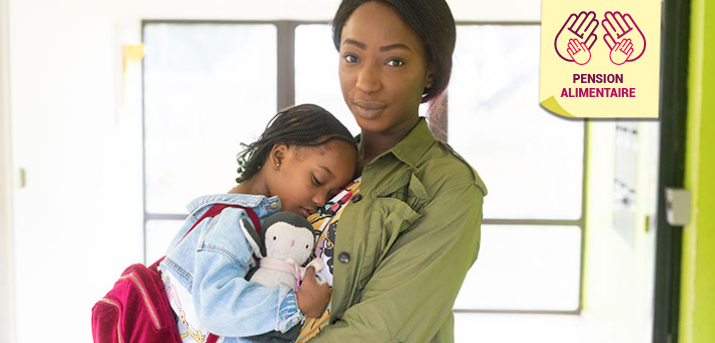
Unpaid child support is one of the largest drivers of poverty among lone-parent households in France, over 80% of whom are headed by mothers. Historically, maintenance was paid directly between parents, leaving the custodial parent to chase non-payment through the courts.
Starting in October 2020 for households already facing arrears, made the default from January 2021, and automatic for all new child-support rulings from January 2023, France's family-allowance funds (CAF and MSA), through the national ARIPA service, now collect the maintenance payment from the paying parent each month and transfer it to the receiving parent, paying a bridging allowance of EUR 116 per child when a payment is missed.
A 2024 CNAF evaluation found the national recovery rate for maintenance arrears rose from 62.5% in 2017 to 70% by end of 2023, with about 430,000 maintenance payments processed monthly and 640,000 people supported once the bridging allowance is included, as of November 2025. The 2021 budget allocated EUR 120 million to fund the bridging-allowance component.
The mechanism is a universal, gender-neutral administrative reform rather than a measure explicitly framed around gender equality, even though most beneficiaries are single mothers.
National / regional programmes
Indicative funding routes for practices of this type — always check each programme's current calls and eligibility rules.
Do you run this practice? Claim it — verified implementers get a public contact pathway and can propose corrections.
Where this practice's information was retrieved from, and when.
Estonia
Estonia pays parents raising a child without a second parent a flat €100/month allowance. Despite this, Statistics Estonia found 38% …
Zambia
Zambia's GEWEL programme (World Bank/GoZ) delivers livelihood packages to poor rural women and school stipends to vulnerable girls. By end-2024: …
Pakistan
Pakistan’s BISP pays quarterly grants to >6.1 million female household heads across 149 districts. Oxford Policy Management’s evaluation (2010–2017) found …
Egypt
Egypt's flagship cash-transfer scheme (2015-present): 4.67 million households enrolled, 75% of card holders women. Two IFPRI impact evaluations confirm 8.4% …
Open full copilot Grounded in cited practices — always check the sources.