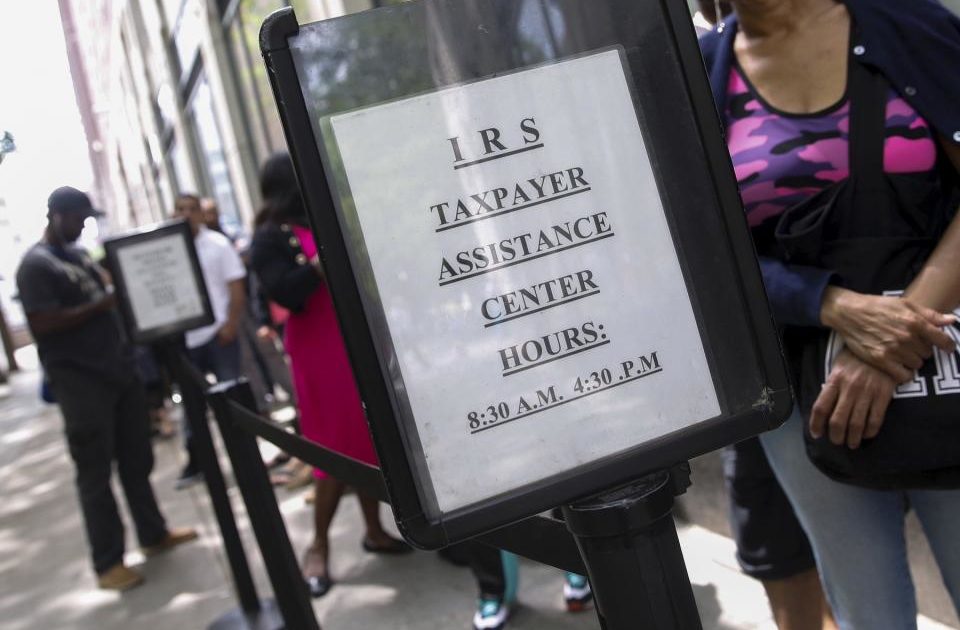
Although IRS audit selection does not use race, a Stanford-led study found Black taxpayers were audited 2.9–4.7 times as often as others, driven by EITC audits; the IRS Commissioner confirmed the findings in May 2023.
A Stanford RegLab team (Elzayn, Smith, Hertz, Ramesh, Fisher, Ho, Goldin) working with IRS data found that, even though the IRS neither records nor uses race in audit selection, Black taxpayers were audited at 2.9 to 4.7 times the rate of non-Black taxpayers. Because race is unobserved, the authors used a partial-identification method to bound the estimate. The disparity was traced largely to audits of Earned Income Tax Credit claimants and to selection algorithms tuned to the likelihood of finding any underreporting rather than its magnitude. The authors found no evidence that Black taxpayers cheat more; a magnitude-focused approach would bring audit rates much closer to the benchmark. In a May 2023 letter to Congress, IRS Commissioner Danny Werfel said an initial internal review supported the study's conclusion, named the evaluation of EITC audit-selection algorithms a top priority and committed to changes before the next filing season. The paper was later published in the Quarterly Journal of Economics. Published evidence of the effect of the subsequent changes was not found, so this is best read as a documented audit-and-confirmation case rather than a proven remedy.
Read the full analysis: https://law.stanford.edu/press/irs-confirms-stanford-study-of-racial-bias-in-audits/
Implementation
Implementation detail (cost, timeline, staffing, conditions for success) is not yet available for this practice.
Do you run this practice?
Claim it —
verified implementers get a public contact pathway and can propose corrections.
Data sources
Where this practice's information was retrieved from, and when.
Since 2011, Ireland's Revenue Commissioners have used AI risk scoring (REAP) to target tax-compliance interventions; 290,000 data-analytics-driven interventions in 2023 …
Amsterdam spent about five years and roughly €535,000 building Smart Check, a welfare-fraud screening algorithm engineered to avoid discrimination. A …