EMBRAPII — Brazil's Shared-Risk Industry–Research Innovation Financing Model
Brazil
Brazil's federal EMBRAPII co-funds R&D between research institutes and firms, splitting risk three ways. A first evaluation of 179 funded …
United Kingdom · Swindon · See the United Kingdom profile · See the Swindon profile
Evidence: Observational / pre–post Top 9% 86/100 · Ask Evidence Copilot about this practice
Innovate UK's KTP scheme embeds graduate associates in businesses to apply university research. An independent evaluation of 2,000 projects (2010–2020) found £1.7–2.3bn net GVA — £4.20–£5.50 per £1 invested — and 83% of firms reporting productivity or turnover gains.
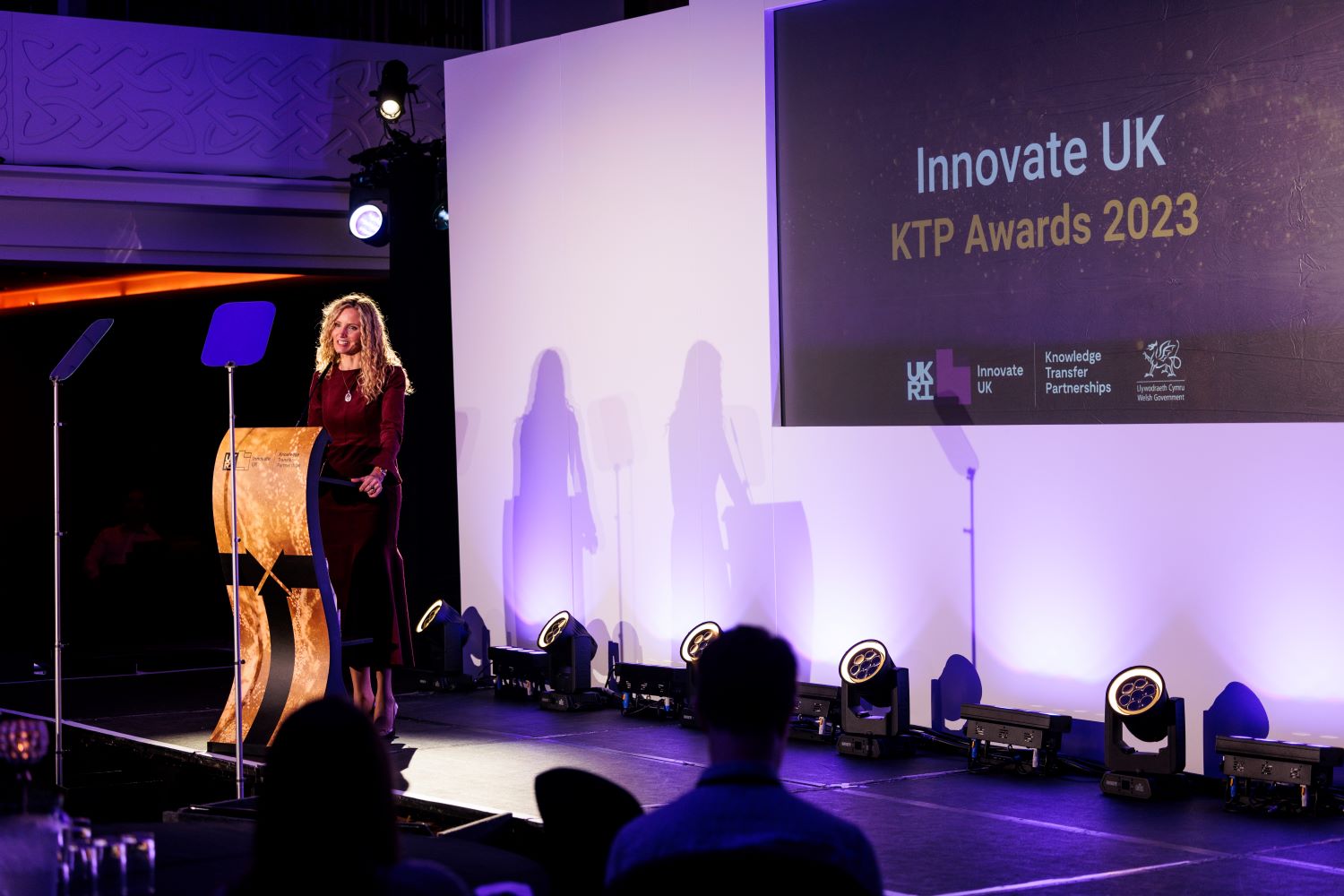
Knowledge Transfer Partnerships (KTP) address the gap between university research and commercial application in UK businesses by embedding a recent graduate — the 'associate' — inside a company for one to three years to work with an academic knowledge base such as a university, college or research organisation on a specific business problem, with Innovate UK part-funding the placement.
The scheme aims to transfer specialist university knowledge into UK firms to raise productivity, profitability, employment or turnover, while giving knowledge-base partners a better understanding of industry challenges.
Since 1975, KTP has run roughly 2,000 tripartite projects between 2010 and 2020 alone, worth about £200 million in grant funding, involving 136 different knowledge bases and 3,000 graduate associates.
An independent evaluation for UKRI, carried out by SQW with Qa Research and published in October 2023, combined econometric analysis, monitoring data, business surveys and case studies across the 2010–2020 cohort. It estimated £1.7–2.3 billion in net gross value added for the UK economy, equivalent to £4.20–£5.50 in net economic benefit per £1 invested. 83% of participating businesses reported gains in productivity, profitability, employment or turnover, and 92% of knowledge-base partners reported an improved understanding of industry challenges. 75% of beneficiary businesses and 68% of knowledge-base partners were located outside London and the Greater South-East.
KTP has operated continuously since 1975 and remains a mature, nationally distributed scheme rather than a novel intervention. Aston University, the largest single KTP provider, separately reports a portfolio-level return above 1,700% for host businesses after three years — a promotional, institution-level figure that is directionally consistent with, but not independently audited to the same standard as, the national evaluation.
National / regional programmes
Indicative funding routes for practices of this type — always check each programme's current calls and eligibility rules.
Do you run this practice? Claim it — verified implementers get a public contact pathway and can propose corrections.
Where this practice's information was retrieved from, and when.
Brazil
Brazil's federal EMBRAPII co-funds R&D between research institutes and firms, splitting risk three ways. A first evaluation of 179 funded …
Canada
Founded in 1999, Mitacs now funds industry-linked graduate internships across all 198 Canadian post-secondary institutions — $292.7m invested in 7,202 …
Sierra Leone
Sierra Leone's presidential innovation directorate built a biometric national digital ID now held by over 5 million citizens, using local …
New Zealand
Since 2011, KiwiNet has pooled New Zealand's university and Crown Research Institute commercialisation efforts, backing 82+ spin-outs and $560m in …
Open full copilot Grounded in cited practices — always check the sources.