Kopuatai Peat Dome Ramsar Wetland Management (Waikato, New Zealand)
New Zealand
DOC manages the 10,201 ha Kopuatai Peat Dome, New Zealand's largest unmodified restiad bog and a Ramsar site since 1989, …
Australia · Jindabyne · See the Australia profile
NSW has removed over 9,000 feral horses from Kosciuszko National Park toward a legal target of 3,000 by 2027; a 2023 RMIT study found horse-trampled Sphagnum bogs are net carbon sources while undisturbed bogs remain sinks, and 2024 surveys show early recovery signs.
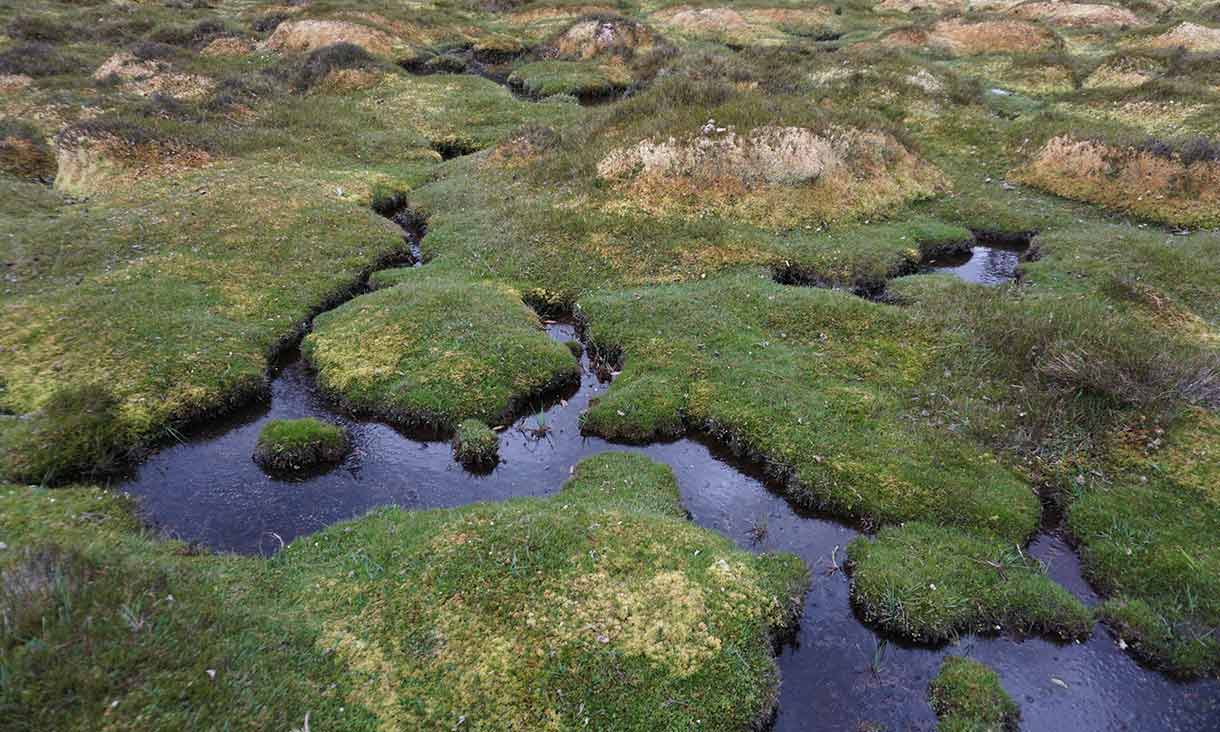
Kosciuszko National Park in the Snowy Mountains holds most of mainland Australia's Sphagnum peat bogs and fens -- about 6,037 of the roughly 7,985 hectares mapped across the wider Snowy Mountains region, storing an estimated 3.55 million tonnes of carbon. Decades of trampling, grazing and wallowing by an expanding feral horse population have degraded many of these bogs, compacting peat and eroding stream banks.
Reduce the park's feral horse population to a legislated target under the 2021 Kosciuszko National Park Wild Horse Heritage Management Plan, to allow degraded Sphagnum bogs and peatlands to recover.
Under the 2021 management plan and a 2024 amendment permitting aerial culling, the NSW National Parks and Wildlife Service has removed more than 9,000 feral horses in 18 months through aerial and ground shooting, trapping and rehoming, working toward a legislated target of 3,000 horses across the park by 30 June 2027 (down from a population that had exceeded 18,000).
A 2023 RMIT University field study (Treby & Grover, Journal of Environmental Management) measured greenhouse-gas flux at 12 Sphagnum bogs in Kosciuszko over seven days in March 2022 and found sites with feral horses present were net carbon sources -- losing 4.83 g CO2-e/m²/day from moss-covered ground and 8.18 g CO2-e/m²/day from bare, trampled ground -- while horse-free bogs remained net carbon sinks. NSW's 2024 population survey separately reported reduced bare ground, increased vegetation cover and less pugging and trampling of sub-alpine stream banks in areas where horse numbers have already fallen, with before/after photography documenting recovery at sites such as Sally Tree Creek on Currango Plain.
The evidence directly links horse removal to reduced localised carbon loss and physical bog recovery, but no whole-of-park tonnage of avoided emissions or peatland-area-wide biodiversity recovery has yet been published, and large-scale horse culling remains a socially and politically contested method in Australia.
Where this practice's information was retrieved from, and when.
New Zealand
DOC manages the 10,201 ha Kopuatai Peat Dome, New Zealand's largest unmodified restiad bog and a Ramsar site since 1989, …
Argentina
On 6 December 2022 Tierra del Fuego's legislature unanimously created a 10,341 km2 protected area over Península Mitre, safeguarding ~2,400 …
Malaysia
Since 2008, Selangor's Forestry Department and NGO Global Environment Centre have rewetted and replanted Raja Musa Forest Reserve, Peninsular Malaysia's …
Ireland
Ireland's largest peatland restoration: 33,000 ha across 82 midland bogs, €108M EU-funded. By end 2024: 18,861 ha done (57%). Net …
Open full copilot Grounded in cited practices — always check the sources.