Kulekhani Hydropower Watershed — Nepal's Statutory Royalty-Sharing PES Scheme
Nepal
Nepal channels 12% of Kulekhani hydropower royalties to Makwanpur district, split 50/50 between upstream and downstream communities — a long-running …
Lesotho · Maseru · See the Lesotho profile · See the Maseru profile
Evidence: Descriptive / self-reported Top 100% 7/100 · Ask Evidence Copilot about this practice
Under a 1986 treaty, South Africa pays Lesotho roughly R4bn (US$240m) a year — about 15% of Lesotho's budget — for c.800 million m3 of water transferred annually to the Vaal system, while affected highland communities report inadequate compensation and environmental degradation.
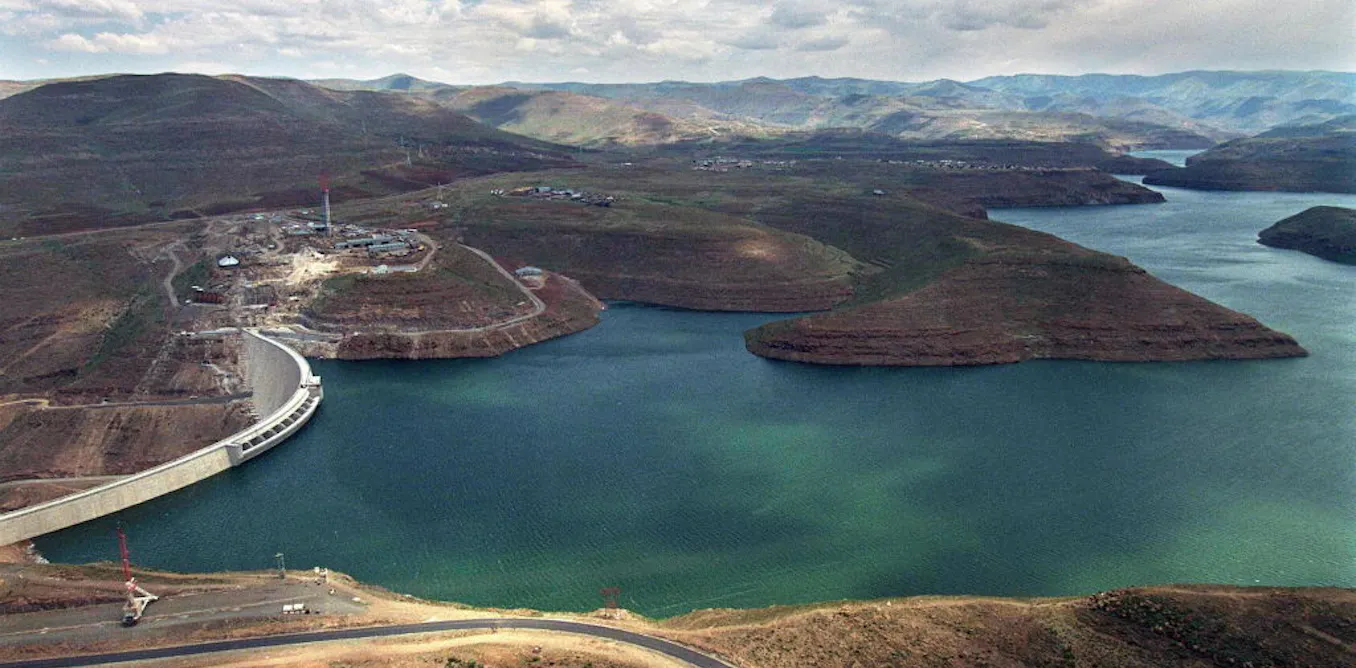

Under the 1986 Treaty on the Lesotho Highlands Water Project, the Lesotho Highlands Development Authority (LHDA) and South Africa's Trans-Caledon Tunnel Authority jointly operate a system of dams and more than 120km of 5-metre-diameter tunnels that transfer highland river water from Lesotho into South Africa's Vaal River system. The Katse and Mohale dams are complete and operating; the Polihali dam (Phase II) is under construction, targeted for completion around 2030.
In exchange for roughly 800 million cubic metres of water transferred a year — supplying about 60% of the water needs of Johannesburg's roughly 5.5 million residents — South Africa pays Lesotho a royalty now approaching R4 billion (around US$240 million) a year, equivalent to roughly 15% of Lesotho's government budget, up from R780 million (about 5% of state income outside taxes) in 2015. The scheme's benefits to Lesotho's national treasury are well documented, but benefits to the highland communities whose catchments generate the water are contested: communities displaced during the first two construction phases report inadequate compensation and resettlement to areas lacking electricity, water and sanitation. In November 2025, representatives of 72 communities across 18 settlements filed a complaint with the African Development Bank alleging stream pollution, farmland loss, forest degradation and reduced pasture access without adequate consultation or benefit-sharing.
National / regional programmes
Indicative funding routes for practices of this type — always check each programme's current calls and eligibility rules.
Do you run this practice? Claim it — verified implementers get a public contact pathway and can propose corrections.
Where this practice's information was retrieved from, and when.
Nepal
Nepal channels 12% of Kulekhani hydropower royalties to Makwanpur district, split 50/50 between upstream and downstream communities — a long-running …
Costa Rica
Costa Rica's national PES, created by the 1996 Forest Law, has paid landowners US$565M to conserve 1.15M+ hectares for carbon, …
Japan
Since 2019, Japan distributes ¥40–62 billion/year to municipalities and prefectures for managing private plantation forests; from April 2024 funded by …
Argentina
Argentina's 2007 Native Forest Law mandates 0.3% of the federal budget as direct payments to landowners and communities conserving Category …
Open full copilot Grounded in cited practices — always check the sources.