Selvagem Grande Rabbit & Mouse Eradication — Restoring a Strict Nature Reserve
Portugal
Madeira's Natural Park removed European rabbits and house mice from the 270 ha Selvagem Grande island using ~17,000 brodifacoum bait …
Malta · Filfla · See the Malta profile
Evidence: Observational / pre–post Top 77% 33/100 · Ask Evidence Copilot about this practice
BirdLife Malta's EUR 1.26M EU LIFE project (2015-2020) ran rat control at 8 sites, 5 within Natura 2000, keeping Filfla islet rat-free and raising Yelkouan shearwater reproductive success from 4.65% to 7.06% in three monitored colonies, while cutting coastal light pollution at te
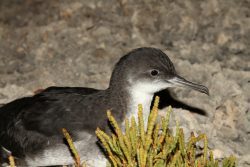
MT00Malta holds over 10% of the global breeding population of the Yelkouan shearwater, a species threatened by invasive rats and coastal light pollution.
LIFE Arcipelagu Garnija (LIFE14 NAT/MT/000991), implemented by BirdLife Malta from September 2015 to August 2020 with a total eligible budget of EUR 1,261,940 (EU contribution EUR 757,220), targeted these threats to the Yelkouan shearwater.
The project ran rat control and localised eradication at eight sites where rat presence had been verified, including five Natura 2000 areas, and maintained the Filfla islet -- which holds the largest Maltese storm-petrel colony -- in rat-free condition through ongoing biosecurity. It also reduced coastal light pollution at ten breeding-colony sites, including converting 34 lights at Cirkewwa ferry terminal, and secured designation of a new Natura 2000 site (Wied il-Ghasri), creating 19 full-time positions during implementation and two permanent posts (a light-pollution officer and a field warden) afterwards.
According to the project's official results, rat control raised the reproductive success of Yelkouan shearwater in three monitored colonies from 4.65% to 7.06% between 2016 and 2020, alongside separately reported breeding-success rates reaching a species-satisfactory threshold (>=75%) in some colonies. Converting 34 lights at Cirkewwa cut light pollution there by roughly half.
The project itself notes that annual breeding success fluctuated year to year rather than rising monotonically, so the reported gain should be read as a five-year net change rather than a steady trend.
Indicative funding routes for practices of this type — always check each programme's current calls and eligibility rules.
Do you run this practice? Claim it — verified implementers get a public contact pathway and can propose corrections.
Where this practice's information was retrieved from, and when.
Portugal
Madeira's Natural Park removed European rabbits and house mice from the 270 ha Selvagem Grande island using ~17,000 brodifacoum bait …
Spain
Canary Islands authorities eradicated feral cats from Alegranza (by 1998) and 127 European rabbits from Montaña Clara (2000-2001, EUR 629,306) …
Mexico
Since the late 1990s, Mexican NGO GECI has removed 60 populations of 13 invasive mammal species from 39 Pacific islands, …
Ecuador
Ecuador's Galápagos authorities and NGO partners aerially and manually baited the entire 17,250 ha Floreana Island against invasive rats, mice …
Open full copilot Grounded in cited practices — always check the sources.