LIFE PonDerat — Black Rat Eradication on Inhabited Ventotene Island (Pontine Archipelago, Italy)
Italy
EU LIFE project (2015–2022, €1.79M) eradicated black rats from inhabited Ventotene — among the largest inhabited islands ever freed of …
Portugal · Faro · See the Portugal profile
Evidence: Observational / pre–post Top 40% 47/100 · Ask Evidence Copilot about this practice
EU LIFE programme (2019–2025, LIFE18 NAT/PT/000927) removed feral cats and invasive plants from Ria Formosa's barrier islands; Audouin's Gull nests rose from ~2,500 to over 7,000, and a rehab centre treated 7,562 seabirds, releasing 3,208.
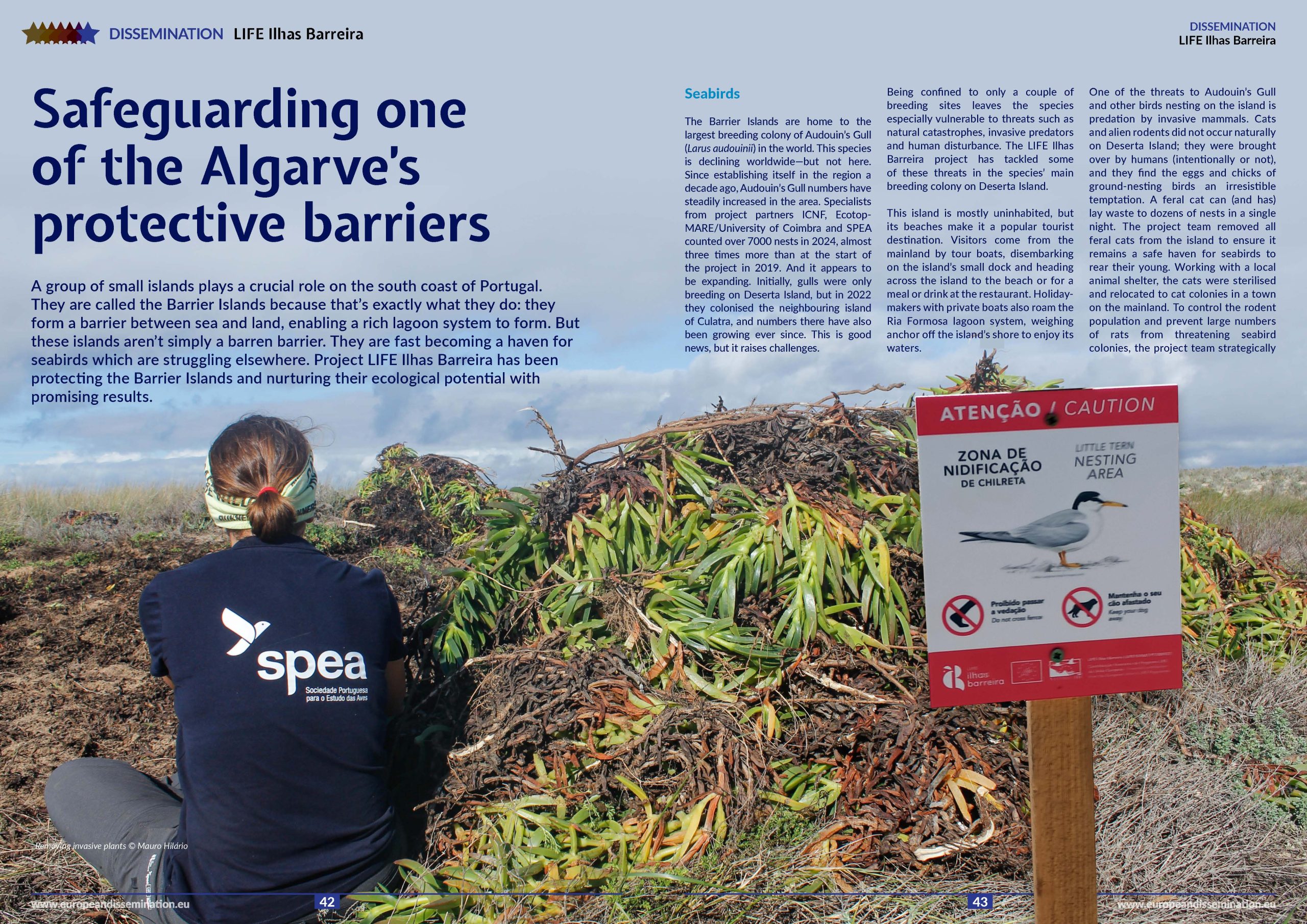
PT15The Ria Formosa lagoon's barrier islands (Culatra, Armona, Tavira, Cabanas, Deserta) and the Anção and Cacela peninsulas, in Portugal's Algarve, shelter Iberia's largest Audouin's Gull colony and important Little Tern nesting beaches, but predation by feral cats, invasive plants and human disturbance threatened breeding success.
From 2019 to 2025, the EU LIFE-funded project 'LIFE Ilhas Barreira' (LIFE18 NAT/PT/000927), coordinated by SPEA with ICNF, Animaris, RIAS/Aldeia, CCMAR-UAlg and CIMA-UAlg, and co-funded by Portugal's Fundo Ambiental, removed all feral cats from Ilha Deserta, cleared invasive Acacia, century plant and Hottentot fig from 1.6 hectares of grey dune habitat, fenced and signposted Little Tern nesting beaches, and modernised the RIAS wildlife-rehabilitation centre.
Audouin's Gull nests rose from roughly 2,500 in 2019 to over 7,000 by 2024, with the colony naturally spreading from Deserta to Culatra, reducing the risk of a single-site catastrophe. Between 2019 and 2024 the RIAS centre treated 7,562 injured or oiled seabirds and released 3,208 back to the wild, and the project's environmental-education programme reached 6,807 schoolchildren across the Algarve.
The project concluded in 2025; sustaining predator-free status on a chain of low sandy barrier islands crossed daily by boat traffic and reshaped by storms will require ongoing biosecurity funding beyond the LIFE grant period, and public sources do not disclose the project's total budget.
National / regional programmes LIFE Programme
Indicative funding routes for practices of this type — always check each programme's current calls and eligibility rules.
Do you run this practice? Claim it — verified implementers get a public contact pathway and can propose corrections.
Where this practice's information was retrieved from, and when.
Italy
EU LIFE project (2015–2022, €1.79M) eradicated black rats from inhabited Ventotene — among the largest inhabited islands ever freed of …
Fiji
In 2008, BirdLife International's Fiji Programme and two customary landowning clans eradicated invasive Pacific rats from all seven main Ringgold …
Australia
Australia's Indigenous Rangers Program funds 40+ ranger groups across northern Australia to control feral pigs, cats and invasive weeds like …
Romania
The EU-funded GreenDanube LIFE project (2006-2010) cleared 12.2 hectares of invasive Amorpha fruticosa and added 953.5 hectares of Danube floodplain …
Open full copilot Grounded in cited practices — always check the sources.