LIFE for MIRES — Trans-boundary Peatland Restoration in Šumava & Bavarian Forest (Czech Republic–Germany)
Czechia
The EU LIFE for MIRES project (2018–2024, €5.85M) rewetted ~2,200 ha of bogs and fens across Czechia's Šumava and Germany's …
France · Frasne · See the France profile
Evidence: Descriptive / self-reported Top 7% 67/100 · Ask Evidence Copilot about this practice
EU LIFE programme (2014-2021) that rehabilitated 55 peatlands across 14 Natura 2000 sites in the French Jura, neutralising 26 km of drains and restoring 15 km of watercourses on an EUR 8.05M budget; a follow-on LIFE RestituO project (2022-2029) targets 70 more degraded sites.
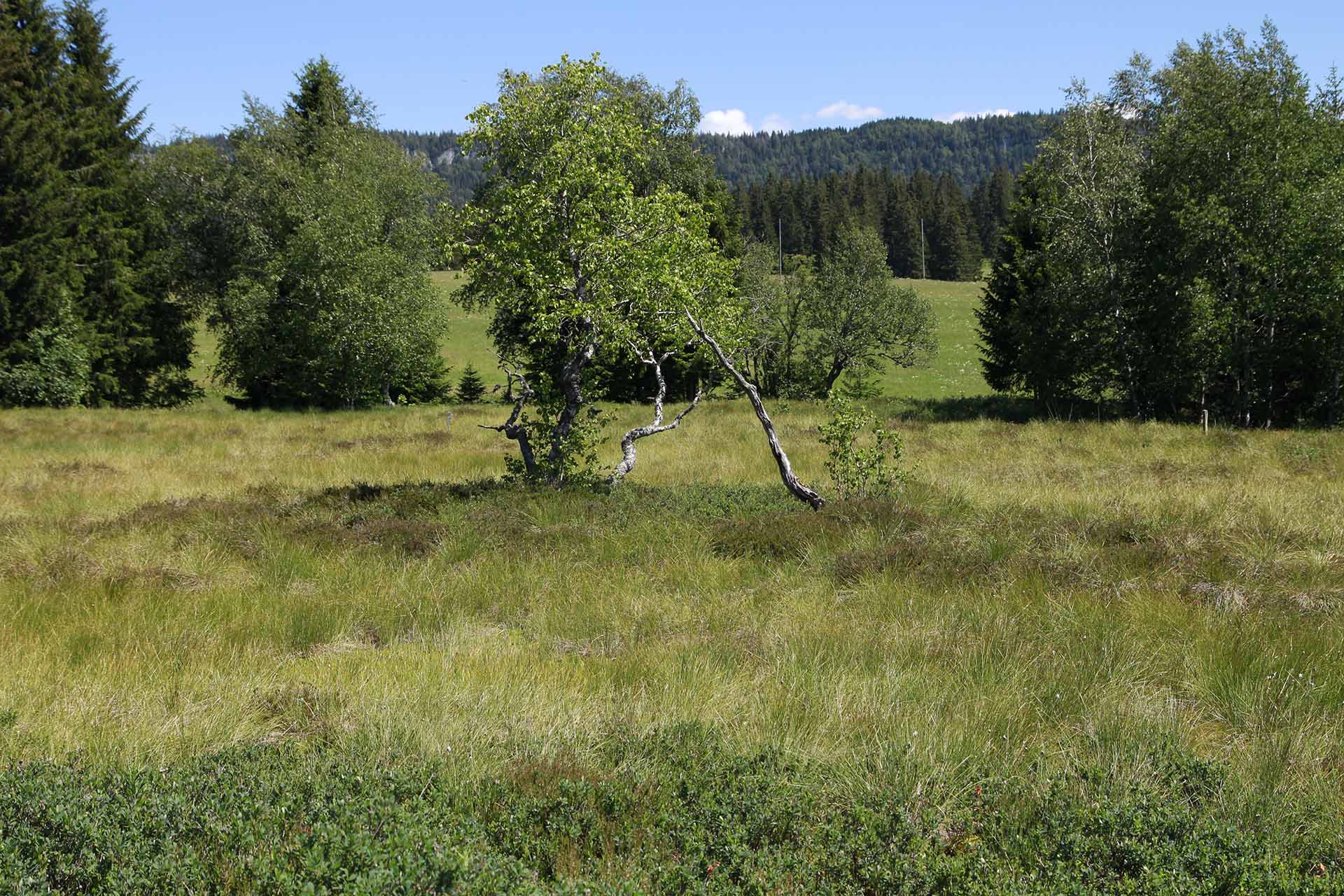
FRC2Between June 2014 and November 2021, the Conservatoire d'espaces naturels de Franche-Comté coordinated the LIFE Tourbières du Jura programme, rehabilitating 55 degraded peatlands across 14 Natura 2000 sites in the Doubs and Jura departments of the French Jura massif. The EUR 8.05M programme was co-financed 46% by the EU LIFE+ programme, 40% by the Rhône Méditerranée Corse Water Agency, and the remainder by regional and departmental councils and project partners.
Rehabilitate degraded peatland hydrology across Natura 2000 sites in the French Jura to re-establish open, water-saturated, peat-forming conditions.
Concrete works included neutralising 26 km of drainage ditches, restoring 15 km of watercourses, rehabilitating 33 hectares of former peat-extraction zones and reopening 57 hectares of encroached wooded cover. Beyond the physical works, the programme engaged around 7,000 residents and elected officials, 1,050 schoolchildren, 400 students and 1,060 environmental professionals through site visits and outreach events.
The original 2014-2021 programme's public reporting emphasises hectares and kilometres of physical restoration rather than a verified cumulative tonnes-of-CO2 figure, so the carbon evidence rests on restored hydrology as a proxy rather than direct flux measurement. A follow-on project, LIFE RestituO (2022-2029), is now extending hydrological restoration to 70 further degraded sites in the same departments, with a stated objective of reducing GHG emissions by 5.03-31.40 t CO2e/ha/year depending on a site's initial degradation.
Multi-source financing and a funded 2022-2029 follow-on project demonstrate institutional continuity, but the practice's carbon and biodiversity outcomes for the original phase are reported as restoration outputs rather than independently monitored ecological trends.
LIFE Programme National / regional programmes
Indicative funding routes for practices of this type — always check each programme's current calls and eligibility rules.
Do you run this practice? Claim it — verified implementers get a public contact pathway and can propose corrections.
Where this practice's information was retrieved from, and when.
Czechia
The EU LIFE for MIRES project (2018–2024, €5.85M) rewetted ~2,200 ha of bogs and fens across Czechia's Šumava and Germany's …
Estonia
EU LIFE-funded programme (2015-2021, EUR 2.8M) rewetted 7,900 ha of degraded Estonian mires — beating its 5,800 ha target — …
Estonia
Estonia's 2015–2021 LIFE Mires programme restored natural water conditions on nearly 8,000 hectares of drained peatland by closing 317km of …
Poland
The EU-funded LIFE Peat Restore project rewetted about 1,350 ha of degraded fen in Poland (part of 5,300 ha across …
Open full copilot Grounded in cited practices — always check the sources.