KovsieChat — University of the Free State's AI Chatbot Scales Student Support in Bloemfontein
South Africa
The University of the Free State grew a COVID-era chatbot into KovsieChat, an AI assistant for admissions, registration and financial-aid …
Singapore · Singapore · See the Singapore profile · See the Singapore profile
Evidence: Descriptive / self-reported Top 89% 27/100 · Ask Evidence Copilot about this practice
Nanyang Technological University's Lyon Bot, built on Google Cloud's Dialogflow, launched in 2020 to handle freshmen queries. A 2025 Gemini-based upgrade now saves NTU staff an estimated 14.5 days of administrative work per month.
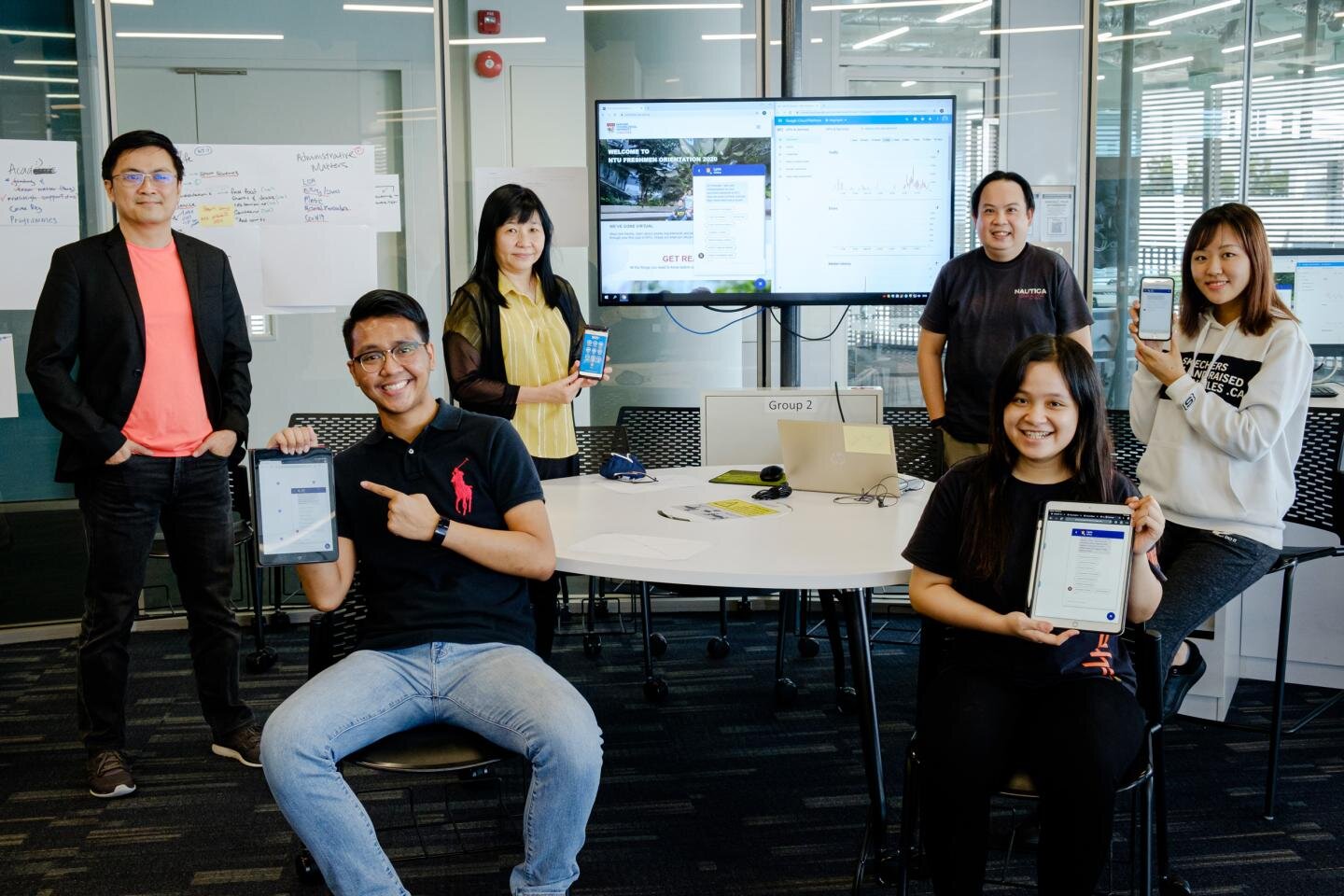
NTU Singapore, in partnership with Google Cloud, launched the "Lyon" virtual assistant in August 2020 to help roughly 6,000 incoming freshmen navigate course registration, timetables and campus services, becoming the first higher-education institution in Southeast Asia to deploy Google Cloud's Dialogflow Mega Agent.
The initiative aimed to give incoming students round-the-clock automated support for administrative queries, and later to move from a purely intent-based chatbot to a hybrid generative-AI approach capable of handling more complex enquiries such as student housing.
The original Dialogflow-based bot processed up to 20,000 distinct query intents; in 2025, NTU partnered with AI vendor CloudMile to rebuild the chatbot on Google's Gemini large language model.
NTU's CIO reported the Gemini-based upgrade now saves the university around 14.5 days of staff work every month, alongside improved conversational accuracy and reduced error rates.
Public reporting documents adoption scale and operational time savings, but no independent third-party evaluation of response accuracy or student-satisfaction outcomes has been published, so the effect on student learning, as opposed to administrative efficiency, remains undemonstrated.
National / regional programmes Own resources / municipal budget
Indicative funding routes for practices of this type — always check each programme's current calls and eligibility rules.
Do you run this practice? Claim it — verified implementers get a public contact pathway and can propose corrections.
Where this practice's information was retrieved from, and when.
South Africa
The University of the Free State grew a COVID-era chatbot into KovsieChat, an AI assistant for admissions, registration and financial-aid …
Vietnam
HCMUT built URAG, a two-tier retrieval-and-rules chatbot for admissions questions, that scored 62.8% accuracy on 500 real applicant queries versus …
Portugal
ISEG (Universidade de Lisboa) launched what it calls Portugal's first generative-AI higher-education chatbot, built with Noesis on Azure OpenAI to …
Peru
A pre-registered World Bank RCT of an Anthropic Claude-powered AI career coach and math tutor across up to 110 Lima …
Open full copilot Grounded in cited practices — always check the sources.