AI-Powered University Orientation Platform — Algeria's National Baccalaureate Placement System
Algeria
Algeria's Ministry of Higher Education used an AI matching algorithm for the first time in 2026 to place 391,018 of …
Vietnam · Ho Chi Minh City · See the Vietnam profile · See the Ho Chi Minh City profile
Evidence: Quasi-experimental Top 81% 33/100 · Ask Evidence Copilot about this practice
HCMUT built URAG, a two-tier retrieval-and-rules chatbot for admissions questions, that scored 62.8% accuracy on 500 real applicant queries versus 54.4% for GPT-4o, 50.2% for Claude 3.5 Sonnet and 44.0% for Gemini 1.5 Pro.
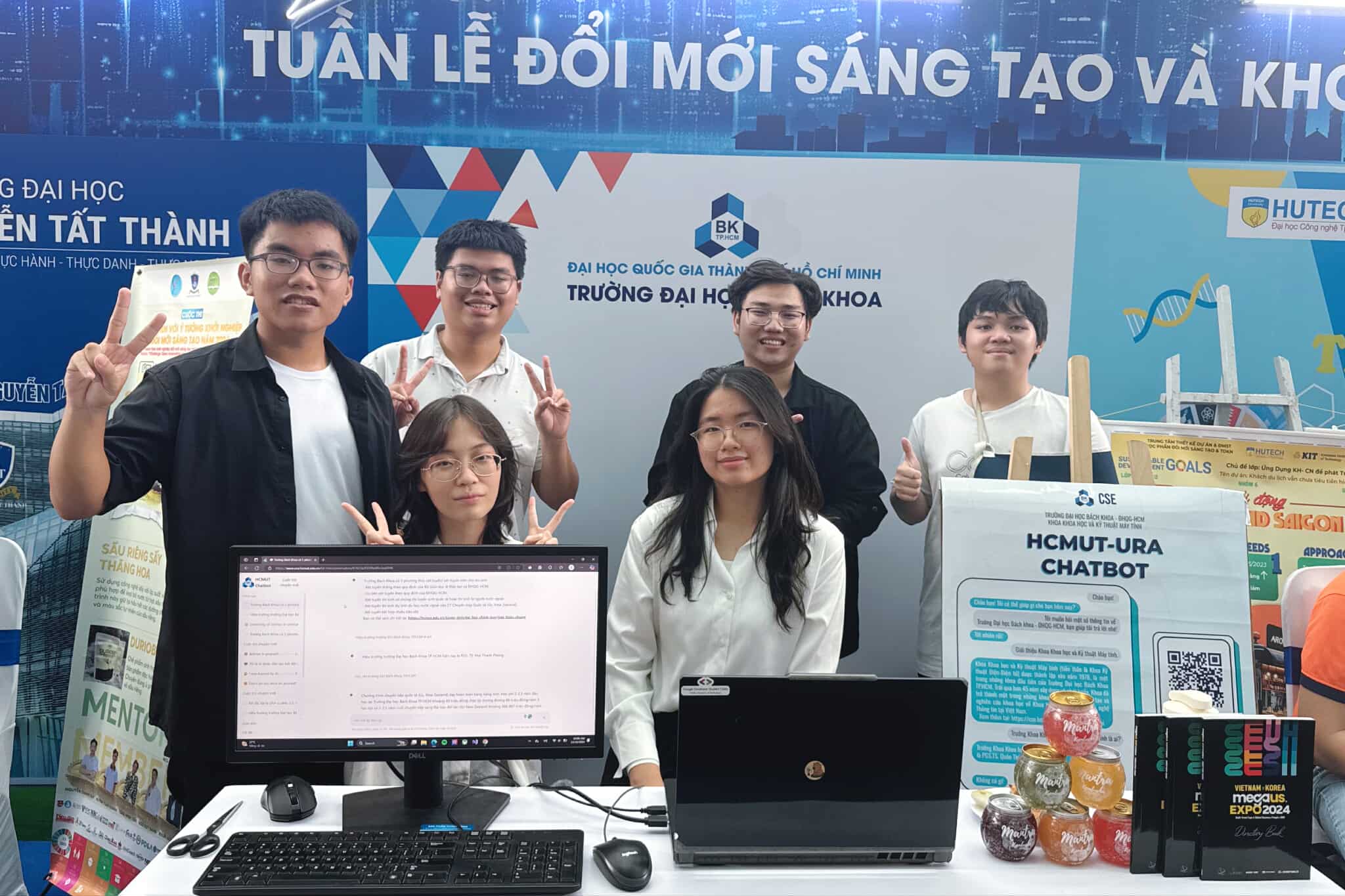
Ho Chi Minh City University of Technology (HCMUT) built URAG, a two-tier hybrid chatbot for university admissions, to address the risk of large language models hallucinating on sensitive, time-bound questions such as deadlines and requirements.
URAG first checks a curated FAQ bank built from official admissions documents, and falls back to retrieval-augmented generation over semantically chunked source documents only when no FAQ match is found.
The chatbot was deployed live at ura.hcmut.edu.vn for a four-month admissions cycle, with usage peaking as Vietnamese high-school students approached exam and enrolment deadlines, and was recognised at Ho Chi Minh City's WHISE 2024.
Benchmarked against 500 real admission questions from high-school applicants, URAG answered 62.8% correctly, ahead of GPT-4o (54.4%), Claude 3.5 Sonnet (50.2%) and Gemini 1.5 Pro (44.0%); its advantage was concentrated in factual, FAQ-style questions (218 of 268 correct), while it underperformed the general-purpose models on multi-step reasoning.
With an accuracy ceiling around 63%, roughly one in three answers was still wrong, so the tool is best read as a triage layer that reduces routine load rather than a full replacement for human admissions staff.
National / regional programmes Own resources / municipal budget
Indicative funding routes for practices of this type — always check each programme's current calls and eligibility rules.
Do you run this practice? Claim it — verified implementers get a public contact pathway and can propose corrections.
Where this practice's information was retrieved from, and when.
Algeria
Algeria's Ministry of Higher Education used an AI matching algorithm for the first time in 2026 to place 391,018 of …
Colombia
Universidad de Nariño's admissions office built VyCla, a WhatsApp chatbot for undergraduate enrollment queries; in a controlled evaluation with 122 …
Singapore
Nanyang Technological University's Lyon Bot, built on Google Cloud's Dialogflow, launched in 2020 to handle freshmen queries. A 2025 Gemini-based …
Portugal
ISEG (Universidade de Lisboa) launched what it calls Portugal's first generative-AI higher-education chatbot, built with Noesis on Azure OpenAI to …
Open full copilot Grounded in cited practices — always check the sources.