Paying Farmers Upfront Not to Burn — A Randomised PES Trial Against Crop-Residue Burning (Punjab, India)
India
A randomised trial across 171 Punjab villages found that paying farmers a share of their no-burn payment upfront cut satellite-detected …
Colombia · Medellín · See the Colombia profile · See the Medellín profile
Evidence: Observational / pre–post Top 41% 47/100 · Ask Evidence Copilot about this practice
Since 2016 Medellín's Secretariat of the Environment has built 30 green corridors (70+ ha, 2.5M plants, 880,000 trees) along roads and waterways; monitoring found average temperatures fell about 2°C citywide, with local drops up to 5°C, plus measurable air-quality gains.
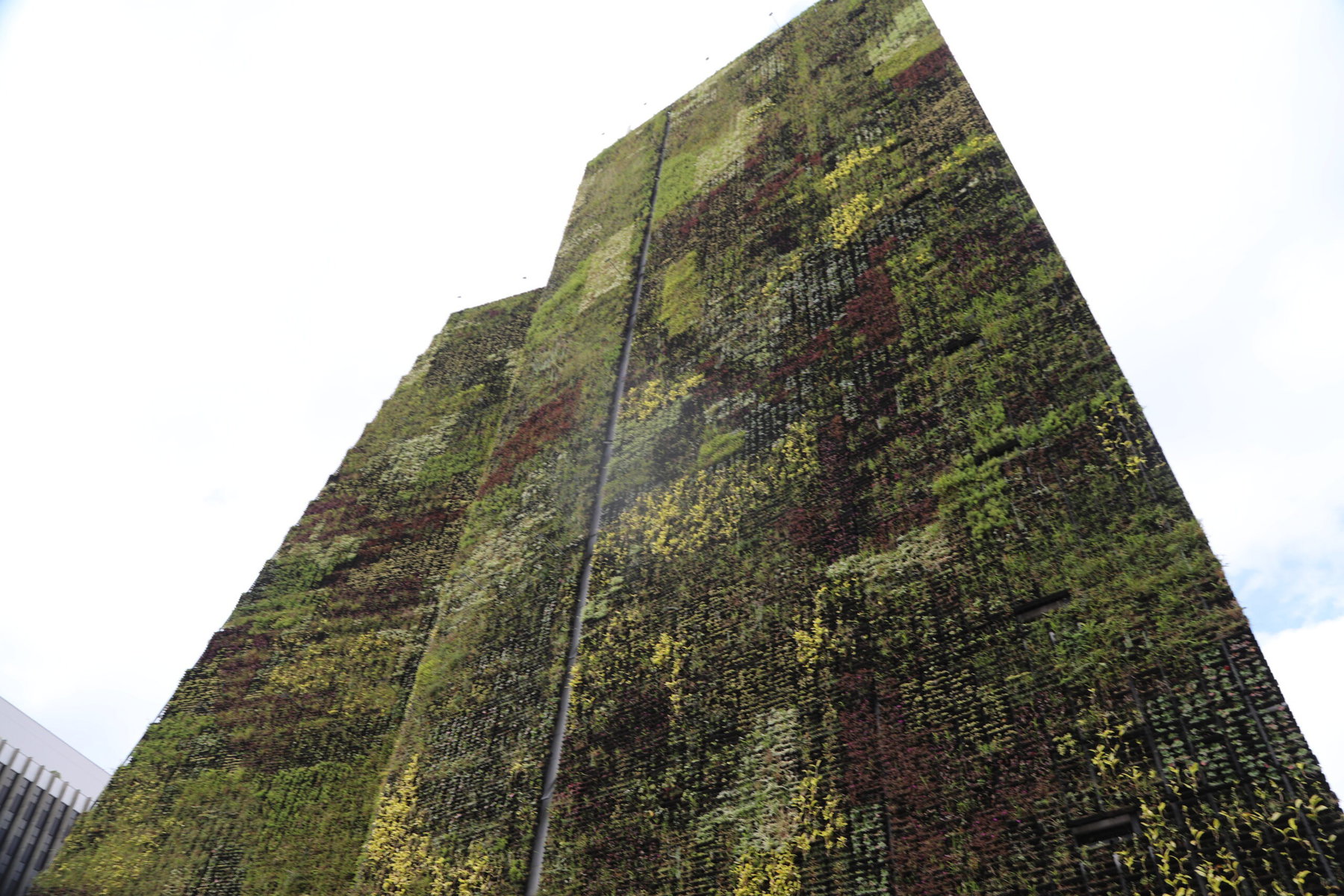
Medellin faced rapid urban heat-island growth and roughly 1,971 pollution-linked deaths recorded in the metropolitan area in 2016.
The Municipality of Medellin's Secretariat of the Environment, with the Joaquin Antonio Uribe Botanical Garden and Empresas Publicas de Medellin (EPM), launched 'Corredores Verdes' (Green Corridors) in 2016 to convert road medians, hillsides and stream corridors into connected green infrastructure.
Between 2016 and 2021 the programme created 30 green corridors (about 18 along roads, 12 along stream beds), covering 70+ hectares (about 4 million m2 including 20 km of shaded cycling/walking routes), planting 2.5 million smaller plants and 880,000 trees. Initial capital investment was around US$16.3 million, with about US$625,000/year in ongoing maintenance, employing roughly 150 citizen-gardeners and 15 forest engineers.
City monitoring from 2016-2019 recorded average air temperature in corridor zones falling from 31.6C to 27.1C and surface temperature from 40.5C to 30.2C, equivalent to roughly a 2C citywide average drop (up to 4-5C locally). PM2.5 and PM10 concentrations declined over the same period, and one sampled corridor was estimated to sequester about 160,000 kg CO2/year (about 40 tonnes/year attributed to the Nutibara and Volador hill corridors specifically). The programme won the 2019 Ashden Award for 'Cooling by Nature.'
Reported temperature and pollutant reductions come mainly from municipal monitoring rather than a peer-reviewed study with an independent control group, and CO2 sequestration figures are extrapolated from single sampled corridors rather than measured city-wide, so magnitude estimates carry uncertainty.
Own resources / municipal budget
Indicative funding routes for practices of this type — always check each programme's current calls and eligibility rules.
Do you run this practice? Claim it — verified implementers get a public contact pathway and can propose corrections.
Where this practice's information was retrieved from, and when.
India
A randomised trial across 171 Punjab villages found that paying farmers a share of their no-burn payment upfront cut satellite-detected …
Sweden
Facing chronic flooding, Malmo's 1997-2002 Augustenborg retrofit added ~10,000 m2 of green roofs and open stormwater channels/ponds across a 1950s …
Netherlands
Utrecht retrofitted all 316 municipal bus shelters with sedum roofs for pollinators and rainwater capture, while a citywide subsidy covers …
Greece
Athens planted nearly 7,500 trees in 18 months and built microforests and cooling gardens across the city; monitored sites recorded …
Open full copilot Grounded in cited practices — always check the sources.