Rencat — the Municipality of Renca's AI Virtual Assistant for Chilean Residents
Chile
Chile's Municipality of Renca launched Rencat, a 24/7 AI virtual assistant built by Argentine vendor BotMaker (creator of Buenos Aires' …
Serbia · Sombor · See the Serbia profile
Evidence: Observational / pre–post Top 62% 53/100 · Ask Evidence Copilot about this practice
Germany's GIZ, Serbian alliance NALED and tech firm SAGA rolled out MIA, an AI chatbot for civil-registry and tax questions in Sombor and Šabac (plus two Bosnian towns) — registering close to 80,000 users and 140,000+ conversations across the four pilots in year one.
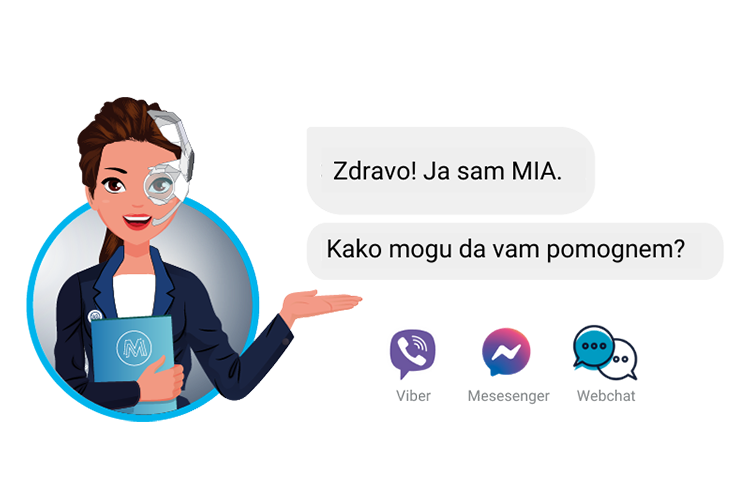
In October 2021, the German development agency GIZ — through the Federal Ministry for Economic Cooperation and Development's develoPPP programme — partnered with the Serbian business alliance NALED and technology company SAGA to launch MIA (Municipal Intelligent Assistant), an AI chatbot for citizens' questions about civil-registry certificates, tax certificates, and parental/child benefit procedures.
Automate answers to routine, repetitive citizen queries on civil-registry and tax procedures, freeing municipal staff time and improving access to information through channels citizens already use.
The chatbot went live simultaneously in two Serbian cities, Sombor and Šabac, and two Bosnian municipalities, Bijeljina and Laktaši, reachable through Viber, Facebook Messenger and each city's web portal, under one shared technical platform and governance structure involving GIZ, NALED, SAGA and the Chamber of Commerce of Republika Srpska.
NALED, which coordinated the roll-out, reported that within a little over a year of operation MIA had registered close to 80,000 users across the four pilot municipalities and logged more than 140,000 conversations. Ahead of the launch, NALED had estimated that municipal staff in the pilot cities were together spending up to 2,400 hours a year answering the same routine queries the chatbot was built to handle.
The programme was explicitly designed for replication, running concurrently in two countries and four municipalities from the outset, and organisers stated that positive results were meant to inform wider regional rollout. More than four years after launch, however, available sources show the deployment still limited to the original four pilot municipalities, with no confirmed further expansion, and no published data on response accuracy, escalation rate or a citizen data-protection policy.
Do you run this practice? Claim it — verified implementers get a public contact pathway and can propose corrections.
Where this practice's information was retrieved from, and when.
Chile
Chile's Municipality of Renca launched Rencat, a 24/7 AI virtual assistant built by Argentine vendor BotMaker (creator of Buenos Aires' …
Georgia
Rustavi City Hall, Georgia launched C-Bot, an AI chatbot built with UNDP and EU support, answering citizens' and businesses' questions …
United Kingdom
The UK's Government Digital Service piloted GOV.UK Chat, a retrieval-augmented generative-AI assistant answering citizens' tax, benefits and visa questions — …
Guatemala
Guatemala's tax authority SAT built RITA, a Dialogflow-based Spanish-language virtual assistant fielding taxpayer queries since April 2019 — serving 335,000 …
Open full copilot Grounded in cited practices — always check the sources.