Mikoko Pamoja — Community Mangrove Carbon Project (Gazi Bay, Kenya)
Kenya
Since 2013, Mikoko Pamoja has conserved 117 ha of mangrove in Gazi Bay, Kenya, the world's first community mangrove-carbon project. …
Benin · Grand-Popo · See the Benin profile
Evidence: Descriptive / self-reported Top 41% 47/100 · Ask Evidence Copilot about this practice
Since 2014, Eco-Benin and partners have restored mangroves across the ~9,678 ha Bouche du Roy reserve on the Benin-Togo border; a 2023 study projects ~402,841 tCO2e sequestered over 30 years to fund it via blue-carbon credits, with 80%+ seedling survival so far.
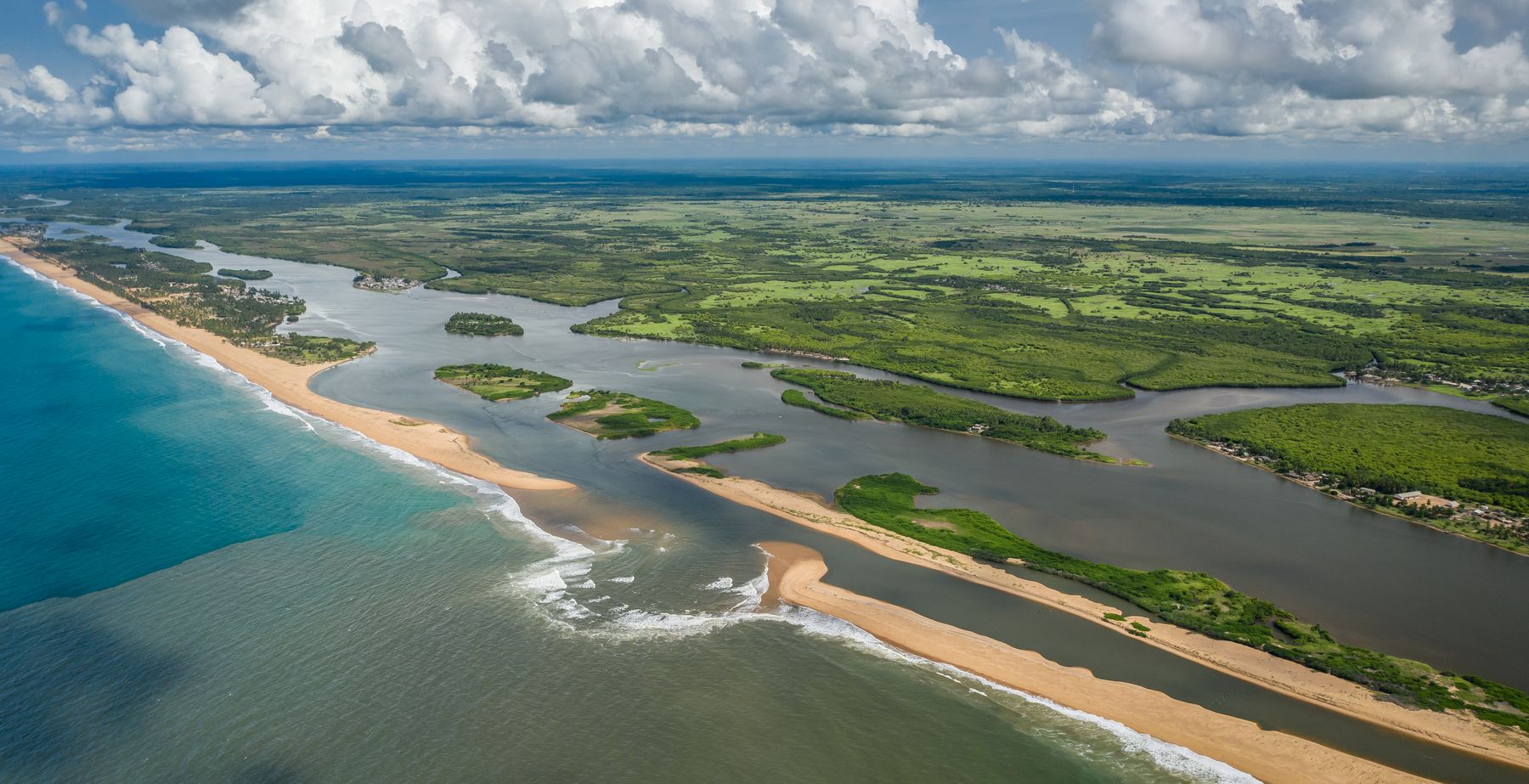
The Bouche du Roy reserve, straddling the Mono River delta on Benin's border with Togo, covers roughly 9,678 hectares and anchors the transboundary Mono Delta Biosphere Reserve (UNESCO MAB) and Ramsar Site 1017. Decades of firewood harvesting, fish-smoking and coastal development had degraded much of its mangrove cover, undermining fisheries, coastal protection and carbon storage.
Restore mangrove cover through community-led replanting and reserve co-management, and develop blue-carbon credit financing to sustain restoration over the long term.
Since 2014 the local NGO Eco-Benin, with Africa Mobile Nature and Nature Tropicale, has led community-based mangrove replanting and co-management, originally financed by Germany's BMUB with GIZ technical support. A subsequent grant from IUCN's Blue Natural Capital Financing Facility supported development of a mangrove carbon project document, and a 2023 feasibility study (verified by IUCN Netherlands and carbon-project developer CO2logic) projected the sequestration potential.
The 2023 feasibility study projected approximately 402,841 tCO2e sequestered over 30 years, to be financed through blue-carbon credit sales. Early monitoring reported an average seedling survival rate above 80%, and the programme has trained park rangers and local residents and reached more than 1,500 students through environmental education, while creating temporary employment for fishing communities during planting campaigns.
The carbon-sequestration figure remains a feasibility-study projection rather than a verified, issued credit volume, and coastal-erosion benefits are described qualitatively in project reporting rather than quantified.
National / regional programmes Philanthropic / foundation funding
Indicative funding routes for practices of this type — always check each programme's current calls and eligibility rules.
Do you run this practice? Claim it — verified implementers get a public contact pathway and can propose corrections.
Where this practice's information was retrieved from, and when.
Kenya
Since 2013, Mikoko Pamoja has conserved 117 ha of mangrove in Gazi Bay, Kenya, the world's first community mangrove-carbon project. …
Mauritius
Mauritius's Odysseo Foundation restores mangroves and runs the Indian Ocean's first seagrass nursery at Le Morne; a 2026 peer-reviewed chronosequence …
Cameroon
Since 2022, Planète Urgence, Orange and Cameroonian communities have restored 100+ hectares of Wouri-estuary mangrove near Douala — including a …
Tonga
Tonga's GEF/UNDP-funded Ridge to Reef programme has directed USD 570,000 to 33 communities across Tongatapu and Vava'u, financing mangrove nurseries …
Open full copilot Grounded in cited practices — always check the sources.