Yaeda-Eyasi Landscape REDD+ Project (Tanzania)
Tanzania
Plan Vivo-verified REDD+ project protecting 110,500 ha of Hadza and Datoga community land in northern Tanzania, avoiding a cumulative 652,082 …
Indonesia · Kapuas Hulu · See the Indonesia profile
Evidence: Observational / pre–post Top 14% 60/100 · Ask Evidence Copilot about this practice
Indonesia's first Plan Vivo-certified project pays 234 households in a West Kalimantan village to protect peat-swamp and riparian forest under a 25-year Village Forest permit, with 3,488 carbon certificates issued to date.
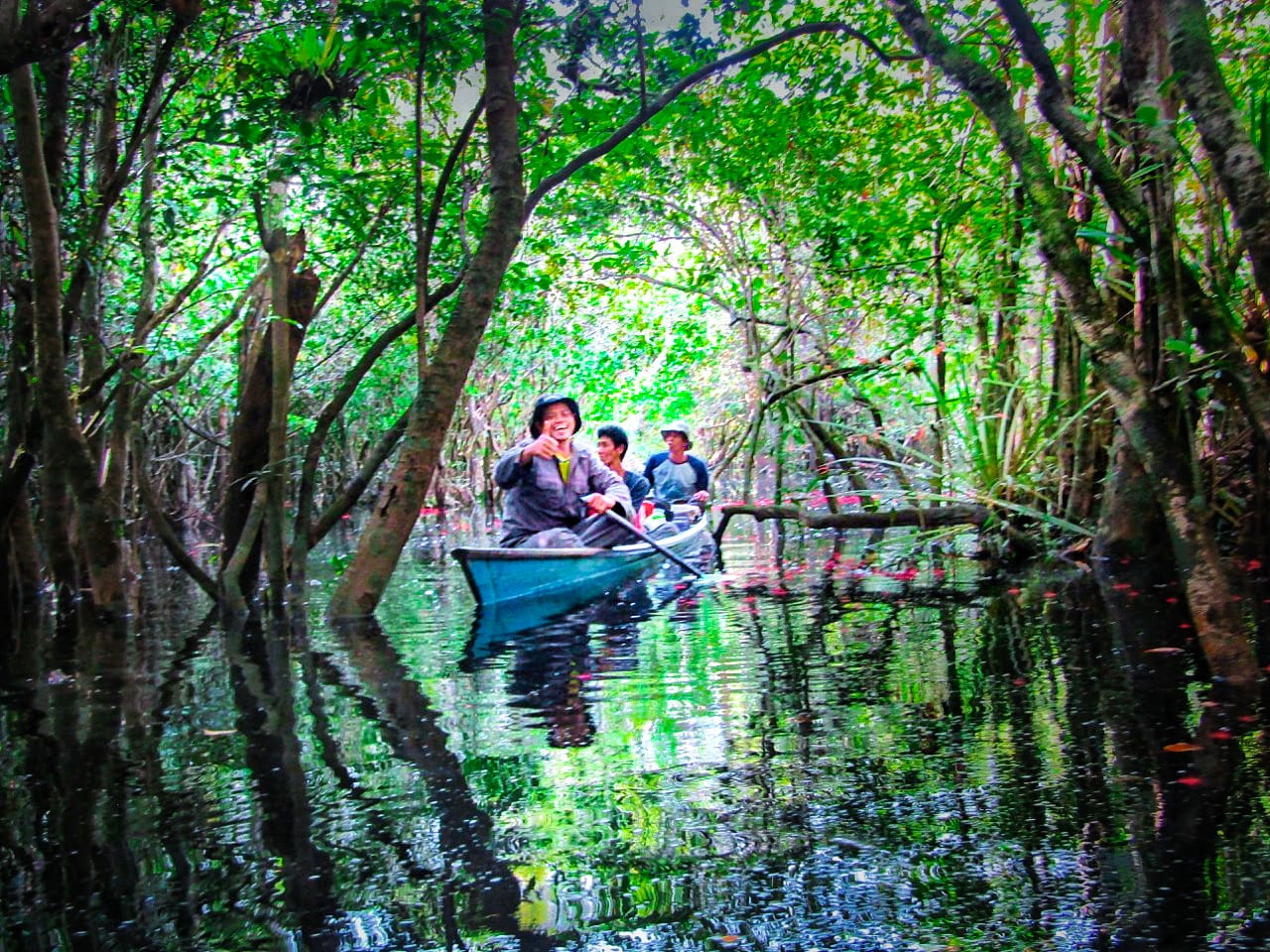
Nanga Lauk, a village in Kapuas Hulu District, West Kalimantan, relies on surrounding riparian and peat-swamp rainforest for fishing, honey production and timber. Facing pressure from logging and mining interests, the village secured a 25-year Hutan Desa (Village Forest) management permit from the Indonesian government in 2017, granting residents legal rights to protect and benefit from the forest.
Protect peat-swamp and riparian forest from deforestation while generating income for 234 participating households through certified carbon credits.
PRCF Indonesia coordinates the project with the village forest unit LPHD Lauk Bersatu, protecting 1,430 hectares of core peat-swamp, marsh and lake habitat plus an additional 8,618 hectares of Limited Production Forest through avoided-deforestation activities. The project is certified under the Plan Vivo Standard (PV Climate Version 4) — Indonesia's first Plan Vivo project.
Plan Vivo's public registry records 3,488 Plan Vivo Certificates (each representing one tonne of CO2-equivalent avoided or sequestered) issued to date, independently audited under the standard's annual verification cycle. No species-level biodiversity monitoring or quantified hydrological metrics have been published alongside the carbon figures.
As Indonesia's first Plan Vivo-certified project, Nanga Lauk offers a replicable governance template combining legal village forest tenure with independently audited carbon certification, though biodiversity and hydrological co-benefits remain unmeasured.
Philanthropic / foundation funding Own resources / municipal budget
Indicative funding routes for practices of this type — always check each programme's current calls and eligibility rules.
Do you run this practice? Claim it — verified implementers get a public contact pathway and can propose corrections.
Where this practice's information was retrieved from, and when.
Tanzania
Plan Vivo-verified REDD+ project protecting 110,500 ha of Hadza and Datoga community land in northern Tanzania, avoiding a cumulative 652,082 …
Mozambique
One of Plan Vivo's founding projects paid ~1,000 Mozambican smallholders near Gorongosa National Park $242.60/ha over 7 years for agroforestry …
Cameroon
Plan Vivo-certified agroforestry project run by Graine de Vie with Bankim, Banyo and Mayo-Darlé communes in Cameroon's Adamawa Region pays …
Ethiopia
Plan Vivo- and Gold Standard-certified dryland restoration in Tigray, Ethiopia: landless and smallholder farmers have restored 30,000+ ha since 2016, …
Open full copilot Grounded in cited practices — always check the sources.