Seagrass Ocean Rescue — Wales's Corporate-Funded Seagrass Restoration (United Kingdom)
United Kingdom
WWF and Sky Ocean Rescue funded Swansea University, Project Seagrass and Pembrokeshire Coastal Forum to plant the UK's first major …
Sweden · Gothenburg · See the Sweden profile · See the Gothenburg profile
Evidence: Observational / pre–post Top 27% 53/100 · Ask Evidence Copilot about this practice
Since the 1980s over 60% (~12,500 ha) of eelgrass has vanished from Sweden's west coast. University of Gothenburg's Zorro group, backed by a SEK 14m Formas grant, produced Sweden's restoration handbook and ran pilot replantings at Kälnäs (~5 ha) and Malmö (8 ha).
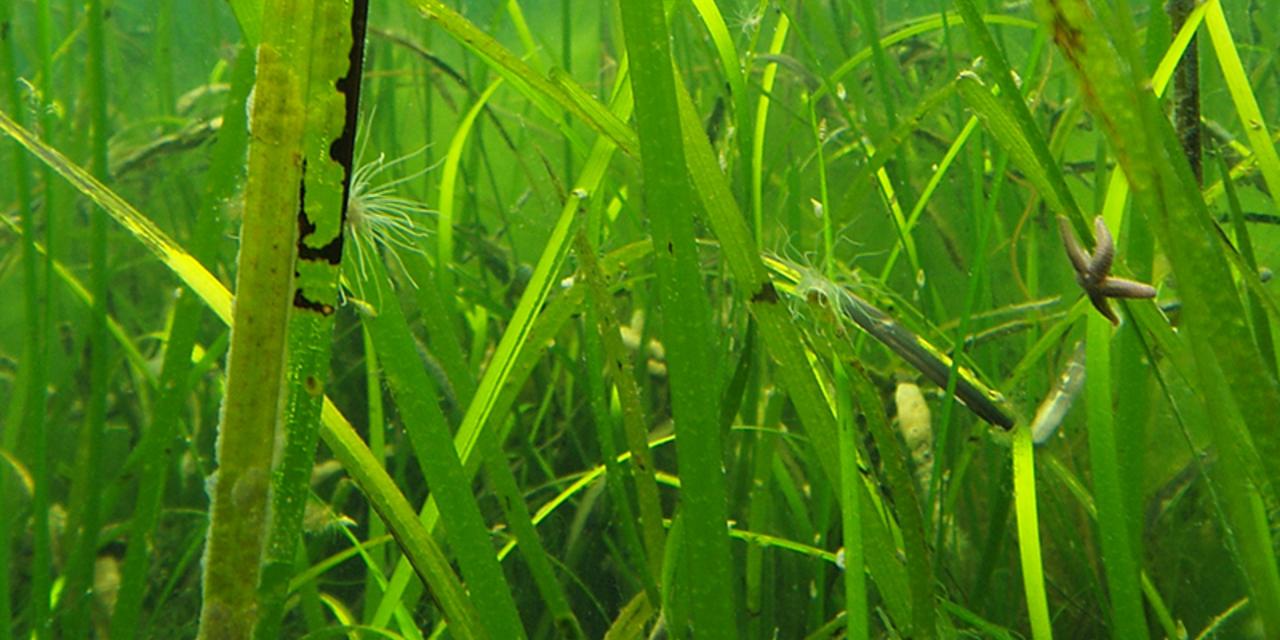

Eutrophication and overfishing — including the loss of cod that once kept algae-grazing crabs in check — drove the collapse of Zostera marina (eelgrass) beds along Sweden's Skagerrak coast. Researchers estimate more than 60%, around 12,500 hectares, of west-coast eelgrass has disappeared since the 1980s, taking with it nursery habitat for fish and significant carbon and nutrient storage.
The University of Gothenburg's interdisciplinary Zorro research group, funded partly by a SEK 14 million grant from the Swedish research council Formas and working alongside the Swedish Agency for Marine and Water Management, developed and published a national restoration handbook (2016, updated 2021) standardising seed-based replanting methods. The team ran restoration trials including a roughly 5-hectare pilot at Kälnäs in Hakefjorden, Bohuslän, and an 8-hectare restoration of a former industrial harbour seabed in Malmö, where toxic bottom sediment was capped and water depth adjusted to allow eelgrass to re-establish.
A 2,000-year sediment record published in Global Biogeochemical Cycles (Dahl et al., 2024) documented substantial historical gains in carbon and nutrient burial following eelgrass colonisation, underpinning the ecological case for restoration; the team's cost analysis put restoration at SEK 1.2-2.5 million per hectare using recommended methods, a figure now used nationally to plan realistic programme budgets.
Restoration remains costly and slow relative to the scale of historical loss: at current per-hectare costs, restoring even a small fraction of the ~12,500 hectares lost would require sustained, large-scale public investment, and the largest completed site (Malmö's 8 ha) remains far below the scale needed to reverse regional decline.
National / regional programmes LIFE Programme
Indicative funding routes for practices of this type — always check each programme's current calls and eligibility rules.
Reusable artefacts from this practice — as published by their sources.
Do you run this practice? Claim it — verified implementers get a public contact pathway and can propose corrections.
Where this practice's information was retrieved from, and when.
United Kingdom
WWF and Sky Ocean Rescue funded Swansea University, Project Seagrass and Pembrokeshire Coastal Forum to plant the UK's first major …
Trinidad and Tobago
A World Bank-backed project (2008-2020) set out to reforest up to 1,500 ha of Trinidad's Ramsar-listed Nariva Swamp for carbon …
Pakistan
World's largest mangrove restoration: 350,000 ha of Indus Delta, protecting 102,000 ha and restoring 225,000 ha. VCS + CCB certified; …
Madagascar
Blue Ventures and Velondriake communities protect 1,200+ hectares of mangroves in southwest Madagascar under Plan Vivo + CCB Gold—the world's …
Open full copilot Grounded in cited practices — always check the sources.