SASA! Community Mobilisation Programme against Intimate Partner Violence — Uganda
Uganda
SASA! is a community mobilisation model to prevent intimate partner violence (IPV), developed in Kampala, Uganda. A cluster RCT (2007–2012) …
South Africa · Cape Town · See the South Africa profile · See the Cape Town profile
Evidence: Randomised controlled trial Top 55% 63/100 · Ask Evidence Copilot about this practice
Sonke Gender Justice's One Man Can campaign mobilises South African men and boys through workshops and community action against gender-based violence. A 2012–2014 cluster-RCT found it shifted men's attitudes but did not significantly reduce their violence perpetration.
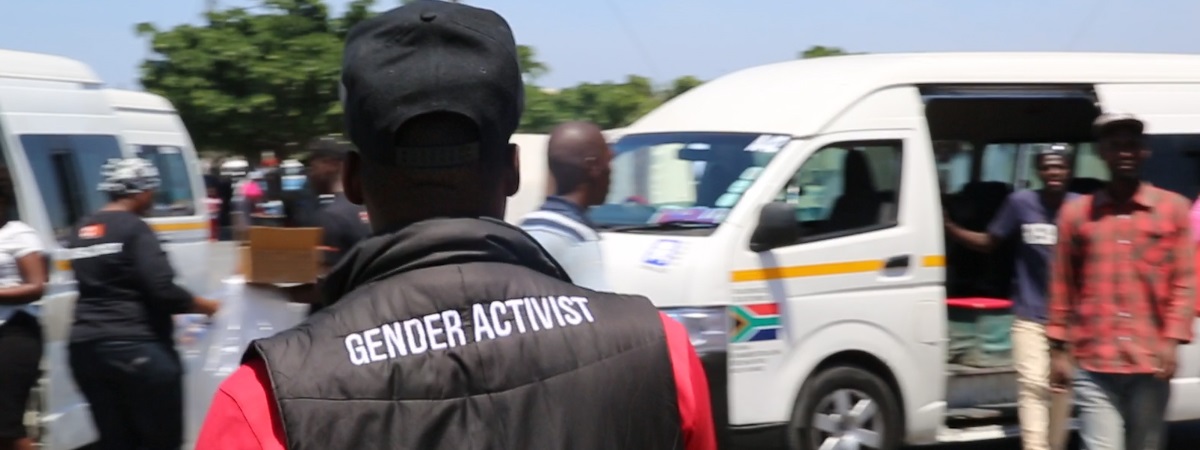
Sonke Gender Justice's One Man Can campaign, launched in Johannesburg and Cape Town in November 2006, uses multi-day workshops, trained community mobilisers and local advocacy to engage men and boys in preventing gender-based violence and HIV-risk behaviour, and has since been adapted in other African settings including Sudan.
A cluster-RCT in 22 villages of the Agincourt health and demographic surveillance site (Mpumalanga, South Africa) found more than a third of men aged 18-35 in intervention villages attended at least one workshop, with a statistically significant improvement in men's self-reported gender-equitable attitudes and a non-significant trend toward lower IPV victimisation among women (adjusted odds ratio 0.53, 95% CI 0.24-1.16).
The trial found no significant reduction in men's self-reported violence perpetration — the programme's central target outcome. Earlier qualitative work documented shifts in participants' accounts of fatherhood, but relied on retrospective self-report without a control group. Some widely circulated figures (e.g. that 50% of participants 'took action' against GBV) could not be traced to a locatable primary evaluation and are not used here.
Philanthropic / foundation funding
Indicative funding routes for practices of this type — always check each programme's current calls and eligibility rules.
Do you run this practice? Claim it — verified implementers get a public contact pathway and can propose corrections.
Where this practice's information was retrieved from, and when.
Uganda
SASA! is a community mobilisation model to prevent intimate partner violence (IPV), developed in Kampala, Uganda. A cluster RCT (2007–2012) …
Brazil
Program H is Promundo's gender-transformative group curriculum for young men, developed in Rio de Janeiro and now adapted in 30+ …
Ethiopia
A quasi-experimental group-education and community-engagement programme for young men in three low-income subcities of Addis Ababa cut self-reported past-6-month IPV …
Ethiopia
A four-arm cluster-RCT tested a gender-transformative 'coffee-ceremony' discussion programme for men, women and couples in rural Ethiopia's Gurage zone; only …
Open full copilot Grounded in cited practices — always check the sources.