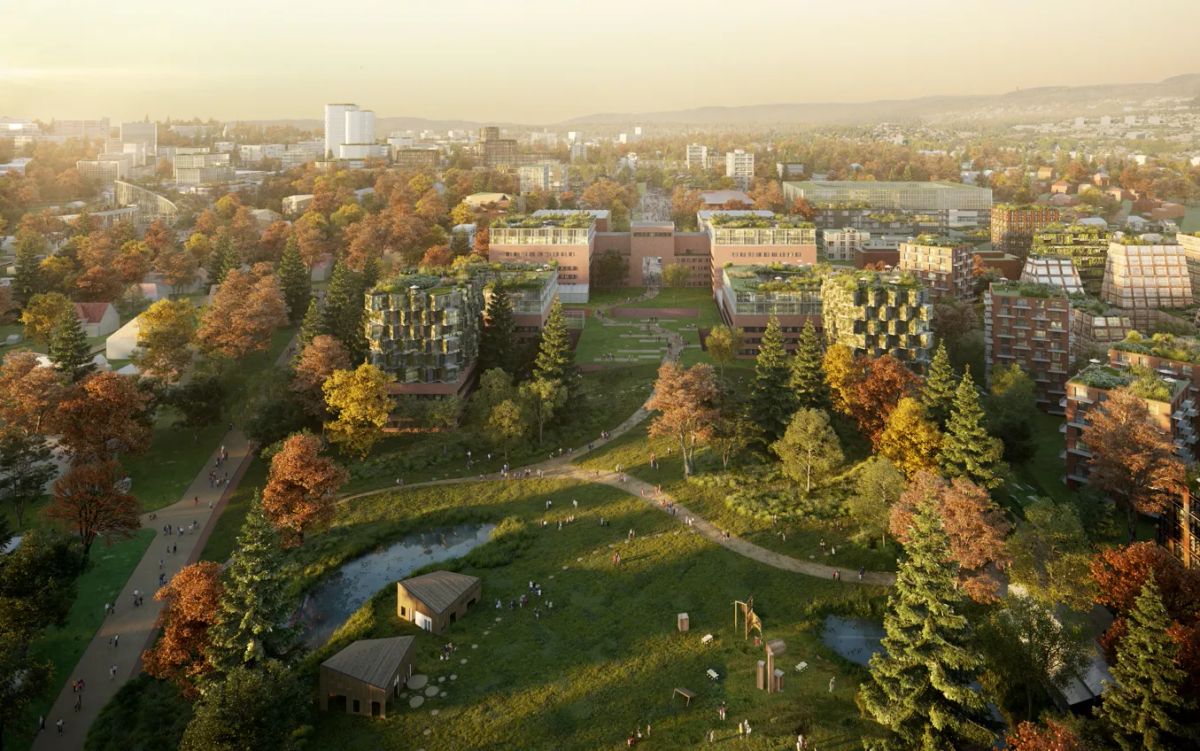
Oslo Science City clusters 8,000 researchers, 40,000 students, and 300+ startups in a 3 km² urban district that accounts for 31% of Norwegian R&D spending (2023); a planned NOK 35 billion investment programme aims to cement it as Scandinavia's leading life-sciences and deep-tech
Climate and health researchers co-located in life-sciences cluster
Details
Maturity
Scaling
Promoter
Oslo Science City Alliance (municipality + universities + hospitals + Oslo Business Region)
Period
2018–present
Region (NUTS)
NO01
Keywords
Life sciences, deep tech, cleantech, higher education, health research
Context
Oslo Science City is an urban innovation district in Oslo's Gaustad-Blindern area, formally designated in 2018, that concentrates a large share of the city's research, higher-education and startup activity within roughly 3 square kilometres.
Activities
The district is coordinated by the Oslo Science City Alliance, a public-private governance body bringing together Oslo municipality, four anchor institutions (University of Oslo, Oslo University Hospital, Norwegian Radium Hospital and Oslo Metropolitan University), Oslo Business Region and the Research Council of Norway. A NOK 35 billion investment programme is planned through 2035, including a co-located life-sciences cluster of 2,200 climate and health researchers.
Results
The district hosts about 8,000 researchers, 40,000 students and more than 300 startups, and accounted for around 31% of Norway's total R&D expenditure in 2023.
Implementation
Indicative cost
Very high (> €5M) — NOK 35 billion investment programme running through 2035 (breakdown by component not detailed on the page).
Time to results
Long (> 3 years) — Formally designated in 2018; investment and build-out programme extends through 2035.
Staffing & skills
Coordinated by the Oslo Science City Alliance, a public-private governance body (not a traditional single-organisation staff roster)
Conditions for success
Formal multi-stakeholder governance combining Oslo municipality, four anchor institutions, Oslo Business Region and the Research Council of Norway
Sustained multi-decade public and institutional investment commitment (NOK 35 billion programme through 2035)
Where it fits
Governance type
public-private multi-stakeholder alliance
Scale
urban innovation district (~3 km²) within a national capital
Income level
high-income (Norway)
Commonly funded by
National / regional programmes
Indicative funding routes for practices of this type — always check each programme's current calls and eligibility rules.
Do you run this practice?
Claim it —
verified implementers get a public contact pathway and can propose corrections.
Data sources
Where this practice's information was retrieved from, and when.