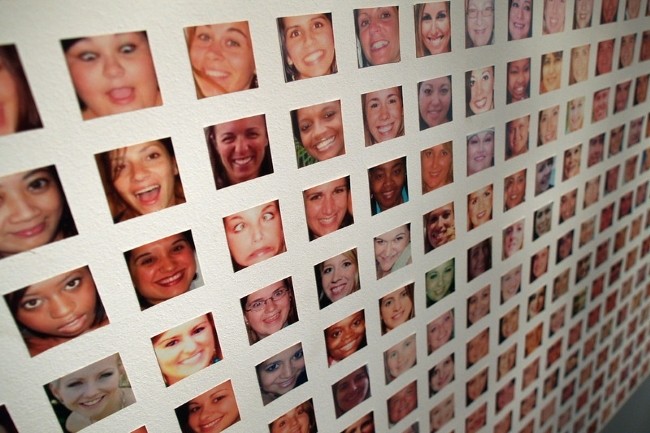
France's PACA regional council piloted facial-recognition gates at two high schools in Marseille and Nice. The CNIL found the scheme disproportionate before it launched, and in February 2020 the Marseille Administrative Court struck it down.
2
High schools included in the trial (2018–2020)
Details
Maturity
Discontinued
Promoter
Provence-Alpes-Côte d'Azur (PACA) Regional Council
Period
2018–2020
Region (NUTS)
FR82
Keywords
secondary education, facial recognition, regional government, data protection
Context
In December 2018 the Provence-Alpes-Côte d'Azur (PACA) regional council approved a trial of facial-recognition entry gates at two high schools — one in Marseille, one in Nice — framed as a security measure to speed up identity checks at the gate.
Results
France's data-protection authority, the CNIL, issued an opinion on 29 October 2019 finding the system disproportionate to its stated aim, in breach of data minimisation, and noting that minors could not give genuinely free consent to facial scanning under those conditions. On 27 February 2020 the Administrative Court of Marseille annulled the regional council's deliberation, ruling it had not shown free and informed consent nor the necessity and proportionality of the measure — one of the first European court rulings to block facial recognition in a school before large-scale deployment.
Implementation
Indicative cost
Low (< €50k)
Time to results
Short (< 1 year)
Commonly funded by
National / regional programmes
Indicative funding routes for practices of this type — always check each programme's current calls and eligibility rules.
Do you run this practice?
Claim it —
verified implementers get a public contact pathway and can propose corrections.
Data sources
Where this practice's information was retrieved from, and when.
Spain's AEPD fined Universidad Internacional de Valencia €650,000 after it forced online-exam takers to use AI facial-recognition and room-scanning software …
Finland's education ministry and Opetushallitus published national AI recommendations (31 March 2025) after consulting 172 organisations and youth 'Digiraati' councils, …