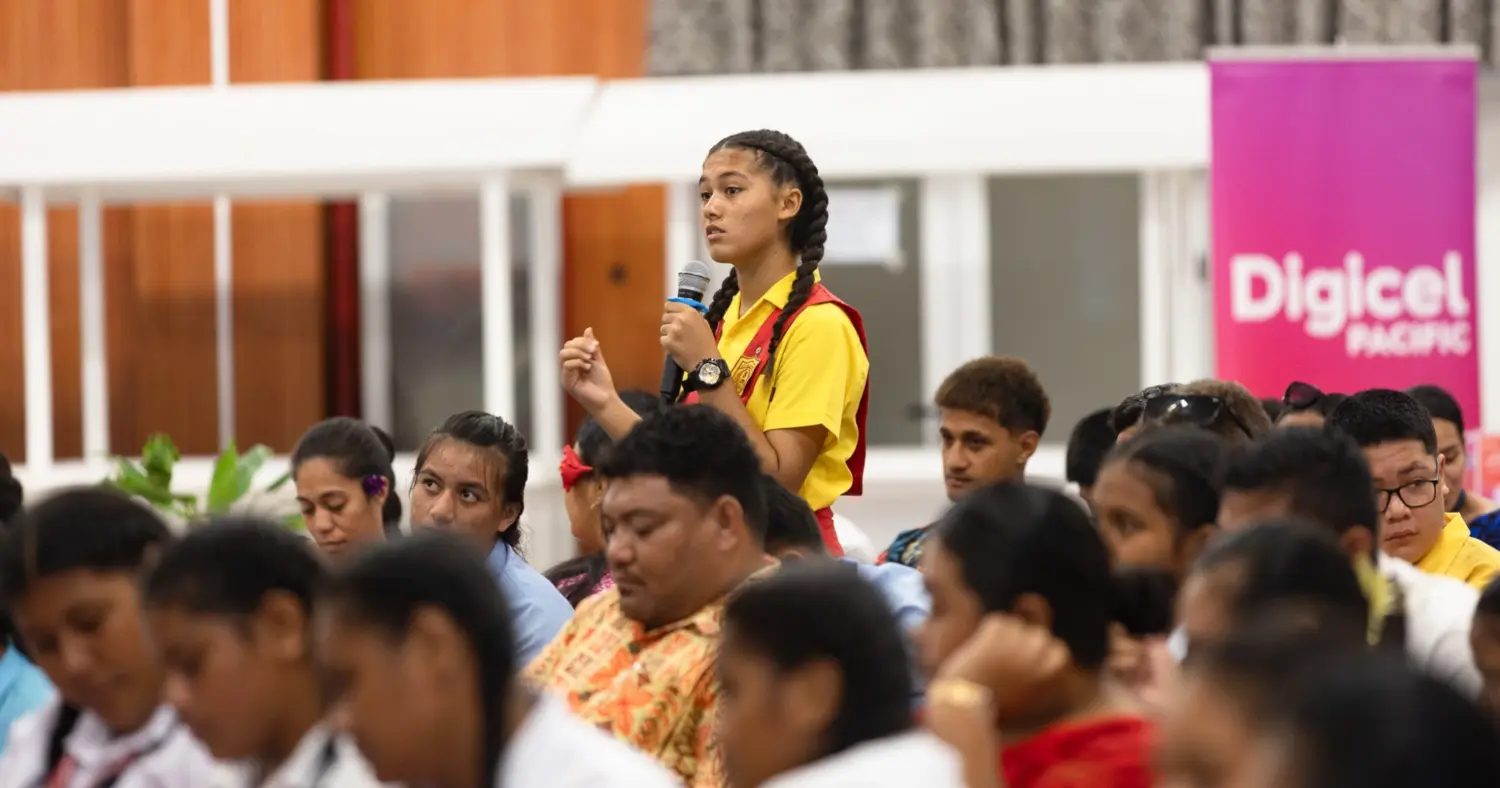
Samoa's decade-old Girls in ICT Day, run with ITU Asia-Pacific, brought AI, cybersecurity and cyberbullying lessons to schoolgirls in Upolu and Savai'i; its 2025 tenth-anniversary edition drew 16 schools, prompting expansion to include boys as more girls outperform in STEM.
54 girls and 9 boys
Participants at 2024 event (2024)
16
Schools participating in 10th-anniversary edition (2025)
10
Years the programme has run (2015-2025)
Details
Maturity
Established
Promoter
Samoa Office of the Regulator; Ministry of Communications and Information Technology; ITU Asia-Pacific
Period
2015-2025 (annual; 10th anniversary 2025)
Keywords
AI literacy, cybersecurity, gender equality, STEM education
Context
Girls in ICT Day is an annual ITU-backed regional programme run jointly with national telecom regulators across the Pacific since around 2015, aimed at closing the gender gap in STEM and ICT careers. Samoa's national implementation is run by the Office of the Regulator and the Ministry of Communications and Information Technology with ITU's Asia-Pacific office.
Objectives
To build AI literacy, cybersecurity awareness and STEM interest among Samoan schoolgirls, and, as the gender gap narrows, to broaden participation to include boys.
Activities
The 2024 event brought together 54 girls and 9 boys; the 2025 tenth-anniversary edition expanded to 16 schools across Savai'i and Upolu. The 2025 curriculum covered cybersecurity, cyberbullying and, per a participating teacher, 'the pros and cons of using Artificial Intelligence'.
Results
Because more girls have been passing STEM exams in Samoa, the programme is being renamed and expanded toward a 'Youth in ICT' format that also includes boys - a change reported transparently by organisers. Attendance and outcome figures come from the convening bodies rather than an independent auditor.
Conclusions
The programme is a decade-old, ITU-anchored national tradition with a genuine equity origin, but it is a light-touch annual awareness day rather than an intensive multi-week bootcamp, so its dosage and depth of skills-building are limited compared with residential coding camps.
Implementation
Indicative cost
Low (< €50k) — Annual outreach day; costs not disclosed but consistent with a light-touch, school-based single-day event.
Time to results
Short (< 1 year) — Recurring annually since around 2015; 2025 marked the 10th anniversary edition.
Staffing & skills
Office of the Regulator staff, Ministry of Communications and Information Technology staff, ITU Asia-Pacific coordination, participating school teachers delivering the curriculum
Conditions for success
partnership with an international body (ITU) providing a shared regional framework and materials
annual recurring structure sustained over a decade
willingness to transparently expand scope (adding boys) as circumstances change
Common failure modes
light-touch, single-day format limits depth and dosage of skills-building compared with residential bootcamps
no independent pre/post assessment of AI-literacy or cybersecurity skills gained
Where it fits
Governance type
government and international body partnership
Scale
national, multi-island (Upolu, Savai'i)
Income level
small island developing state
Commonly funded by
National / regional programmes
Indicative funding routes for practices of this type — always check each programme's current calls and eligibility rules.
Do you run this practice?
Claim it —
verified implementers get a public contact pathway and can propose corrections.
Data sources
Where this practice's information was retrieved from, and when.
Ghana's national Girls-in-ICT programme ran a 10-day AI, machine-learning, big-data and cybersecurity bootcamp for 50 female university students at the …