Zhongguancun Science Park (Z-Park) — China's National Innovation Hub
China
Established in 1988, Zhongguancun (ZGC) in Beijing's Haidian District is China's first and largest national science park. By 2024 it …
South Korea · Seongnam · See the South Korea profile · See the Seongnam profile
Evidence: Observational / pre–post Top 74% 57/100 · Ask Evidence Copilot about this practice
A state-planned tech district outside Seoul grew from 88 firms in 2011 to 1,803 companies and KRW 202.4 trillion in combined revenue by 2023–24, per Gyeonggi Province and Korea Herald data, though recent coverage questions whether growth is plateauing.
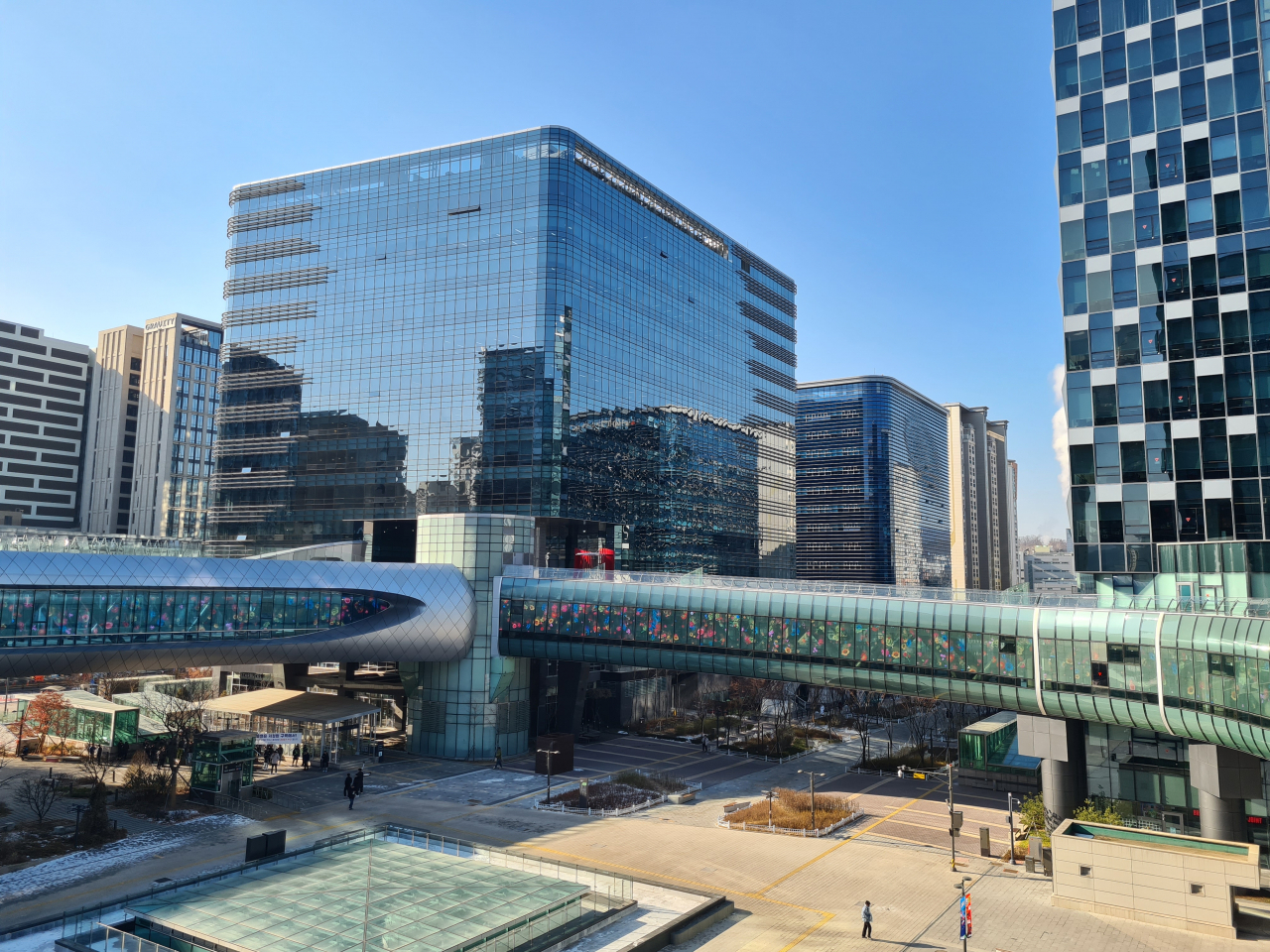
Developed by the Gyeonggi provincial government and Korea Land & Housing Corporation on former farmland outside Seoul, the first Pangyo Techno Valley opened in 2011 with 88 tenant companies (IT, biotech, cultural technology, nanotechnology), with land offered at roughly half the price of Seoul's established Gangnam/Teheran-ro tech corridor.
By 2019, tenant companies reported combined sales of KRW 107.2 trillion and ~64,000 employees; by 2021 the enclave held 1,642 companies with KRW 120.8 trillion (~$95bn) in annual revenue; a December 2024 Gyeonggi Province survey counted 1,803 companies and 78,872 employees, with combined 2023 revenue reaching KRW 202.4 trillion (+28.5% year-on-year).
Tenants are overwhelmingly small and mid-size firms (91.5%), alongside large anchors (Naver, Kakao, Nexon, Samsung units, 3.6% of tenants). Commentators note revenue is concentrated in a handful of major firms, and some industry coverage questions whether Pangyo's growth is beginning to plateau relative to its early rapid expansion.
National / regional programmes
Indicative funding routes for practices of this type — always check each programme's current calls and eligibility rules.
Do you run this practice? Claim it — verified implementers get a public contact pathway and can propose corrections.
Where this practice's information was retrieved from, and when.
China
Established in 1988, Zhongguancun (ZGC) in Beijing's Haidian District is China's first and largest national science park. By 2024 it …
Ethiopia
With JICA support, Ethiopia built a standing government institute to disseminate Japanese-style Kaizen management; from 2012/13-2016/17 it trained nearly 69,000 …
Germany
Germany's 1976 codetermination law gives workers up to half the seats on large firms' boards. Rigorous natural-experiment studies find modest …
Tunisia
Since 1995, Tunisia's Mise à Niveau programme has co-financed tech and management upgrades for industrial firms — ~7,000 applications (86% …
Open full copilot Grounded in cited practices — always check the sources.