Likoti Pit-Planting Conservation Agriculture — Growing Nations, Lesotho
Lesotho
Introduced in 2002 by the NGO Growing Nations, Lesotho's likoti no-till pit-planting method reversed decades of maize yield decline; a …
Saint Kitts and Nevis · Basseterre · See the Saint Kitts and Nevis profile · See the Basseterre profile
Evidence: Descriptive / self-reported Top 96% 20/100 · Ask Evidence Copilot about this practice
St. Kitts and Nevis funds a government-run trapping programme against an estimated 37,000 invasive African green (vervet) monkeys, backed since 2019 by a GEF-financed OECS project and an EC$700,000 2020 budget line, after 2018 crop losses equal to a month's marketable produce.
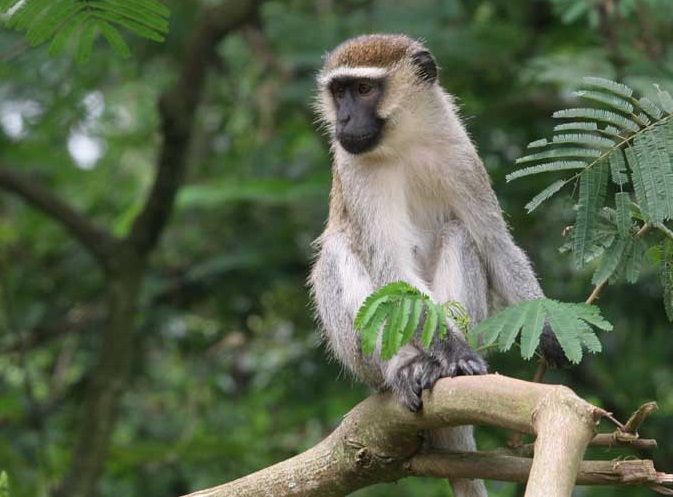
African green (vervet) monkeys, introduced from West Africa roughly 350 years ago, are estimated at around 37,000 individuals on St. Kitts (68 sq. miles) and are described by CABI and the Ministry of Agriculture as the territory's most damaging invasive species, with 2018 crop losses equivalent to a full month's marketable produce.
In March 2019, St. Kitts and Nevis joined the GEF-funded regional project 'Preventing the COSTS of Invasive Alien Species in Barbados and the OECS', implemented by CABI, to build a national monkey-management strategy alongside population and behavioural studies. The Ministry of Agriculture allocated EC$700,000 in its 2020 budget to a dedicated Pest Control Initiative, and a national Monkey Task Force, coordinated with support from Dr. Kerry Dore, has scaled live-trapping operations (capturing an average of around 25 monkeys per operation, with plans to field 500 traps).
A related feral-animal control fund on neighbouring Nevis grew from US$500,000 a year to US$1.2 million by 2022, indicating rising public investment.
Neither the government nor CABI have published population-reduction or crop-loss-recovery figures, so the programme's on-the-ground effectiveness so far rests on funding and effort inputs rather than measured ecological or economic outcomes.
National / regional programmes
Indicative funding routes for practices of this type — always check each programme's current calls and eligibility rules.
Do you run this practice? Claim it — verified implementers get a public contact pathway and can propose corrections.
Where this practice's information was retrieved from, and when.
Lesotho
Introduced in 2002 by the NGO Growing Nations, Lesotho's likoti no-till pit-planting method reversed decades of maize yield decline; a …
Zambia
Since 1995 Zambia's Conservation Farming Unit has trained smallholders in minimum-tillage, crop-rotation farming. Multi-year on-farm trials (2016-2021) found maize yields …
Malta
BirdLife Malta's EUR 1.26M EU LIFE project (2015-2020) ran rat control at 8 sites, 5 within Natura 2000, keeping Filfla …
Portugal
Madeira's Natural Park removed European rabbits and house mice from the 270 ha Selvagem Grande island using ~17,000 brodifacoum bait …
Open full copilot Grounded in cited practices — always check the sources.