Can't Wait to Learn: Digital Game-Based Learning for Out-of-School Children in Sudan
Sudan
Since 2014, War Child Holland, UNICEF and Ahfad University have run tablet-based learning games for out-of-school children in three Sudanese …
Sierra Leone · Freetown · See the Sierra Leone profile · See the Freetown profile
Evidence: Quasi-experimental Top 10% 96/100 · Ask Evidence Copilot about this practice
Solar-powered, offline tablets deliver adaptive literacy and numeracy lessons in rural Sierra Leone schools, partnered with the Ministry of Education since 2023. It targets 217,000 children in 751 schools by 2026; early data show twice as many reading fluently after a year.
Nearly 90% of Sierra Leonean children are unable to read and understand a simple sentence by age 10, a foundational-learning crisis rooted in overcrowded classrooms, teacher shortages and rural areas with no electricity or internet connectivity.
Imagine Worldwide, in partnership with Sierra Leone's Ministry of Basic and Senior Secondary Education (MBSSE) since 2023, aims to deliver adaptive literacy and numeracy learning directly in rural classrooms without requiring grid power or internet connectivity.
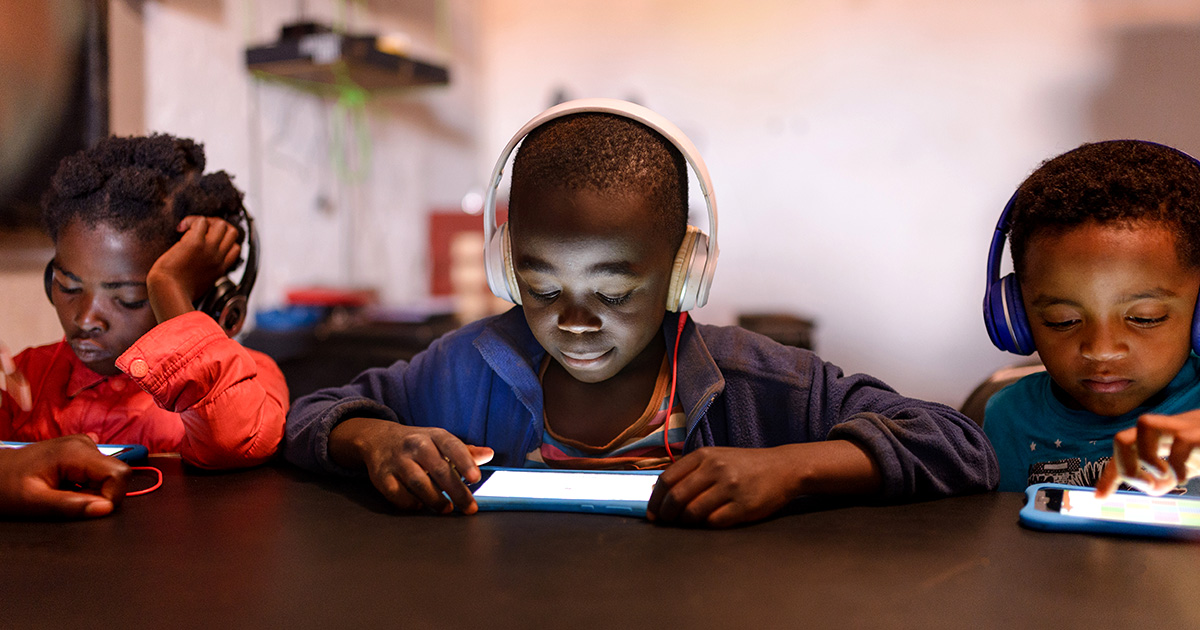
Solar-powered tablets loaded with offline, adaptive literacy and numeracy software are placed in classrooms, mainly in the rural districts of Kailahun, Kenema and Karene. Each child works at their own pace with an on-screen teacher avatar, with lessons built around locally relevant content. The programme is scaling toward 217,000 children across 751 schools by the end of 2026.
Programme data show that after one year of use, twice as many children reach the 20-words-per-minute threshold marking emergent reading fluency, compared with children not using the software. This mirrors a wider evidence base: nine independent randomised controlled trials of Imagine Worldwide's model, run across Malawi, Sierra Leone and Tanzania -- where the model collectively reaches more than 700,000 children a year -- have found consistent gains in reading, maths, attendance and enrolment.
The model depends on continued philanthropic funding to install hardware and cover running costs before responsibility rolls over to government systems school by school; a comparable tablet-based programme in rural Burkina Faso was shut down when its funding lapsed, a caution worth weighing against Sierra Leone's stronger government co-ownership plan.
Philanthropic / foundation funding
Indicative funding routes for practices of this type — always check each programme's current calls and eligibility rules.
Do you run this practice? Claim it — verified implementers get a public contact pathway and can propose corrections.
Where this practice's information was retrieved from, and when.
Sudan
Since 2014, War Child Holland, UNICEF and Ahfad University have run tablet-based learning games for out-of-school children in three Sudanese …
India
Google's offline, speech-recognition reading tutor, launched in India as Bolo in 2019, gives children real-time voice feedback as they read …
United States of America
CAST's Universal Design for Learning framework asks designers to build multiple means of engagement, representation and expression into digital curricula …
Kenya
Since 2009, NGO inABLE has installed assistive-technology computer labs in six specialist schools across four Kenyan counties, enrolling over 7,700 …
Open full copilot Grounded in cited practices — always check the sources.