Read Along (Bolo) — Google's AI reading tutor for low-literacy children in India
India
Google's offline, speech-recognition reading tutor, launched in India as Bolo in 2019, gives children real-time voice feedback as they read …
United States of America · Wakefield · See the United States of America profile
Evidence: Observational / pre–post Top 10% 96/100 · Ask Evidence Copilot about this practice
CAST's Universal Design for Learning framework asks designers to build multiple means of engagement, representation and expression into digital curricula from the start, rather than retrofitting for individual disabilities.
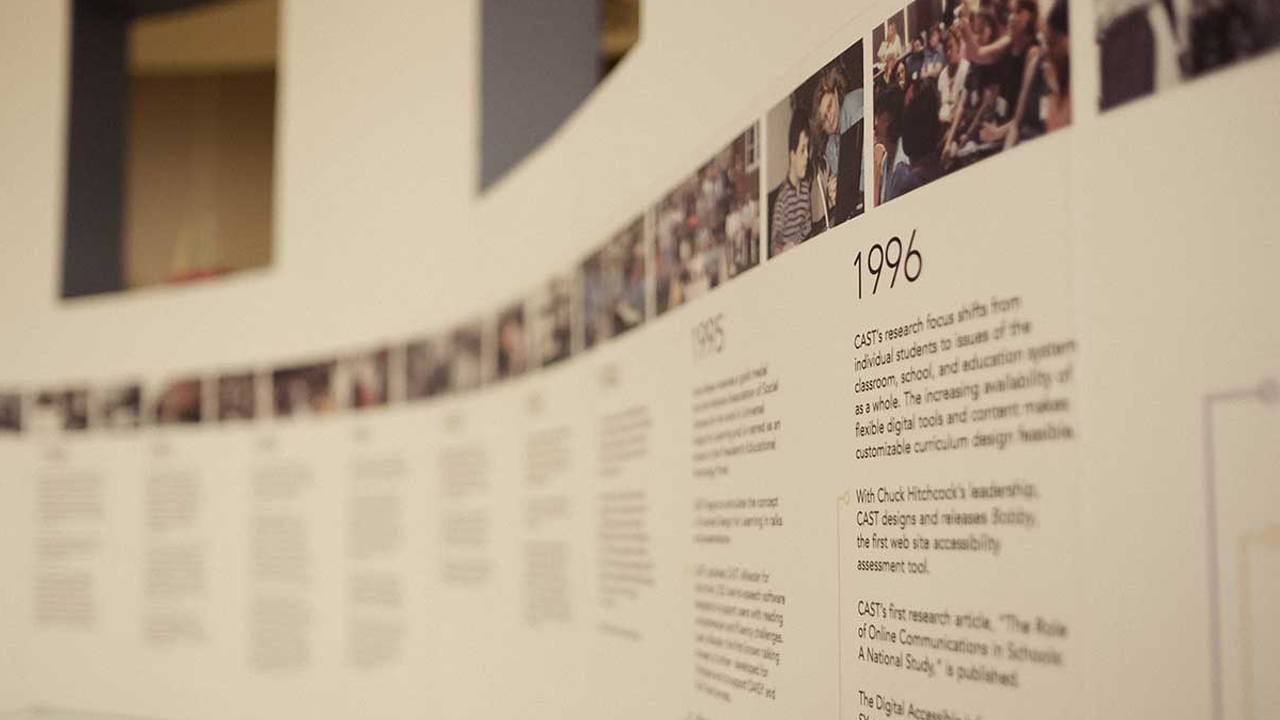
Founded in 1984 as the Center for Applied Special Technology, the Massachusetts nonprofit CAST — through co-founders Anne Meyer and David Rose — introduced Universal Design for Learning (UDL) in the 1990s as a framework for designing digital curricula around learner variability from the outset, rather than adapting materials for disability after the fact.
UDL's three principles — multiple means of engagement, representation, and action/expression — aim to build inclusive curriculum design in from the start rather than retrofitting for individual disabilities.
The framework has been written into US federal education law, including the Every Student Succeeds Act, and adapted by school systems and ministries of education in multiple countries.
A 2022 systematic review published in a peer-reviewed journal (PMC) examined UDL interventions for students with intellectual disabilities: of 71 studies initially identified, seven met inclusion criteria, and all seven reported positive outcomes across academic achievement, social interaction and behaviour — including one behavioural intervention showing a 90% reduction in problem behaviours.
The same reviewers were explicit about the evidence base's limits: only seven qualifying studies, inconsistent implementation and measurement across them, and a research base concentrated in North America. UDL's record shows a genuinely evidence-informed but still-maturing practice — a globally influential design paradigm with real, if modest and geographically narrow, peer-reviewed support.
Philanthropic / foundation funding
Indicative funding routes for practices of this type — always check each programme's current calls and eligibility rules.
Do you run this practice? Claim it — verified implementers get a public contact pathway and can propose corrections.
Where this practice's information was retrieved from, and when.
India
Google's offline, speech-recognition reading tutor, launched in India as Bolo in 2019, gives children real-time voice feedback as they read …
Sierra Leone
Solar-powered, offline tablets deliver adaptive literacy and numeracy lessons in rural Sierra Leone schools, partnered with the Ministry of Education …
Sudan
Since 2014, War Child Holland, UNICEF and Ahfad University have run tablet-based learning games for out-of-school children in three Sudanese …
Tanzania
Tanzania's official eLearning partner providing curriculum-aligned digital content to 3M+ secondary school students in all 25 regions, with an offline …
Open full copilot Grounded in cited practices — always check the sources.