Kampung Improvement Programme — Jakarta's In-Situ Slum-Upgrading Model
Indonesia
Starting in Jakarta in 1969, Indonesia's Kampung Improvement Programme threaded paved paths, drainage, water and sanitation into existing 'kampung' neighbourhoods …
Tunisia · Tunis · See the Tunisia profile · See the Tunis profile
Evidence: Descriptive / self-reported Top 27% 76/100 · Ask Evidence Copilot about this practice
Between 2012 and 2024, Tunisia's ARRU rehabilitated 155 low-income 'quartiers populaires' nationwide — roads, water, sewage and community facilities for roughly 865,000 residents — via a 617-million-dinar programme co-financed by the EU, EIB and AFD.
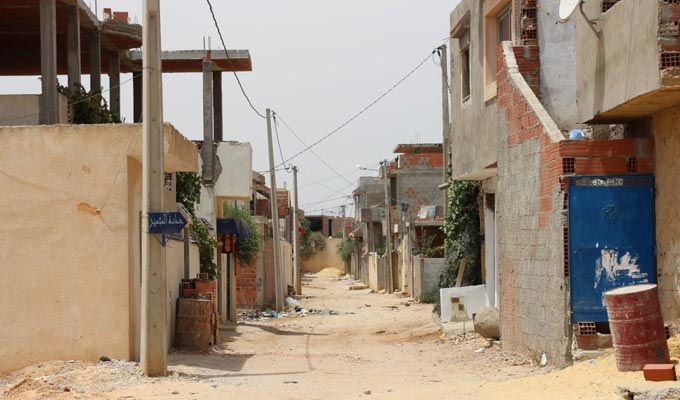
The Agence de Réhabilitation et de Rénovation Urbaine (ARRU), Tunisia's national urban-rehabilitation agency, has run neighbourhood-upgrading programmes for three decades. Its largest recent phase, the Programme de Réhabilitation et d'Intégration des Quartiers d'Habitation (PRIQH 1), ran from 2012 to 2024 and targeted "quartiers populaires" — low-income neighbourhoods historically excluded from formal urban infrastructure investment.
Work included road paving, water-distribution and sewage-network extension, rainwater drainage, public lighting, and the construction of 52 sports, cultural and youth facilities plus 19 industrial units.
PRIQH 1 rehabilitated 155 neighbourhoods, reaching approximately 865,000 inhabitants across roughly 172,000 homes, at a total cost of about 617 million Tunisian dinars. The programme began covering 119 neighbourhoods and was extended three times to reach its final total of 155.
Financing combined Tunisian state funds with concessional support from the European Investment Bank, the European Union and the French Development Agency (AFD), which together covered roughly 65% of costs. Having demonstrated it could deliver and scale, ARRU launched a second phase, PRIQH 2, in 2023 — targeting a further 160 neighbourhoods across 100 municipalities in 24 governorates with a 670-million-dinar budget — indicating institutional continuity and confidence in the model's replicability, though public reporting reviewed here documents infrastructure delivery rather than independent outcome evaluation (e.g. income, health or tenure-security changes for residents).
National / regional programmes ERDF — European Regional Development Fund
Indicative funding routes for practices of this type — always check each programme's current calls and eligibility rules.
Do you run this practice? Claim it — verified implementers get a public contact pathway and can propose corrections.
Where this practice's information was retrieved from, and when.
Indonesia
Starting in Jakarta in 1969, Indonesia's Kampung Improvement Programme threaded paved paths, drainage, water and sanitation into existing 'kampung' neighbourhoods …
Thailand
Thailand's Baan Mankong programme channelled government infrastructure subsidies and soft loans directly to community-run savings cooperatives, who then negotiated land …
Namibia
Since the early 1990s, Namibia's shack-dweller savings groups have secured land tenure for 3,200 households and self-built 1,350 homes at …
South Africa
A 'second-generation' crime-prevention-through-design programme in Cape Town's Khayelitsha township pairs infrastructure upgrading with community safety work; a peer-reviewed 2020 study …
Open full copilot Grounded in cited practices — always check the sources.