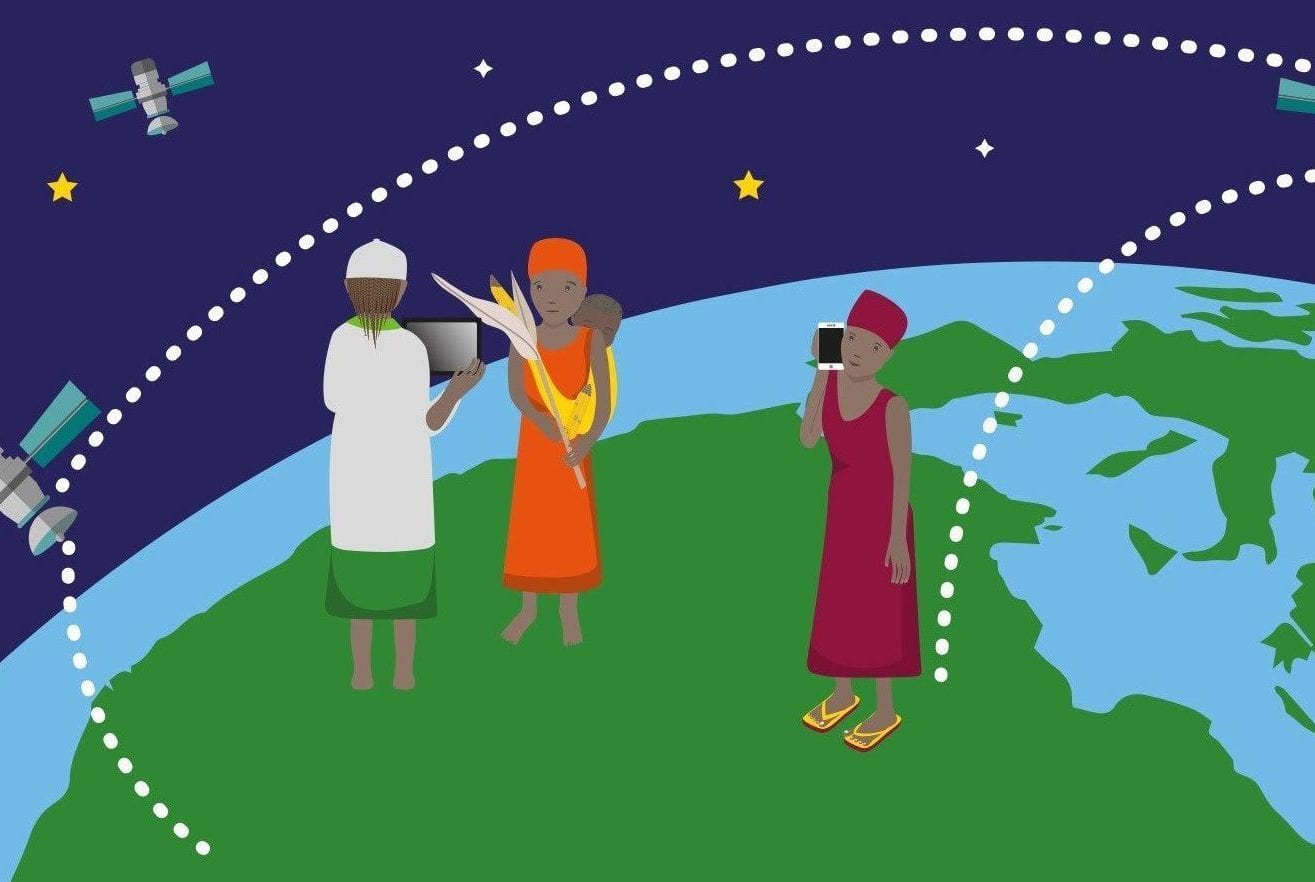
Since 2017, CABI's PRISE service has combined satellite data, weather forecasts and pest life-cycle models to deliver pest-outbreak alerts to smallholder farmers via government extension officers in Zambia, Kenya, Ghana and Malawi, reaching over 1.8 million farmers.
1.8 million+ farmers
Farmers reached (since 2017, cumulative across Zambia, Kenya, Ghana, Malawi)
13 %
Yield increase vs. non-users (average, participating smallholders)
1:182 ratio
Return on investment (estimated)
Details
Maturity
Established
Promoter
CABI, with Zambia Agriculture Research Institute (ZARI) and national extension services in Kenya, Ghana and Malawi
Period
2017–ongoing
Keywords
agriculture, extension services, climate-smart agriculture, public data services
Context
Small island and smallholder farming communities across Zambia, Kenya, Ghana and Malawi face recurring, hard-to-forecast pest outbreaks that damage food security, with limited localised early-warning data available to farmers.
Objectives
CABI's PRISE (Pest Risk Information SErvice) aims to fuse satellite Earth-observation data, weather forecasts and pest life-cycle models into a 'data cube' generating localised pest-outbreak risk alerts for smallholder farmers.
Activities
Since 2017, alerts have been delivered via SMS and dashboards used by government agricultural extension officers in Zambia (through ZARI), Kenya (KALRO), Ghana (PPRSD/CRI) and Malawi's Department of Agriculture Extension Services. The forecasting methodology has been published and peer-reviewed in the Journal of Integrated Pest Management.
Results
CABI reports the service has reached more than 1.8 million farmers across the four countries, with participating smallholders recording an average 13% yield increase compared with non-users and an estimated 1:182 return on investment.
Conclusions
PRISE sits at the boundary between an intergovernmental technical programme (CABI) and embedded public-sector delivery via national extension services, which is worth noting when assessing institutional ownership rather than delivery channel.
Implementation
Indicative cost
High (€500k–€5M) — Not publicly disclosed; a near-decade, multi-country satellite-and-forecasting service with an early funding role played by the UK Space Agency.
Time to results
Long (> 3 years) — Operating continuously since 2017 across Zambia, Kenya, Ghana and Malawi.
Staffing & skills
CABI as the intergovernmental technical operator and data-cube developer, Zambia Agriculture Research Institute (ZARI) and national extension services in Kenya (KALRO), Ghana (PPRSD/CRI) and Malawi (Department of Agriculture Extension Services) as the delivery channel to farmers
Conditions for success
Delivering alerts through existing government agricultural-extension networks rather than building a new farmer-facing channel from scratch
Combining satellite data, weather forecasts and pest life-cycle models into a shared 'data cube' architecture usable across four countries
Publishing the underlying forecasting methodology in a peer-reviewed journal for independent scrutiny
Where it fits
Governance type
intergovernmental programme delivered via national extension services
Scale
multi-country (4 African countries)
Income level
low and lower-middle income
Do you run this practice?
Claim it —
verified implementers get a public contact pathway and can propose corrections.
Data sources
Where this practice's information was retrieved from, and when.
FAO and Timor-Leste's government built an XGBoost-corrected seasonal drought index that triggered the country's first Anticipatory Action protocol in October …