GECI Island Restoration Programme — Invasive Mammal Eradication (Mexico)
Mexico
Since the late 1990s, Mexican NGO GECI has removed 60 populations of 13 invasive mammal species from 39 Pacific islands, …
Antigua and Barbuda · Redonda · See the Antigua and Barbuda profile
Evidence: Observational / pre–post Top 27% 53/100 · Ask Evidence Copilot about this practice
Goat and rat eradication (2016–2018) on the barren islet of Redonda triggered a peer-reviewed sixfold+ rebound in an endemic ground lizard and a >2,000% rise in vegetation biomass, leading Antigua and Barbuda to designate a 30,000-hectare land-and-sea reserve in 2023.
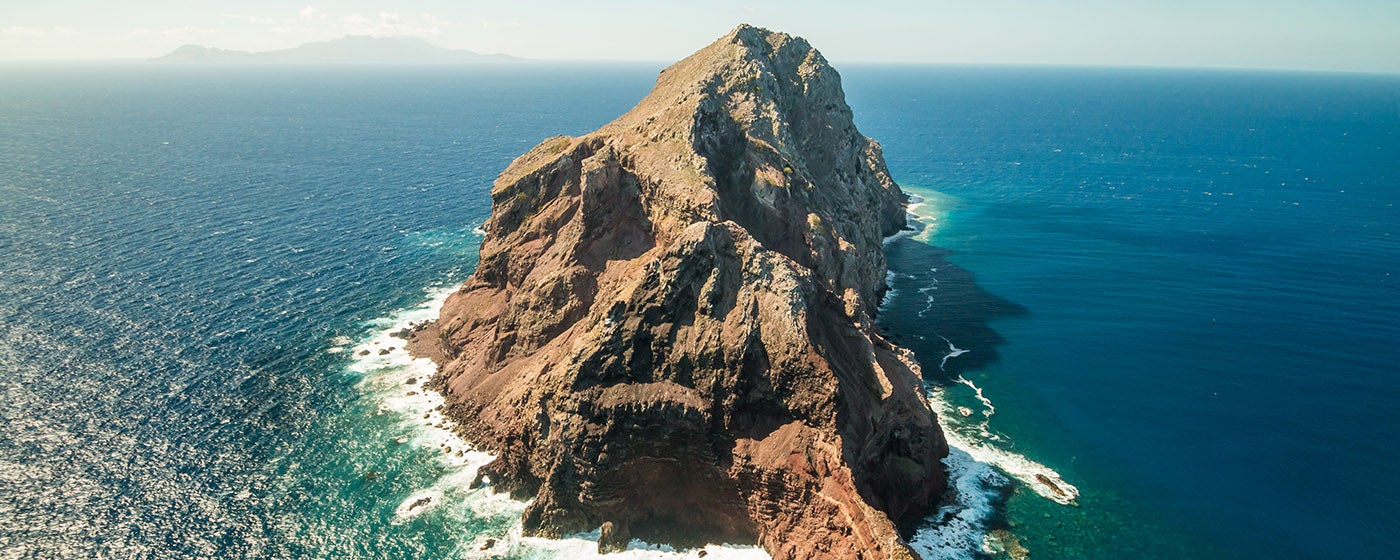
Redonda is a small, uninhabited volcanic islet (~150 hectares) belonging to Antigua and Barbuda. Goats were introduced during the 19th-century phosphate-mining era, and black rats established later, stripping vegetation until the island was reduced to bare rock, a 'moonscape'. This pressure from invasive species threatened endemic reptiles, including the Redonda ground lizard and the Redonda ground dragon (anole).
The programme aimed to remove invasive goats and rats from Redonda to halt vegetation loss and allow the islet's ecosystem, including its endemic reptile species, to recover.
Between November 2016 and April 2017, the Environmental Awareness Group (EAG), Fauna & Flora International, New Zealand technical contractor Wildlife Management International, the Government of Antigua and Barbuda, and funders including Re:wild, the Darwin Initiative, USAID and the National Fish and Wildlife Foundation removed about 60 feral goats. Rat eradication using brodifacoum bait ran from February to April 2017, and the island was declared rat-free in July 2018.
A peer-reviewed study in Integrative Zoology (2021) documented Redonda ground lizard density rising from roughly 112–147 individuals per hectare in 2012 to 935.3 individuals per hectare in 2019, while the endemic Redonda ground dragon increased roughly 13-fold since 2017 and invertebrates rose more than fivefold. Vegetation biomass grew by over 2,000%, and plant species richness rose from 17 to about 90 species; fifteen land bird species recolonized the island. On 18 August 2023, Antigua and Barbuda designated the Redonda Ecosystem Reserve, roughly 30,000 hectares of land and sea including a coral reef of about 180 square kilometres, the largest marine protected area in the Eastern Caribbean.
No programme cost figures have been published, land crab recovery was reported only qualitatively without a percentage figure, and long-term funding for continued monitoring is not fully secured. The peer-reviewed study itself flags possible weather and observer bias in its visual-census methods, so results should be read as a strong but imperfect ecological monitoring record.
Philanthropic / foundation funding
Indicative funding routes for practices of this type — always check each programme's current calls and eligibility rules.
Reusable artefacts from this practice — as published by their sources.
Do you run this practice? Claim it — verified implementers get a public contact pathway and can propose corrections.
Where this practice's information was retrieved from, and when.
Mexico
Since the late 1990s, Mexican NGO GECI has removed 60 populations of 13 invasive mammal species from 39 Pacific islands, …
Ecuador
GEF-funded campaign by Galápagos National Park and the Charles Darwin Foundation removed 140,000+ feral goats from 500,000+ ha across Pinta, …
Mauritius
From 1976, Durrell, Mauritius's National Parks Service and the Mauritian Wildlife Foundation eradicated invasive goats (1979) and rabbits (1986) from …
South Georgia and the South Sandwich Islands
The world's largest rodent-eradication project cleared brown rats and mice from over 100,000 ha of sub-Antarctic South Georgia between 2011 …
Open full copilot Grounded in cited practices — always check the sources.