GECI Island Restoration Programme — Invasive Mammal Eradication (Mexico)
Mexico
Since the late 1990s, Mexican NGO GECI has removed 60 populations of 13 invasive mammal species from 39 Pacific islands, …
Mauritius · Port Louis · See the Mauritius profile · See the Port Louis profile
Evidence: Observational / pre–post Top 40% 47/100 · Ask Evidence Copilot about this practice
From 1976, Durrell, Mauritius's National Parks Service and the Mauritian Wildlife Foundation eradicated invasive goats (1979) and rabbits (1986) from Round Island. Peer-reviewed monitoring shows recovery of 6 reptile species and 4 endemic palms across the 219 ha reserve.
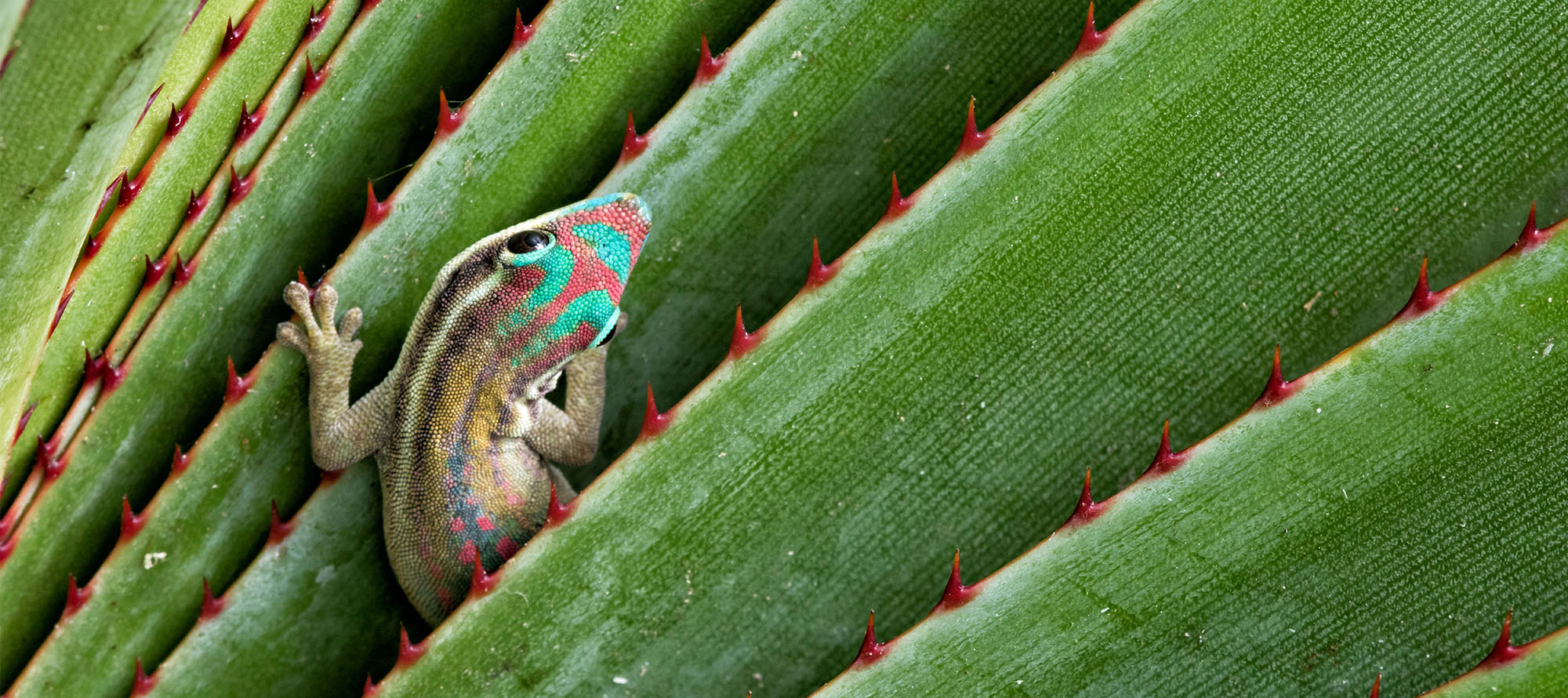
Round Island is a 219-hectare volcanic islet 22.5 km off the northeast coast of Mauritius, designated a nature reserve in 1957. For over 150 years, goats and rabbits introduced by sailors devastated its native palm forest, stripping vegetation and causing severe soil erosion that threatened the island's unique reptile fauna — species that had already been wiped out on the Mauritian mainland by introduced predators.
From 1976, the Jersey Wildlife Preservation Trust (now Durrell Wildlife Conservation Trust) worked with Mauritius's National Parks and Conservation Service and the Mauritian Wildlife Foundation to remove the invasive herbivores: goats were eradicated by 1979 and rabbits by 1986, using a targeted poisoning campaign led by conservationist Don Merton. A permanent research station, opened in 2002, has since supported ongoing native forest restoration and weed control.
Multiple peer-reviewed studies documented the ecological response: six reptile species recovered, including Telfair's skink, Guenther's gecko and the Round Island keel-scaled boa, alongside a rebound of four endemic palm species, among them the critically rare bottle palm. The island remains the only Indian Ocean nesting site for the Round Island petrel and is recognised as the most intact reptile-dominated ecosystem in the Mascarenes.
Marking its 50th year of active management in 2025, no equivalent quantified erosion or soil-recovery dataset has yet been published, so those co-benefits remain qualitative.
National / regional programmes Philanthropic / foundation funding
Indicative funding routes for practices of this type — always check each programme's current calls and eligibility rules.
Do you run this practice? Claim it — verified implementers get a public contact pathway and can propose corrections.
Where this practice's information was retrieved from, and when.
Mexico
Since the late 1990s, Mexican NGO GECI has removed 60 populations of 13 invasive mammal species from 39 Pacific islands, …
Ecuador
Ecuador's Galápagos authorities and NGO partners aerially and manually baited the entire 17,250 ha Floreana Island against invasive rats, mice …
Antigua and Barbuda
Goat and rat eradication (2016–2018) on the barren islet of Redonda triggered a peer-reviewed sixfold+ rebound in an endemic ground …
Ecuador
GEF-funded campaign by Galápagos National Park and the Charles Darwin Foundation removed 140,000+ feral goats from 500,000+ ha across Pinta, …
Open full copilot Grounded in cited practices — always check the sources.