Redonda Ecosystem Reserve — Rat and Goat Eradication (Antigua and Barbuda)
Antigua and Barbuda
Goat and rat eradication (2016–2018) on the barren islet of Redonda triggered a peer-reviewed sixfold+ rebound in an endemic ground …
Ecuador · Puerto Villamil · See the Ecuador profile
Evidence: Observational / pre–post Top 27% 53/100 · Ask Evidence Copilot about this practice
GEF-funded campaign by Galápagos National Park and the Charles Darwin Foundation removed 140,000+ feral goats from 500,000+ ha across Pinta, Santiago and Isabela (1997-2006) via aerial hunting and Judas-goat tracking; peer-reviewed study confirms vegetation and rail recovery.
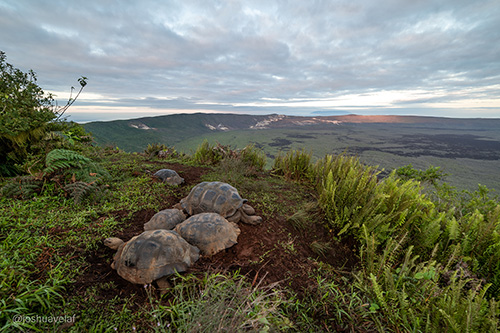
Introduced feral goats had devastated native vegetation on several of the Galápagos Islands' largest islands since the 19th century, out-competing giant tortoises and land iguanas and threatening endemic flora. Project Isabela (1997-2006), led by the Galápagos National Park Directorate and the Charles Darwin Foundation, was funded through a six-year, US$13.3 million Global Environment Facility (GEF/UNDP) invasive-species initiative, with additional support from Galápagos Conservancy and the Frankfurt Zoological Society.
Teams eradicated goats from Pinta (5,940 ha), Santiago (58,465 ha, where more than 18,000 feral pigs were also removed) and northern Isabela (approximately 250,000 ha), combining helicopter-based aerial hunting with radio-collared 'Judas goats' that led hunters to remaining herds, backed by ground teams. Small numbers of goats were deliberately retained short-term as radio-collared Judas animals to locate stragglers before final removal.
A peer-reviewed cost-effectiveness analysis published in PLOS ONE (2011) put the total eradication cost at approximately US$10.5 million across more than 500,000 ha for more than 140,000 goats removed, finding the aerial-based Isabela campaign cost approximately US$9/ha versus approximately US$110/ha for the largely ground-based Santiago campaign. Post-eradication monitoring documented rapid ecological recovery: regenerating tree stumps, expanding highland shrub species, forest tree seedlings and Opuntia cactus populations, and a marked return of Galápagos rails to highland areas in abundance.
National / regional programmes Philanthropic / foundation funding
Indicative funding routes for practices of this type — always check each programme's current calls and eligibility rules.
Do you run this practice? Claim it — verified implementers get a public contact pathway and can propose corrections.
Where this practice's information was retrieved from, and when.
Antigua and Barbuda
Goat and rat eradication (2016–2018) on the barren islet of Redonda triggered a peer-reviewed sixfold+ rebound in an endemic ground …
Mexico
Since the late 1990s, Mexican NGO GECI has removed 60 populations of 13 invasive mammal species from 39 Pacific islands, …
Mauritius
From 1976, Durrell, Mauritius's National Parks Service and the Mauritian Wildlife Foundation eradicated invasive goats (1979) and rabbits (1986) from …
South Georgia and the South Sandwich Islands
The world's largest rodent-eradication project cleared brown rats and mice from over 100,000 ha of sub-Antarctic South Georgia between 2011 …
Open full copilot Grounded in cited practices — always check the sources.