Living Danube Partnership — Drava River Side-Arms Restoration (Croatia)
Croatia
Coca-Cola Foundation and WWF-CEE co-financed the reconnection of 14.5 river km of Drava side-arms in Croatia's Mura-Drava-Danube Biosphere Reserve (2015-2024), …
Brazil · Rio Claro · See the Brazil profile
Evidence: Observational / pre–post Top 27% 53/100 · Ask Evidence Copilot about this practice
Since 2008, Rio de Janeiro's Guandu river-basin PES program has paid smallholders USD 6.25-31.25/ha/year to conserve or restore riparian forest; a peer-reviewed evaluation found 41 contracts delivered 489 ha (39% of its 1,258 ha goal), for a watershed supplying ~90% of Rio's wate
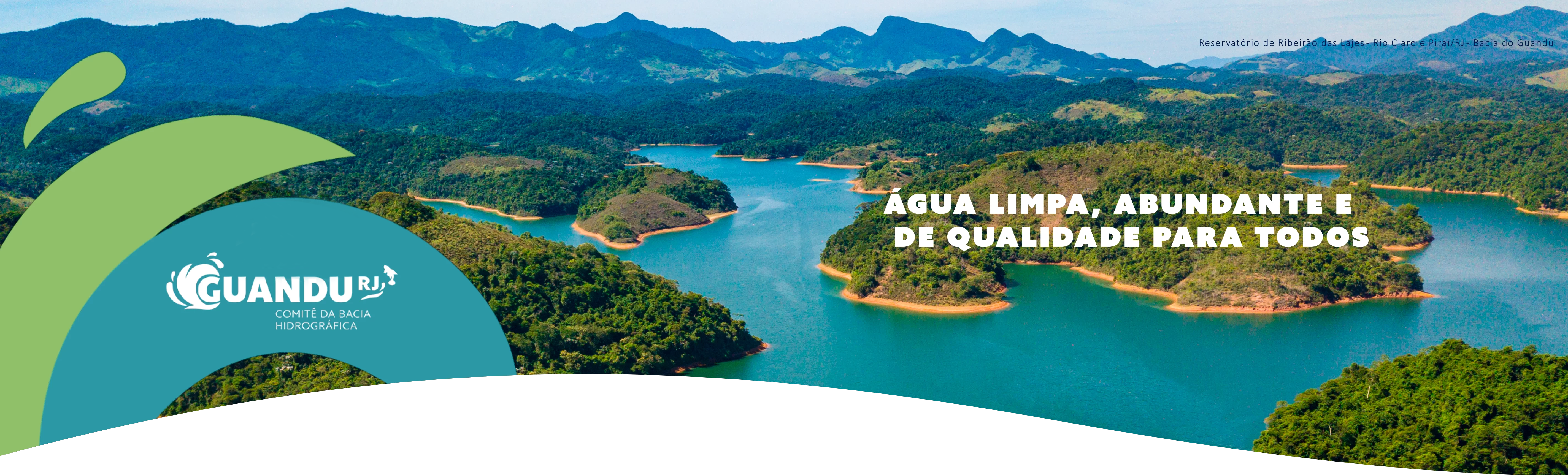
Since 2008, Rio de Janeiro's Guandu river-basin PES programme has paid smallholders to conserve or restore riparian Atlantic Forest in the catchment feeding the Guandu River Treatment Station, which supplies roughly 90% of the water used by the city of Rio de Janeiro, serving approximately 9 million people. The Water and Forest Producers Program was launched by the Comitê Guandu river-basin committee together with The Nature Conservancy Brasil and is funded through bulk water-use tariffs paid by municipal and industrial water users. Under the flagship PAF Rio Claro sub-project, 67 producers enrolled to preserve 4,036 hectares of standing forest and restore a further 514 hectares.
The programme aims to protect the riparian Atlantic Forest that filters sediment and regulates flow into the reservoir system supplying Rio de Janeiro's water treatment station. A parallel, independently evaluated PES scheme within the programme pays upstream landowners for riparian restoration, soil conservation, or forest conservation, with payments of USD 6.25 to 31.25 per hectare per year rising alongside the share of riparian area kept intact, subject to a minimum of 15% riparian cover. A 2015 second phase, PAF Sacra Família, aimed to extend the model to the municipalities of Mendes, Vassouras and Engenheiro Paulo de Frontin, targeting a further 1,000 hectares of preservation and 50 hectares of restoration.
Under the PES scheme, 41 contracts were signed with 38 landowners (28 men, 9 women and one company), who received payments differentiated by practice type. PAF Sacra Família landowners received cash payments, for example R$47,000 paid to producers in Engenheiro Paulo de Frontin in 2021. Complementary riparian restoration in the same basin is carried out separately by water utility CEDAE's 'Replanting Life' programme and by hydropower company LIGHT, which reports reforesting 600 hectares since 1992.
A peer-reviewed evaluation published in the journal Forests (2019) found that only 489 hectares of interventions were achieved against a 1,258-hectare target (39%), broken down as 64.2 hectares of riparian restoration, 90.8 hectares of soil conservation and 187.4 hectares of forest conservation. Only USD 98,812 of available PES funds were disbursed, roughly 50% of the budget, against an estimated USD 600,000 spent by project partners on planning, implementation, communication and monitoring — a ratio of about 1:12 between direct landowner payments and overhead. The evaluation drew on administrative monitoring and contract data for a defined set of interventions rather than a randomised or matched comparison group.
The study's explicit conclusion was that 'having funds is not a guarantee of success,' citing landowner participation and institutional constraints as the main bottlenecks to achieving physical targets. It stressed that ongoing ecosystem-service monitoring, not just payment disbursement, is essential to demonstrate real conservation outcomes.
National / regional programmes
Indicative funding routes for practices of this type — always check each programme's current calls and eligibility rules.
Do you run this practice? Claim it — verified implementers get a public contact pathway and can propose corrections.
Where this practice's information was retrieved from, and when.
Croatia
Coca-Cola Foundation and WWF-CEE co-financed the reconnection of 14.5 river km of Drava side-arms in Croatia's Mura-Drava-Danube Biosphere Reserve (2015-2024), …
Panama
Panama Canal Authority pays landowners flat annual fees to restore forest in the 342,000-ha Canal watershed: 10,846 ha reforested (3,650 …
Mexico
Mexico's first metropolitan water fund — corporate contributions from ARCA Continental, Heineken and CEMEX secure 2,796 ha under PES and …
Indonesia
Corporate PES in East Java where PT Tirta Investama (Danone-AQUA Keboncandi) pays 174 upstream farmers USD 100–215/ha/yr across 106.6 ha …
Open full copilot Grounded in cited practices — always check the sources.