FAMM — Monterrey Metropolitan Environmental Fund (Mexico)
Mexico
Mexico's first metropolitan water fund — corporate contributions from ARCA Continental, Heineken and CEMEX secure 2,796 ha under PES and …
Indonesia · Pasuruan · See the Indonesia profile
Evidence: Observational / pre–post Top 58% 40/100 · Ask Evidence Copilot about this practice
Corporate PES in East Java where PT Tirta Investama (Danone-AQUA Keboncandi) pays 174 upstream farmers USD 100–215/ha/yr across 106.6 ha to maintain tree cover, restoring infiltration to protect the Umbulan spring serving 1.3 million people.
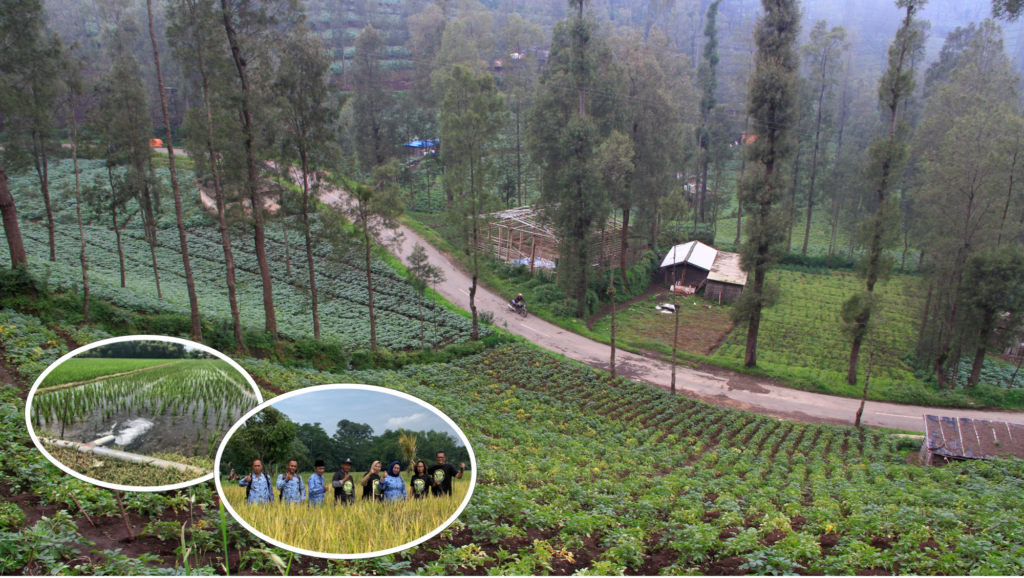
The Rejoso watershed in Pasuruan, East Java, feeds the Umbulan spring — the source for Danone-AQUA's largest bottled-water factory in Indonesia (Keboncandi) and the primary drinking water supply for 1.3 million people. Between 2007 and 2013, spring discharge fell by 17% due to deforestation and land-use change on volcanic upper slopes.
From 2015, the Rejoso Kita initiative — led by World Agroforestry (CIFOR-ICRAF) and Danone-AQUA — designed a landscape-scale payment for ecosystem services (PES) mechanism.
A reverse group auction identified 174 farmers from 12 farmer groups in seven villages across Tosari and Pasrepan sub-districts, managing 106.6 hectares of upland agricultural land. PT Tirta Investama (the Keboncandi factory) acts as the formal PES buyer, paying Rp 1.5-3.2 million/ha/year (USD 100-215/ha/year) in exchange for performance-based conservation obligations: maintaining 300-500 trees per hectare, installing erosion-retaining grass strips, and digging rorak (contour gutters) between crop rows to increase rainwater infiltration.
CIFOR-ICRAF research (published 2018) showed that replicating these practices at scale can increase infiltration by 0.5-1% and reduce surface runoff by 1.5-2% of annual rainfall. Canopy cover above 55% is associated with adequate infiltration and acceptable erosion levels. More than 47,000 trees have been replanted or preserved under the programme.
The Rejoso Kita model has attracted co-investment from an Indonesian Water Coalition (including Coca-Cola, Nestlé, Unilever, L'Oréal, and Heineken Indonesia) to extend landscape-scale action across the broader Brantas River basin.
Own resources / municipal budget
Indicative funding routes for practices of this type — always check each programme's current calls and eligibility rules.
Do you run this practice? Claim it — verified implementers get a public contact pathway and can propose corrections.
Where this practice's information was retrieved from, and when.
Mexico
Mexico's first metropolitan water fund — corporate contributions from ARCA Continental, Heineken and CEMEX secure 2,796 ha under PES and …
Panama
Panama Canal Authority pays landowners flat annual fees to restore forest in the 342,000-ha Canal watershed: 10,846 ha reforested (3,650 …
Brazil
Since 2008, Rio de Janeiro's Guandu river-basin PES program has paid smallholders USD 6.25-31.25/ha/year to conserve or restore riparian forest; …
Croatia
Coca-Cola Foundation and WWF-CEE co-financed the reconnection of 14.5 river km of Drava side-arms in Croatia's Mura-Drava-Danube Biosphere Reserve (2015-2024), …
Open full copilot Grounded in cited practices — always check the sources.