Malaysia SiPKPM — AI-enhanced national early-warning system for school dropout prevention
Malaysia
Malaysia's Ministry of Education (KPM) and UNICEF deploy SiPKPM, an AI early-warning system tracking 5 million learners on 7 risk …
Japan · Saitama · See the Japan profile
Evidence: Descriptive / self-reported Top 81% 33/100 · Ask Evidence Copilot about this practice
Saitama City adopted a game-theory matching algorithm, built with Fujitsu and Kyushu University, to allocate 7,959 children to 311 nursery places — work that took staff days, computed in seconds while honouring eight sibling-preference rules.
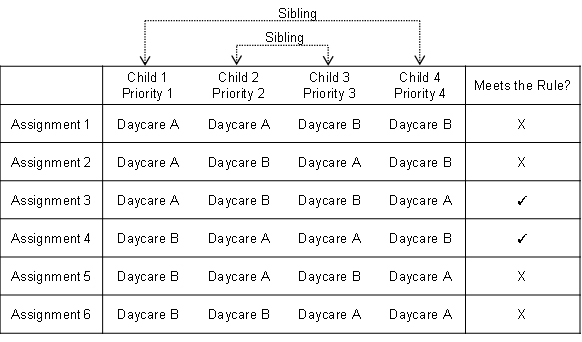
Matching thousands of children to licensed nursery places each year, while respecting families' ranked preferences, priority scores, and complex sibling rules (such as requiring siblings to attend the same facility or start on the same date), had previously taken Saitama City's staff several days of manual work each admissions cycle.
In 2017, Fujitsu Laboratories and Kyushu University's Institute of Mathematics for Industry developed a game-theory-based matching algorithm — in the same family as the deferred-acceptance mechanisms used for US medical residency placement — to automate the process, and Saitama City announced its adoption for the 2019 admissions cycle.
In its first production run, the system matched 7,959 children to 311 nursery facilities across the city, honouring eight sibling-preference rules.
The vendor's own evaluation on anonymised historical data completed the computation in a matter of seconds, cutting roughly a week off the time it took to notify parents of results. Other municipalities followed: Minato Ward in Tokyo later reported cutting a reported 500 person-hours of manual matching work down to about five minutes of computation, and Japan's Ministry of Internal Affairs and Communications listed more than 30 municipalities trialling similar systems by fiscal year 2018.
The headline speed figures come from a vendor evaluation conducted before deployment, not an independent post-hoc audit, and no published study has examined whether the resulting matches are fair or resistant to strategic manipulation by applicants. The system is scoped to licensed childcare (early-childhood) admissions rather than K-12 school administration, and it relies on combinatorial optimisation rather than a learned/trained model.
Do you run this practice? Claim it — verified implementers get a public contact pathway and can propose corrections.
Where this practice's information was retrieved from, and when.
Malaysia
Malaysia's Ministry of Education (KPM) and UNICEF deploy SiPKPM, an AI early-warning system tracking 5 million learners on 7 risk …
Peru
A pre-registered World Bank RCT of an Anthropic Claude-powered AI career coach and math tutor across up to 110 Lima …
Kenya
Announced 19 May 2026 alongside Pakistan, Brazil and India, this Google.org-funded, UNICEF-implemented partnership works with Kenya's national Government on three …
Peru
The World Bank, Peru's DRELM, Anthropic and Microsoft launched an AI maths tutor and career-guidance coach across 110 Lima public …
Open full copilot Grounded in cited practices — always check the sources.