Ed.ai — Île-de-France Pilots AI-Assisted Essay Correction Across 20 Lycées
France
The Île-de-France region piloted the Ed.ai tool in 20 high schools, proposing AI-generated grades and remediation exercises for 7,600 exam …
Dominican Republic · Santo Domingo · See the Dominican Republic profile · See the Santo Domingo profile
Evidence: Observational / pre–post Top 40% 53/100 · Ask Evidence Copilot about this practice
SARA pairs a validated Spanish reading battery with AI-automated scoring on a tablet. Validated on 1,860 Santo Domingo pupils, its AI matched human raters at 92% accuracy and revealed a large public-private reading gap. Not yet independently replicated.
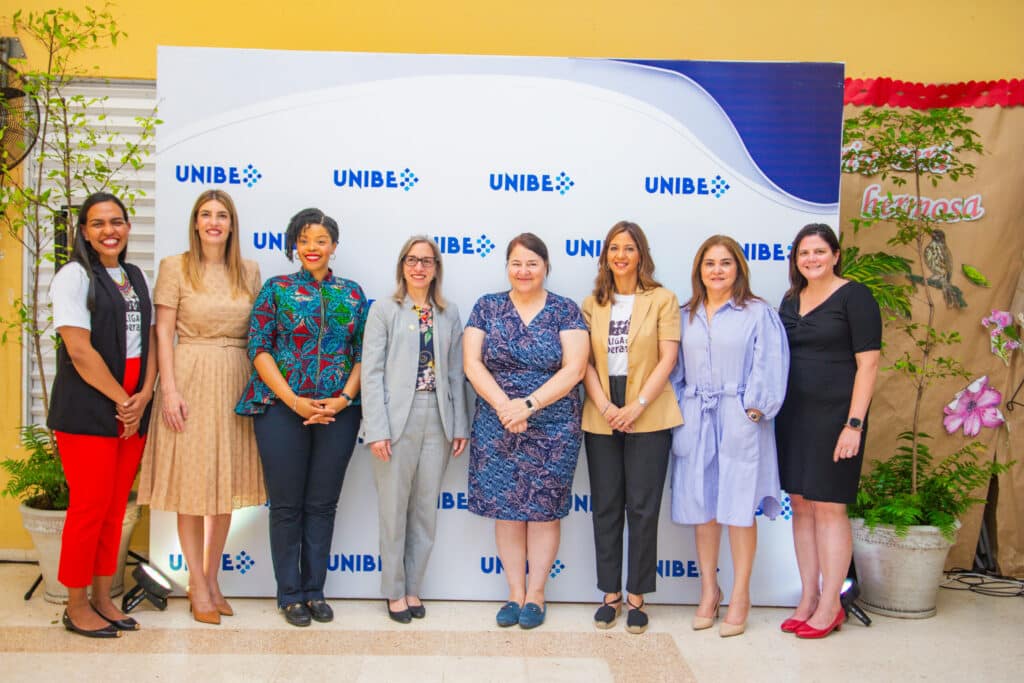
Reading proficiency is a persistent crisis in the Dominican Republic: national and international assessments repeatedly find most primary and secondary students below minimum reading levels. Standardized, psychometrically validated Spanish-language reading assessments that do not require scarce trained examiners are rare in the region — a gap underscored by USAID's own $24 million 'Proyecto Leer' literacy program (2015-2023, reaching 364,000+ students across 378 schools), which UNIBE helped implement.
Researchers at the Instituto de Investigación en Neurociencias Aplicadas (IINA) at Universidad Iberoamericana (UNIBE) built SARA (Self-Applied Reading Assessment): a tablet-based tool that pairs the existing validated ECLEC reading battery with AI-automated scoring of learners' recorded spoken responses, letting children take all six subtests with minimal adult supervision.
SARA was validated on 1,860 students in grades 2-6 (340 to 406 per grade; 50.3% girls) across 34 public and private schools in Santo Domingo (educational regions 10 and 15), under an approved IRB protocol (CEI2022-20).
Internal consistency was strong for the decoding subtests (Cronbach's alpha .86-.97) and reading comprehension (.76-.88), though weaker for oral comprehension (.60-.71). Against the established PROLEC-R battery, convergent validity was good to excellent (r=.79-.93), except for oral comprehension (r=.38). The AI scoring engine matched independent human raters with 91.97% overall accuracy (precision .96, recall .945), though agreement varied by subtest (73%-95%). SARA also surfaced a large, statistically significant (p<.05) public-private achievement gap: in 2nd-grade reading comprehension, public-school pupils averaged 33.7 out of 100 versus 55.9 for private-school pupils — a gap that narrowed but persisted through 6th grade.
The tool has not yet been independently replicated outside its developing institution, and even the human-rater benchmark it was validated against showed only moderate agreement (Cohen's kappa .55) on some subtests, so some residual scoring uncertainty remains.
Do you run this practice? Claim it — verified implementers get a public contact pathway and can propose corrections.
Where this practice's information was retrieved from, and when.
France
The Île-de-France region piloted the Ed.ai tool in 20 high schools, proposing AI-generated grades and remediation exercises for 7,600 exam …
United States of America
NYU Stern's Panos Ipeirotis replaced written assignments in an AI/ML Product Management course with AI-run oral exams via ElevenLabs voice …
Philippines
DepEd's ARAL programme uses Microsoft Reading Progress to automate reading-fluency assessments; a Cabanatuan pilot reduced at-risk readers from 14 to …
Brazil
Paraná's state education department runs Redação Paraná, a writing platform with 833,000+ active users; AI correction (Google technology) gives instant …
Open full copilot Grounded in cited practices — always check the sources.