Microsoft Reading Coach & Reading Progress
United States of America
Free AI literacy tools in Microsoft Teams that give students personalised reading practice and teachers fluency data; a trial showed …
Philippines · Quezon City · See the Philippines profile · See the Quezon City profile
Evidence: Observational / pre–post Top 14% 67/100 · Ask Evidence Copilot about this practice
DepEd's ARAL programme uses Microsoft Reading Progress to automate reading-fluency assessments; a Cabanatuan pilot reduced at-risk readers from 14 to 0, assessment time fell from 2 days to 2 hours in Bais City (14,000+ learners, 60 schools); rolling out to 1,500 schools in 2026.
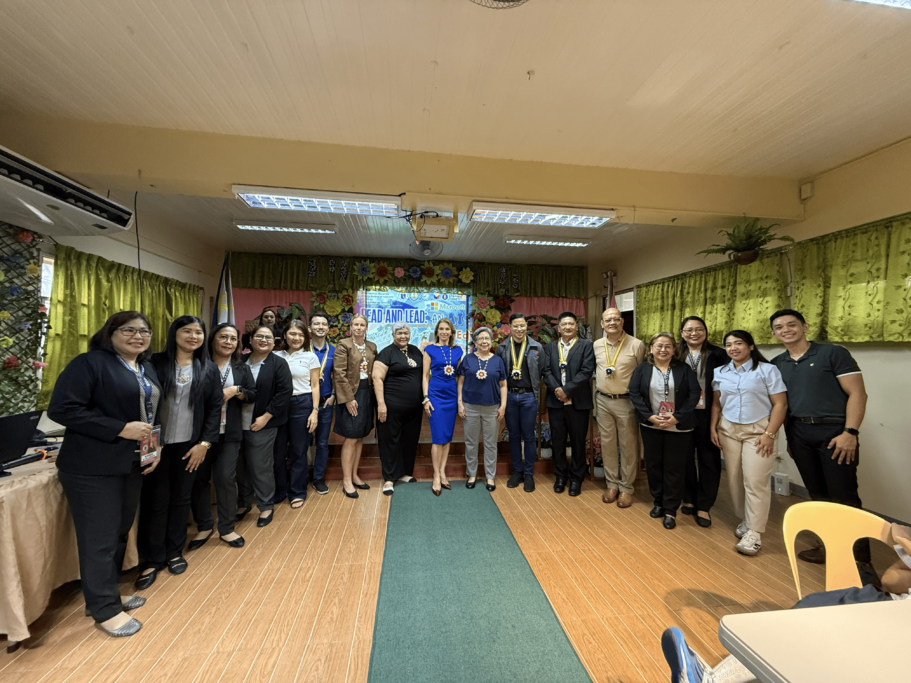
The Philippines Department of Education (DepEd) launched the Academic Recovery and Accessible Learning (ARAL) programme in September 2025 in partnership with Microsoft Philippines, deploying AI-powered reading-fluency tools - primarily Microsoft Reading Progress and Reading Coach - across public schools to identify and remediate struggling readers.
Reading Progress uses AI to automate oral reading-fluency assessment, evaluating a student's accuracy, pace and pronunciation as they read a passage aloud and generating data for teachers within minutes. A companion pilot, READExcel, ran in three school districts of Cabanatuan City, while a separate rollout assessed learners in Bais City. By early 2026 the programme had reached 25 school districts, with a roadmap to 3,000 teachers across 1,500 schools during 2026; DepEd also launched Project AGAP.AI in January 2026 as the country's first nationwide AI-in-education integration programme, backed by Memorandum Order 003, 2026.
The READExcel pilot in Cabanatuan City identified 14 struggling readers at baseline, all of whom progressed out of the at-risk category following targeted AI-supported intervention. In Bais City, assessing 60 schools that previously took teachers two full days took two hours with Reading Progress, and more than 14,000 learners across those 60 schools have been assessed.
DepEd and Microsoft describe the evidence as promising but limited to small-scale pilots reported jointly by the two implementing partners; no independent RCT has been conducted. National scaling also depends on connectivity investment - DepEd committed to universal school internet by end-2025, though close to 12,000 schools remained offline at that point.
Implementation detail (cost, timeline, staffing, conditions for success) is not yet available for this practice.
National / regional programmes
Indicative funding routes for practices of this type — always check each programme's current calls and eligibility rules.
Do you run this practice? Claim it — verified implementers get a public contact pathway and can propose corrections.
Where this practice's information was retrieved from, and when.
United States of America
Free AI literacy tools in Microsoft Teams that give students personalised reading practice and teachers fluency data; a trial showed …
Vietnam
WeSign gives deaf and hard-of-hearing Hanoi primary pupils real-time, AI-scored feedback on fingerspelling and sign formation via webcam. A 30-participant …
Portugal
Dyscovery, a startup incubated at Técnico Lisboa's JUNITEC, combines text-to-speech, AI analysis of reading/writing error patterns, and adaptive exercises with …
Sudan
A solar-powered tablet game teaches literacy and numeracy to out-of-school children in conflict-affected Sudan. A 2020 peer-reviewed study found significantly …
Open full copilot Grounded in cited practices — always check the sources.