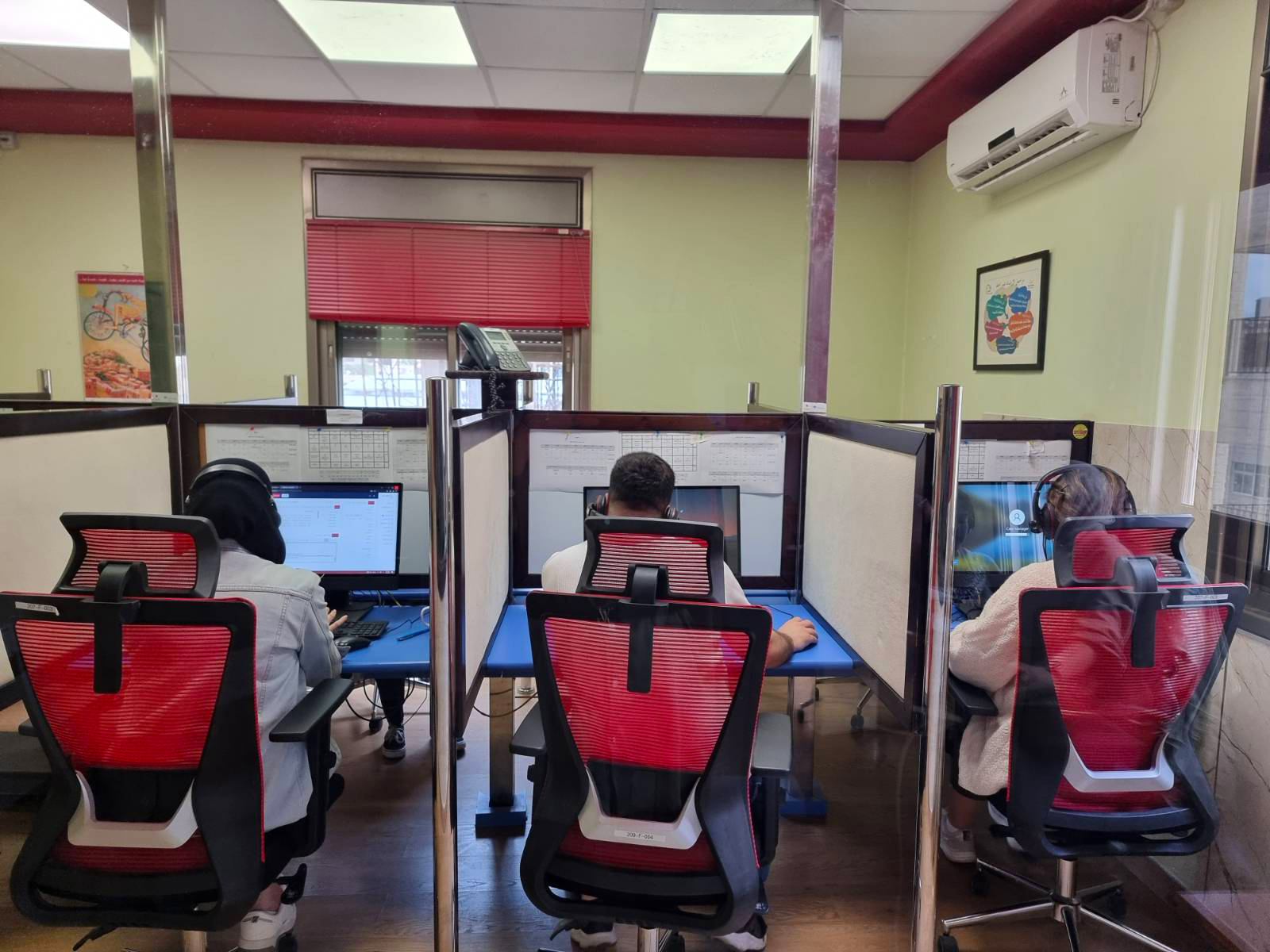
Since 1998 the Palestinian NGO SAWA has run a free 24/7 national helpline for women and children facing violence, scaling through repeated wars from 2008–09 to 2023–24, though safe-shelter referral gaps persist.
200-250 calls/day
Calls handled per day during the 2008-09 Gaza war (2008-09)
29,618 calls
Documented calls during the 2014 Gaza war (2014)
1,334 calls
Calls in August 2023 (August 2023)
3,148 sessions
Counselling sessions in November 2023 (November 2023)
2,400+ calls
Calls about home destruction over five months (from October 2023, over five months)
1,125 calls
Calls about displacement over five months (from October 2023, over five months)
Details
Maturity
Established
Promoter
SAWA – All the Women Together Today and Tomorrow
Period
1998–ongoing
Keywords
gender-based violence, child protection, helpline, psychosocial support
Context
SAWA -- All the Women Together Today and Tomorrow -- was founded in August 1998 by eight women trained as volunteers at the Jerusalem Rape Crisis Centre, with the mission of building a Palestinian society free of violence and abuse against women and children.
Objectives
Provide crisis counselling and referral to legal, medical and protection services for women and children facing violence.
Activities
A free, 24/7 national helpline (short code 164) delivered by phone, chat, WhatsApp and in person at a counselling centre known as "Let's Talk"; a dedicated Child Protection Helpline launched in 2004 (joined Child Helpline International in 2005); mobile psychosocial and reproductive-health clinics; school-based gender-based-violence awareness workshops; and, since 2018, designation as Meta's "Trusted Partner" for reporting online gender-based violence in Palestine.
Results
The service handled 200-250 calls a day during the 2008-09 Gaza war and logged 29,618 documented calls during the 2014 Gaza war. Following the escalation from October 2023, counsellors recorded 1,334 calls in August 2023 rising to 3,148 counselling sessions in November 2023, including a marked rise in men contacting the service and over 2,400 calls about home destruction and 1,125 about displacement across five months, while checkpoint closures forced the suspension of physical mobile clinics in favour of remote-only support.
Conclusions
The helpline has scaled repeatedly through three wars over 26+ years, but no independent evaluation of its impact on violence outcomes was found -- all figures reflect call and session volume, not verified reductions in violence. SAWA's own staff have acknowledged a critical shelter-referral gap: "we want to help them, but there is nowhere safe for them to go."
Implementation
Indicative cost
Medium (€50k–€500k) — No budget or per-call cost data is published.
Time to results
Long (> 3 years) — Operating continuously since 1998 (26+ years) through repeated wars and escalations (2008-09, 2014, 2023-24); demand scales sharply during crisis periods.
Staffing & skills
SAWA-trained volunteer and professional counsellors, Helpline officers, Mobile clinic staff, Meta "Trusted Partner" liaison (since 2018)
Sweden's 28 Barnahus co-locate police, social services, prosecution and child psychiatry for child victims of sexual abuse. Evaluations show conviction …
Since 2006, Lusaka's University Teaching Hospital has co-located medical, police, psychosocial and legal care for sexual-abuse survivors, lifting HIV post-exposure …